
In short
Take a Ford Transit to a body shop that can fit a tall van, follows Ford's repair requirements and handles the upfit and lettering. Ford requires pre- and post-repair scans on 1996 and newer vehicles after a collision and recommends Ford parts for structural repairs and glass. In Texas, you choose the shop.
- Ford requires pre- and post-repair diagnostic scans after a collision on 1996 and newer vehicles.
- Ford says recycled, aftermarket or reconditioned parts are not validated for structural repairs.
- Bumper, mirror and glass work can call for camera or radar calibration.
- List shelving, racks and lettering before the repair so they come back right.
- A heavier Transit used in interstate commerce may be a commercial motor vehicle with marking rules.
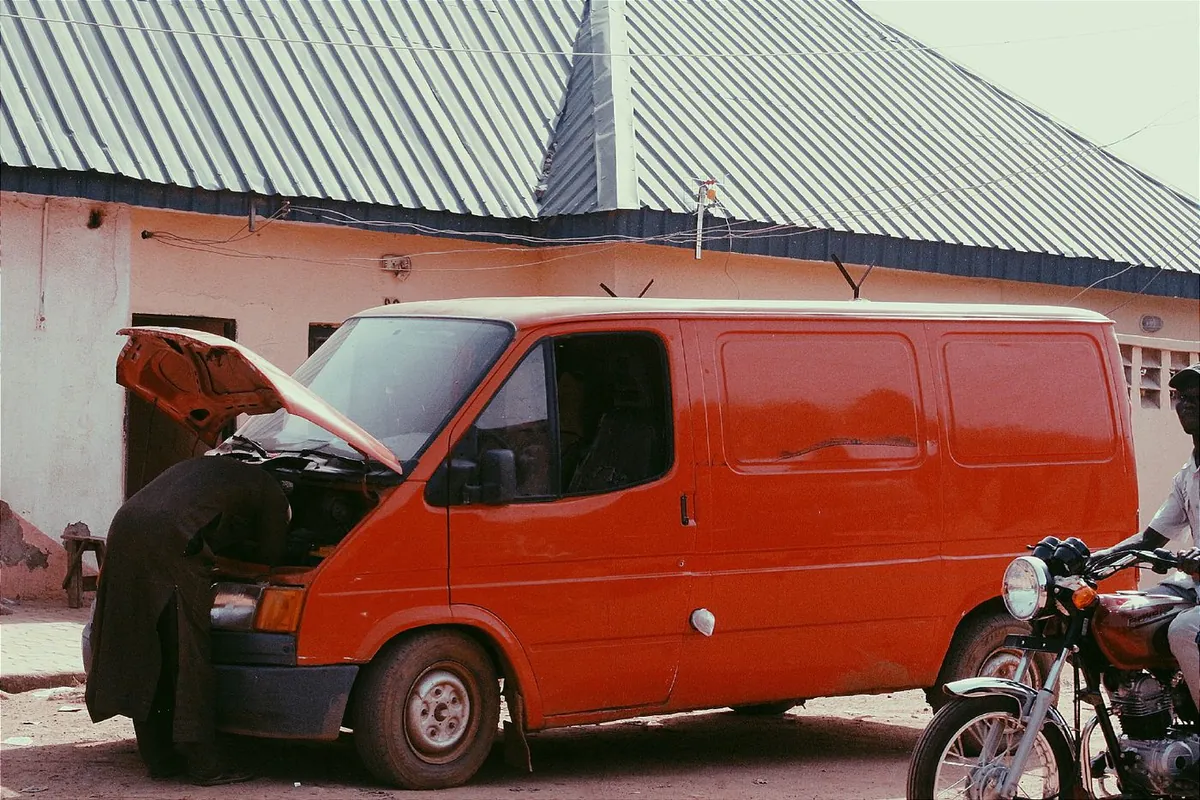
Where can I get a Ford Transit cargo van repaired near Dallas?
At a body shop that can fit a tall van, follows Ford's repair requirements, and understands that the van is a working tool. A Transit is not a hard vehicle to fix, but it is easy to fix badly: a sliding door that never closes right, a sensor that stops warning the driver, or lettering that comes back crooked.
ACE Body & Frame repairs cargo vans as part of our fleet and work vehicle repair. We are in Balch Springs, on S. Peachtree Road, and we work with owners and fleet managers from Balch Springs, Mesquite and the surrounding area.
Whichever shop you choose, the questions below will tell you quickly whether it will treat your Transit the way Ford says it should be treated. You have the right to choose where your vehicle is repaired, even when an insurer suggests a list.
That right is written into Texas law. Texas Insurance Code 1952.301 says an insurer may not use an auto policy to limit your choice of repair person or facility. Commercial policies carry their own terms, so read yours, but the van's owner picks the shop. The claim stays yours; the shop documents the damage, writes the estimate and works with the adjuster.
What does Ford require when a Transit is repaired after a collision?
Ford publishes collision position statements that apply to its whole line, Transit included. These are the points that matter most for a van owner.
- Scans before and after. Ford's statement of October 1, 2025 says all Ford vehicles from model year 1996 and newer that were in a collision, meaning damage beyond minor outer-panel cosmetic distortion, must have both a pre-repair and a post-repair diagnostic scan. Ford adds that some faults do not turn on a warning light and that removing panels, glass or components can create new fault codes.
- Structural parts. Ford's structural repairs statement says Ford-approved original equipment parts should be used for structural repairs, that recycled, salvaged, aftermarket or reconditioned parts have not been validated by Ford for structural repairs, and that where no specific procedure exists, structural repairs should be made at the original factory joints or seams.
- Fasteners and adhesives. Ford says technicians should use Ford-original structural rivets and Ford-approved structural adhesives and installation tools for structural and cosmetic body repairs, and that each rivet is engineered for its own location.
- Glass. Ford says it does not endorse non-Ford original equipment glass, that the bonded windshield is a structural member, and that untested aftermarket glass may not give the camera an accurate position for driver-assist functions such as Lane-Keeping and Pre-Collision Assist.
A maker's statement is not Texas law, and your insurer may write the estimate with other parts. But a shop should know these positions and be able to tell you how it handles each one on your van. Our guide to OEM, aftermarket and used parts explains your options.
Which Transit damage is most common, and what does each repair involve?
Cargo vans get hit in predictable places: loading docks, tight job sites, parking lots and backing mistakes. The table below shows what each type of damage usually means for the repair.
| Damage | What the repair usually involves | What to ask |
|---|---|---|
| Sliding side door dented or off its track | Door skin or door replacement, track and roller repair, alignment so it seals and latches | Will the track and latch be checked, not just the panel? |
| Rear doors pushed in at a dock | Door repair or replacement, hinge and striker alignment, rear lamps and any rear camera | Are the backup camera and rear sensors checked afterward? |
| High roof corner hit on an overhang | Roof panel or roof rail repair, sealing against leaks, interior trim | Is the roof area structural on this van, and how will it be sealed? |
| Front bumper and grille | Bumper cover, brackets, lamps, cooling parts, and any radar or camera behind the cover | Does this van have a front radar, and does Ford call for calibration after this repair? |
| Long side panel scraped | Panel repair, paint on a large flat surface, blending, lettering | How will the color be matched across a long panel? |
| Windshield cracked in the crash | Glass replacement, camera bracket transfer, camera calibration if equipped | Which glass will be used, and how is the camera aimed? |
Use the right column on the first call. A shop that knows vans will answer without guessing, and it will tell you when it needs to look up the procedure for your exact model year.
Why do the safety sensors need attention after body work?
Many newer Transits carry driver-assistance features. IIHS explains that front crash prevention uses cameras, radar or lidar, lane departure systems use cameras, and blind spot systems use sensors on the sides of the vehicle. Those parts sit behind the same bumpers, grilles, mirrors and glass that get damaged.
I-CAR says forward radar sensors sit in or behind the front bumper or grille, and that calibration is normally required after the sensor is replaced and may be needed after the bumper or grille is removed or after front structural repairs. Ford's own scanning statement adds that removing panels, glass or components can introduce new fault codes that call for recalibration or initialization, so glass and mirror work deserve the same question as a bumper.
The right answer for your van comes from Ford's repair information for that model year, so ask any shop, including us, how calibration will be handled and how you will see proof that it was done. Our guides on pre- and post-repair scanning and sensor recalibration after body repair go deeper.
What happens to shelving, ladder racks and partitions?
Most cargo vans are upfitted, and the upfit is often bolted through the panels that were damaged. Shelving may need to come out to reach the inside of a side panel. A ladder rack may need to come off to repair the roof. A partition may block access to the rear of the cab.
- Tell the shop what is installed. List shelving, racks, partitions, inverters, lights and cameras added after purchase.
- Empty the cargo area. Tools and stock slow the teardown, and you do not want them in the van while it is in the paint booth.
- Agree who reinstalls. Some owners want their upfitter to do it. Others want the body shop to remove and reinstall. Put the answer on the estimate.
- Photograph the lettering. Clear photos of both sides and the rear make it easier to reproduce graphics after paint. Our guide to fleet repaint and lettering covers this.
Does my Transit count as a commercial motor vehicle?
It might, depending on weight and use. Under 49 CFR 390.5, a vehicle used in interstate commerce with a gross vehicle weight rating or gross combination weight of 10,001 pounds or more is a commercial motor vehicle, as is one designed or used to carry more than 15 passengers including the driver when not for compensation. Heavier Transit configurations, or a van towing a trailer, can cross that line. The rating is printed on the label in the driver's door jamb.
If the van is covered, two rules touch body repair. 49 CFR 390.21T requires the carrier's name and USDOT number on both sides, legible in daylight from 50 feet, so a replaced or repainted door needs the marking back. Keep the body shop invoice with the van's other repair records, too. See our guide to USDOT markings after body repair for details.
What should I bring, and what should I ask?
Bring these, or send them before you drop off the van:
- VIN, unit number and mileage reading from the dash.
- Claim number and adjuster contact, if a claim is open.
- Photos of the damage, the lettering and the dash with the key on.
- A list of the upfit and who installed it.
- Your approval rules: who can approve work and up to what amount.
Then ask: Will you scan the van before and after the repair? Which parts will you use on structural areas and glass? Does this repair call for a camera or radar calibration, and how will I see the result? Who reinstalls the shelving and lettering? If the van cannot be driven safely, read how to keep a damaged work van safe until it is repaired first. When you are ready, request a free estimate for your Transit.
How ACE Body & Frame helps
ACE Body & Frame has been on S. Peachtree Road in Balch Springs since 1987. We repair fleet and work vehicles with fleet discounts, and we have repaired transit buses, utility-bed trucks and large fleets, with letters of recommendation on file. Our services include collision repair, body and paint, suspension and frame repair, welding, fabrication, glass replacement, and foreign and domestic mechanical service and diagnostics. Towing and rental car service are available.
We accept all insurance claims and write free computerized estimates, and our repairs are satisfaction guaranteed. See finished jobs on our work page, compare notes in our Ram ProMaster and Sprinter van guides, or browse Ford repairs and the fleet and work trucks guides. To see how we set up repairs for company vans, call 972-286-0935, Monday to Friday, or send your van's details for a free estimate.
Questions people ask next
Does a Ford Transit need a diagnostic scan after a minor accident?
Ford's position statement says Ford vehicles from model year 1996 and newer that were in a collision need both a pre-repair and a post-repair scan. Ford defines a collision as damage beyond minor outer-panel cosmetic distortion. Ford also notes that some faults do not light a warning lamp, so a dark dashboard does not prove the van is fine.
Will my insurer pay for Ford parts on my Transit?
TDI says insurers must pay for parts of like kind and quality, which are not necessarily original manufacturer parts. Ford says Ford-approved original parts should be used for structural repairs and does not endorse non-Ford glass. Ask the adjuster which parts the estimate lists, and ask the shop where Ford's repair information calls for original parts on your van.
Does a windshield replacement on a Transit affect the safety camera?
It can. Ford says the bonded windshield is a structural member and that untested aftermarket glass may not give the camera an accurate position for driver-assist functions. Ford also says removing glass can create new fault codes that need recalibration. Ask whether your van has a windshield camera and how the shop will calibrate it.
Can the shop remove and reinstall my van's shelving?
Usually, yes, but agree on it before work starts. Shelving and racks are often bolted through the panels being repaired. Tell the shop what is installed and who installed it, and put removal and reinstallation on the estimate. Some owners prefer their own upfitter to reinstall equipment; that is fine if the timing is planned.
Do I need my USDOT number put back after a Transit door is replaced?
If the van is a commercial motor vehicle under 49 CFR 390.5, 49 CFR 390.21T requires the carrier's name and USDOT number on both sides, legible in daylight from 50 feet while parked. A replaced or repainted door that carried the marking needs it back before the van works again. Ask for it on the estimate.
Ready to get your vehicle back to work?
ACE Body & Frame, 2922 S. Peachtree Road, Balch Springs. Free computerized estimates, all insurance claims accepted.
Sources
- Ford Collision Repair Position Statement, "Pre- and Post-Diagnostic Scanning During a Collision Repair Required" (October 1, 2025)
- Ford Collision Position Statement, "Structural Repairs" (October 1, 2025)
- Ford Collision Position Statement, "Use of Ford OEM Glass" (October 1, 2025)
- Ford Collision Position Statement, "Use of OEM Structural Fasteners and Adhesives" (October 1, 2025)
- I-CAR RTS, "Typical Calibration Requirements For Forward Radar Sensors"
- IIHS, "Advanced driver assistance" topic page
- 49 CFR 390.21T
- Tex. Ins. Code 1952.301
- TDI, Automobile insurance guide (cb020)
- 49 CFR 390.5
Read next
 Fleet and work trucks
How do fleet discounts and fleet accounts at a body shop usually work?
A fleet account sets contacts, approvals, billing and pricing once. What it usually includes, which discount terms to ask about, and the records to expect.
 Fleet and work trucks
Do commercial vehicles still need a Texas safety inspection in 2026?
Texas ended safety inspections for non-commercial vehicles in 2025, but commercial trucks, vans and buses still need one. What changed and what to do.
 Fleet and work trucks
What does a commercial vehicle need after a crash before it goes back in service in Texas?
Before a repaired work vehicle runs again in Texas: safety repairs done, driver defects signed off, inspection proof on board, markings back, records filed.
More: all fleet and work trucks guides, fleet & work trucks, repair by make, reviews and directions to the shop.