
In short
Park the van if the airbags deployed, it pulls or shakes, doors will not latch, lights or mirrors are broken, fluid leaks or a brake, airbag or driver-assistance warning is on. If the damage is cosmetic and every safety item works, it can usually keep working with a daily check and a repair date already booked.
- Lights, horn, mirrors, wipers and tires must work on every vehicle in Texas.
- A van with deployed airbags stays parked until the restraint system is restored.
- Warning lights for brakes or driver-assistance mean a prompt check, not a reset.
- Secure loose parts only to make the van safer for a short time, never to hide damage.
- Get the estimate and parts identified early to shorten the time out of service.
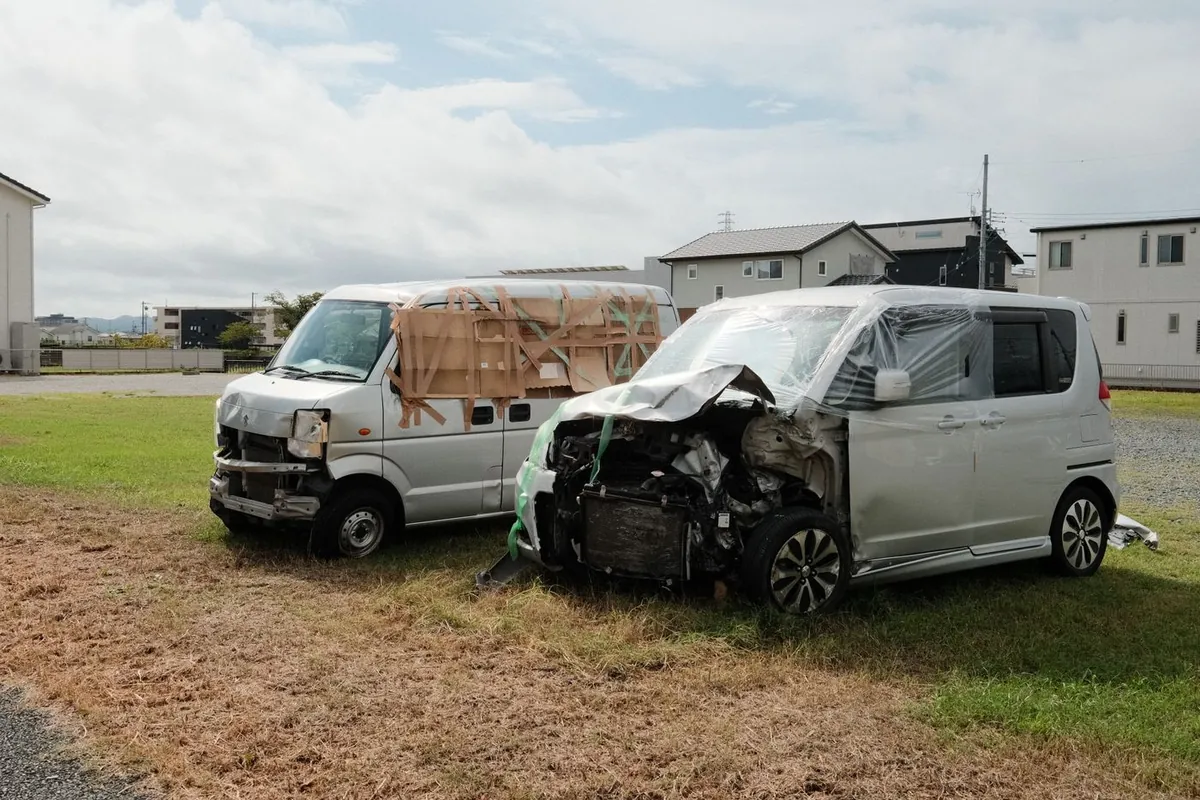
How do I keep a damaged work van safe to drive until it is repaired?
Start with an honest decision about whether it should be driven at all. If the airbags deployed, the van pulls or shakes, a door or the rear doors will not latch, lights or mirrors are broken, fluid is leaking, or a warning light for brakes or driver-assistance is on, park it and book the repair. If the damage is cosmetic and every safety item works, the van can usually keep working, with a short daily check and a repair date already on the calendar.
The worst outcome is a van that keeps running for weeks on "it seemed fine", while a cracked bumper bracket loosens, a sensor stays misaimed, or a tire rubs on bent sheet metal. Drivers adapt to a van that feels a little off. Your job as the person responsible for the vehicles is to decide on facts, not on how the van feels, and to shorten the wait.
When you are ready to book, our fleet and work truck repair page explains how we take vans in.
Is the damaged van safe to keep driving?
This table sorts common post-crash conditions on cargo and passenger vans by whether the van should stay in service.
| Condition | Keep driving? | Why |
|---|---|---|
| Dent or scrape on a panel, nothing loose, everything works | Usually yes, with daily checks | Cosmetic damage, but rust can start where paint is broken |
| Bumper cover cracked or hanging | Only if it is secured and cannot drag or fall | A loose cover can come off on the road; sensors behind it may be affected |
| Broken headlight, taillight or mirror | No, until replaced | DPS says these must work even without an annual inspection |
| Windshield cracked in the driver's view, or wipers damaged | No | Visibility and wipers are basic legal and safety items |
| Sliding or rear doors will not latch | No | Cargo or passengers are not secure |
| Van pulls, vibrates, or the steering wheel is off center | No | Possible suspension, steering or frame damage |
| Airbags deployed | No | The restraint system has to be restored to the maker's procedure |
| Brake, airbag or driver-assistance warning light on | No, have it checked promptly | A system the driver relies on may not work as designed |
| Fluid leaking, steam, or a burning smell | No | Cooling, fuel or electrical damage behind the front end |
Read it from the bottom up: if any of the lower rows fit, the van is parked no matter how small the outside damage looks. Only the top rows leave room for judgment, and that judgment should come with a repair date.
What do the rules say about running a damaged vehicle?
For any vehicle on Texas roads, the Department of Public Safety reminded drivers in January 2025 that headlights, taillights, horns, mirrors, windshield wipers and tires must still work, and that driving without them working is against the law even though annual safety inspections ended for non-commercial vehicles.
If the van is a commercial motor vehicle under federal rules, more applies. The federal definition in 49 CFR 390.5 covers vehicles of 10,001 pounds or more, and vehicles designed or used to carry more than 8 passengers including the driver for compensation, or more than 15 not for compensation, among others. Larger cargo vans and passenger vans can fall inside it. For those:
- 49 CFR 396.7 says a motor vehicle shall not be operated in a condition likely to cause an accident or a breakdown. A vehicle found unsafe on the road may continue only to the nearest place where repairs can safely be made, and only if that is less hazardous than leaving it there.
- 49 CFR 396.11 requires drivers to write a vehicle inspection report at the end of each day covering items including service brakes, steering, lighting devices and reflectors, tires, horn, wipers, rear vision mirrors, and wheels and rims. Before the vehicle runs again, the carrier must repair any listed defect likely to affect safe operation and certify that it was repaired or that repair is unnecessary. This does not apply to a carrier with only one commercial motor vehicle.
Even if your vans are below those lines, the same habits protect your drivers and your company.
What if the airbags deployed or seat belts were in use?
A van with deployed airbags should not go back to work until the restraint system has been restored. There is no single rule for every maker. The maker's procedure for that vehicle lists what must be replaced, and that list can go beyond the air bags themselves to sensors, seat belt parts and other components. Ask to see it.
Nissan's position, as summarized by I-CAR, is to inspect all seat belt assemblies after a collision, recommend replacing those in use unless the collision was minor and they show no damage and work properly, and replace pretensioners if the frontal airbags deployed even when the belts were not in use. Other makers have their own procedures; ask the shop which one it is following for your van.
Parts matter here too. In a 2012 warning, NHTSA cautioned about counterfeit air bags that looked nearly identical to original parts and malfunctioned in testing, and advised making sure original equipment parts are used when an air bag is replaced. Separately, if a recall is open on the van, federal law under 49 U.S.C. 30120 requires the maker to remedy it without charge in most cases; check at nhtsa.gov/recalls while it is in for repair.
What about warning lights and driver-assistance features?
Modern work vans often have cameras and radar for automatic braking, lane warnings and blind spot alerts, many of them in the bumpers, grille, mirrors and windshield, which are exactly the parts that get hit. AAA advises taking a vehicle to a repair facility promptly when a warning light, icon or message shows a failed driver-assistance component, and notes that these sensors sit at the front, side and back of the vehicle.
A sensor that was knocked out of position may not show a warning at all. If drivers report the van braking on its own, warning at nothing, or not warning when it used to, treat that as damage, not a quirk. Our guides on sensor recalibration after body repair and bumper cover repair and the sensors behind it explain what is involved.
Which temporary fixes are reasonable, and which are not?
- Reasonable: securing a loose bumper cover or trim piece so it cannot drag or fly off; covering a broken side window opening from rain until the glass is replaced, if the van is parked; taping over a scraped area to keep water out of bare metal.
- Not reasonable: driving with a broken mirror or light; tying shut a door that will not latch; driving with a cracked windshield in the driver's line of sight; pulling bent sheet metal off a tire and calling it fixed; clearing a warning light without finding the cause.
If you are not sure which side a fix falls on, send photos to the shop and ask. A temporary fix should make the van safer for a short period, not make the damage easier to ignore. For glass, see who replaces windshield and door glass after a wreck.
What should drivers check every day until the repair?
- Walk around the van and compare the damage with the photo from the day of the crash. Has anything loosened or spread?
- Check under the damaged area for drips, and look at the tire nearest to it for rubbing marks.
- Test every light, the horn, the wipers and both mirrors.
- Open and close every door, including the sliding and rear doors, and confirm each latches.
- Start the van and watch the dash for new warning lights.
- Drive a short loop in the lot: does it pull, shake or make a new noise?
- Report changes before the end of the shift, on the daily inspection report if you keep one.
How do you shorten the wait for the repair?
The longer a damaged van keeps working, the more likely a small problem grows. Get the estimate early, even before the claim is settled, so parts can be identified. Send photos with the request. Name the person who approves additions. Ask whether parts can be ordered before the van comes in, so it is out of service for as short a stretch as possible. Our model-specific guides for the Ford Transit, Ram ProMaster and Mercedes Sprinter cover what is particular to each, and getting a wrecked work vehicle back fast covers scheduling.
How ACE Body & Frame helps
ACE Body & Frame has been on S. Peachtree Road in Balch Springs since 1987, serving Balch Springs, Mesquite and the surrounding area. We do collision repair, auto body and paint, suspension and frame repair, foreign and domestic diagnostics, glass replacement and fleet and work van repair with fleet discounts. Towing and rental car service are available if the van should not be driven.
Send us photos and we will tell you plainly whether we think the van should stay parked until we see it. Estimates are free and computerized, we accept all insurance claims, and repairs are satisfaction guaranteed. More answers are under fleet and work trucks, and directions are on our contact page.
Call 972-286-0935 Monday to Friday, or request a free estimate with photos of the damage and the dashboard. For several vans, send us your fleet details.
Questions people ask next
Can a work van with a cracked bumper cover keep running?
Only if the cover is secured so it cannot drag or fall off, and only for a short time. Sensors for parking aids, radar or blind spot alerts often sit behind the bumper, so a hit there can affect them even without a warning light. Book the repair and ask the shop to check the sensors.
Is a van with deployed airbags safe to drive to the shop?
We advise against putting it back to work. The restraint system has to be restored according to the maker's procedure, which lists the parts to replace. If it cannot be driven safely, use towing. Ask the shop which maker procedure it will follow and which parts it lists for your van.
What if the van brakes on its own after a minor crash?
Treat it as damage. Cameras and radar for automatic braking sit in bumpers, grilles, mirrors and windshields, and a sensor knocked out of position may not show a warning. AAA advises taking a vehicle to a repair facility promptly when a driver-assistance warning appears. Park it and have it checked.
Do federal rules apply to our cargo vans?
They can. The federal definition of a commercial motor vehicle in 49 CFR 390.5 includes vehicles of 10,001 pounds or more and vans designed or used to carry more than 8 or 15 passengers, depending on compensation, among other tests. Ask your compliance contact which of your vans are covered.
Should drivers record damage on their daily vehicle inspection report?
Yes, if you keep those reports. Under 49 CFR 396.11, covered carriers must have drivers report defects in items such as lights, mirrors, tires and steering, and must repair any defect likely to affect safe operation before the vehicle runs again. Writing down changes in the damage also helps the shop.
Ready to get your vehicle back to work?
ACE Body & Frame, 2922 S. Peachtree Road, Balch Springs. Free computerized estimates, all insurance claims accepted.
Sources
- 49 CFR 396.7
- 49 CFR 396.11
- 49 CFR 390.5
- Texas DPS news release HQ 2025-001, "Vehicle Safety Inspection Program Changes Now in Effect" (January 3, 2025)
- I-CAR RTS, "Nissan Position Statement: Seat Belt Replacement Considerations"
- U.S. Immigration and Customs Enforcement news release, "NHTSA, ICE alert consumers to dangers of counterfeit air bags"
- AAA Newsroom, "Fixing Advanced Vehicle Systems Makes Up Over One-Third of Repair Costs Following a Crash" (Dec. 14, 2023)
- 49 U.S.C. 30120
Read next
 Fleet and work trucks
Who fixes Ram ProMaster body damage in the Mesquite, TX area?
Stellantis calls for wiTECH scans, measured structural repair and a recalibrated camera after glass work. What it means for your ProMaster and what to ask.
 Fleet and work trucks
Who repairs fleet vehicles after an accident near Mesquite and Balch Springs, TX?
Fleet vehicles need a shop that fits big units, fixes frames and keeps the paperwork straight. What to do first, what to send, how to get the crash report.
 Fleet and work trucks
What should a fleet manager ask a body shop before sending work trucks in the Dallas area?
What to ask a Dallas area body shop before sending vans, box trucks or utility beds: capacity, in-house work, approvals, billing and crash records.
More: all fleet and work trucks guides, fleet & work trucks, repair by make, reviews and directions to the shop.