
In short
Shuttle and small transit buses are best repaired by a shop with room for a bus and the trades it needs: fiberglass and metal panels, bonded glass, passenger doors, seats and paint. Buses carrying more than 8 or 15 passengers can fall under federal and Texas carrier rules, so markings, records and inspection proof matter after the repair.
- A bus has a chassis from one maker and a body from another; parts come from both.
- Bus glass is a safety part covered by FMVSS 205; ask for the adhesive's drive-away time.
- Under 49 CFR 390.5, passenger capacity alone can make a bus a commercial motor vehicle.
- TxDMV requires a TxDMV Number for vehicles designed to carry more than 15 passengers.
- Check doors, seats, lift, lights, cured glass and inspection proof before passengers ride.
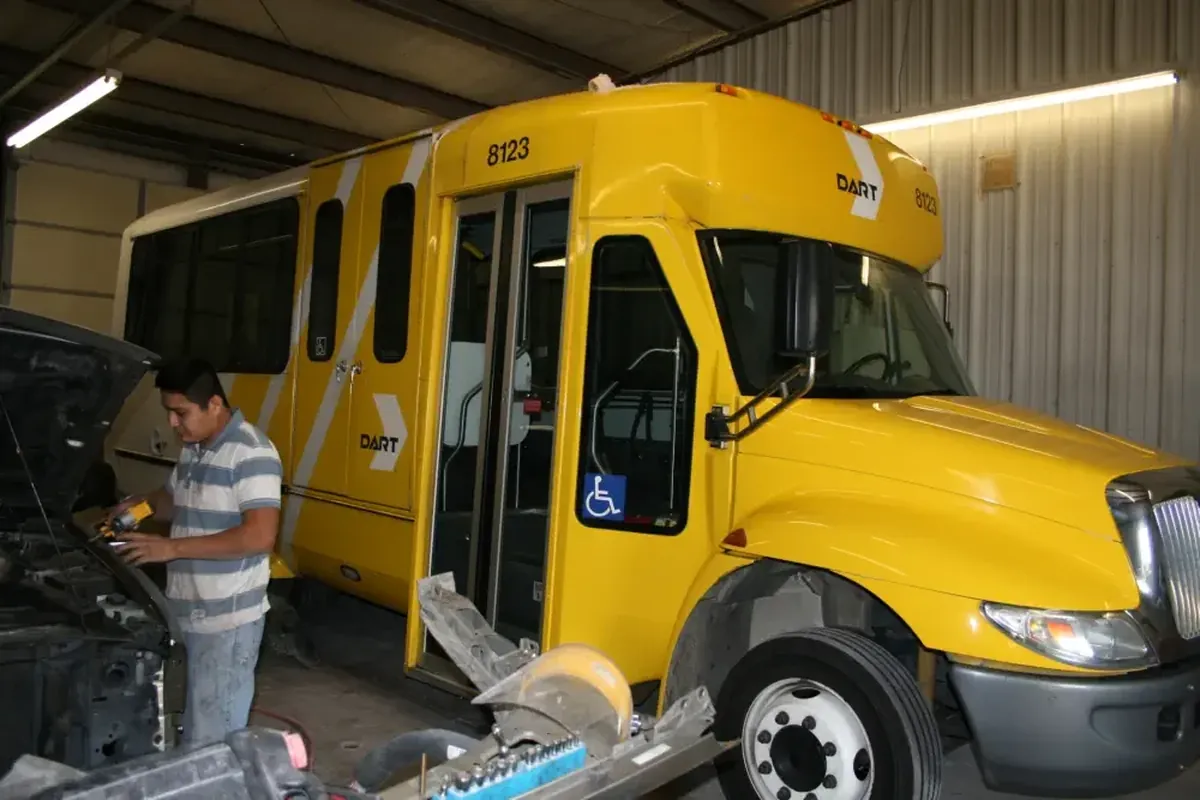
Who repairs shuttle buses and small transit buses in the Dallas area?
A body shop with the space, the trades and the experience to work on a vehicle that carries the public. Most car body shops cannot fit a bus through the door, and many truck shops do not work with fiberglass, bonded glass, passenger doors and seating. A bus repair needs all of those, plus attention to the rules that come with carrying passengers.
ACE Body & Frame has repaired transit buses, and we keep letters of recommendation on file. We are on S. Peachtree Road in Balch Springs, southeast of downtown Dallas, and bus work is part of our fleet and work vehicle repair. Our services cover body and paint, frame and suspension, welding, fabrication, fiberglass repair, glass replacement and upholstery.
This guide is for the transportation manager, the church or school administrator, or the owner of a shuttle company. It covers the damage buses usually get, how glass is handled, which rules may apply, and what must be checked before passengers ride again.
Two points come before the repair. First, passengers come first at the scene: under Texas Transportation Code 550.026, the driver must notify police right away when a collision causes an injury or leaves a vehicle unable to be driven normally and safely. Give your drivers our driver checklist for a company vehicle crash. Second, the bus's owner chooses the repair shop. The Texas Department of Insurance (TDI) says an insurer may offer a list of shops, but you can use any shop you choose. Read your commercial policy for its own terms.
Why is a bus repair different from a truck repair?
A shuttle or small transit bus is usually built in two stages. A vehicle maker supplies the chassis and cab. A bus builder adds the passenger body, which may use fiberglass, aluminum or steel panels over a frame of its own. That has several consequences for the repair.
- Two sets of parts. Cab and chassis parts come through the chassis maker. Body panels, windows, doors and seats often come through the bus builder.
- Mixed materials. Fiberglass caps and panels are repaired differently from metal, and some panels are bonded rather than bolted.
- Large glass. Side windows and windshields are big, specific to the body and sometimes slow to source.
- Passenger equipment. Entry doors, handrails, seats, seat anchors and wheelchair lifts all sit near the panels that get hit.
- Size. The bus must fit the building, the lift and the paint booth.
Before any work starts, a good shop identifies both the chassis and the body builder from the vehicle's labels and paperwork, so parts are ordered from the right source the first time.
Which damage do buses usually get, and what does each repair involve?
Buses mostly get hit at low speed in tight places: curbs, poles, parking structures and other vehicles at stops. The table below matches common damage to the repair it usually needs.
| Damage | What the repair usually involves | Ask the shop |
|---|---|---|
| Rear cap or corner cracked | Fiberglass repair or cap replacement, sealing, paint | Repair the cap or replace it, and why? |
| Side panels scraped along a pole | Panel repair or replacement, rub rail, paint over a long surface | How will color and lettering be matched? |
| Entry door hit or misaligned | Door panel, glass, hinges or actuator, adjustment and seal | Will the door open and close fully under its own control? |
| Side window or windshield broken | Glass replacement with the right adhesive or gasket, cure time before driving | Which glass and adhesive, and what is the drive-away time? |
| Front cab damage | Bumper, lamps, hood, cooling parts, possible scan of chassis systems | Does the chassis maker call for a scan or calibration? |
| Wheelchair lift area hit | Panel repair and lift inspection, often by the lift's own service provider | Who inspects the lift before it is used again? |
| Seats or interior panels damaged | Upholstery repair or replacement, seat frame and anchor check | Are the seat anchors and floor checked, not just the cover? |
Read the right column as a checklist. A shop that has worked on buses will answer each one, and will tell you plainly which items, like a lift, belong to a specialist.
What does replacing glass on a bus involve?
Glass on a bus is a safety part, not trim. Federal Motor Vehicle Safety Standard 205 sets requirements for glazing materials in motor vehicles, including buses, to reduce injuries from impact with glass, keep the driver's view clear, and reduce the chance of occupants being thrown out through windows in a crash.
The windshield has a second job. Standard 212 sets windshield retention requirements in crashes, for buses among other vehicles with a weight rating of 4,536 kg or less. That is a test for vehicle makers, but it shows why the bond between glass and body matters.
- Installation standard. The Auto Glass Safety Council, an ANSI-accredited standards developer, publishes the Auto Glass Replacement Safety Standard (ANSI/AGSC/AGRSS 005-2022), which covers replacement procedures. It is an industry standard, not a law.
- Drive-away time. AGSC defines minimum drive-away time as how long a vehicle should stay parked after glass installation so the adhesive can bond. It depends on the adhesive and the weather, so ask the installer for the time on your bus before scheduling it back into service.
- Restraint system. AGSC says the windshield and side glass are part of the passenger restraint system and must be installed properly for air bags to work safely.
- Cameras. If the chassis has a camera behind the windshield, the chassis maker's procedures may require calibration after replacement.
Our guide to replacing glass after a wreck explains more.
Which rules apply to a shuttle or small bus?
Passenger vehicles reach the federal and Texas carrier rules at lower sizes than trucks do.
- Federal definition. For vehicles in interstate commerce, 49 CFR 390.5 sets the passenger line by whether riders pay. A bus designed or used to carry more than 8 people for compensation counts as a commercial motor vehicle, and so does one carrying more than 15 without compensation, in both cases counting the driver.
- Texas registration. TxDMV says a motor carrier must get a TxDMV Number if it operates a vehicle designed to carry more than 15 passengers including the driver, or a commercial school bus, among other cases. TxDMV notes that separate insurance minimums apply to buses.
- Markings. If a panel that carried the carrier's name or USDOT number is replaced or repainted, plan for the lettering to go back on before the bus returns to service. Our guide to USDOT markings after body repair explains what to check.
- Crash records. 49 CFR 390.15 requires motor carriers to keep an accident register for 3 years after each accident that meets the federal definition. Our guide to crash records a fleet must keep explains it.
Churches, schools and nonprofits may operate under different rules than a for-hire shuttle, so confirm with your compliance contact or TxDMV. Our guide for church and school bus and van repair covers those owners.
What must be checked before passengers ride again?
A bus that looks finished may still not be ready. Before it carries anyone, confirm each of these.
- Defects closed out. Under 49 CFR 396.11, a defect on a driver's inspection report that is likely to affect safe operation must be repaired, and the repair signed off by the carrier, before the bus runs.
- Doors. Entry and emergency doors open, close and latch correctly.
- Glass cured. The drive-away time for any new glass has passed.
- Seats and handrails. Anchors are tight and nothing was left loose after interior work.
- Lift. A wheelchair lift near the damage has been inspected by a qualified provider.
- Lights and mirrors. Every lamp works and every mirror is adjusted.
- Inspection proof. Commercial vehicles have their own inspection rules, so confirm the bus's inspection is current and its paperwork is in order. See Texas inspections for commercial vehicles.
Our back-in-service checklist puts these on one page.
What should a transportation manager send for an estimate?
Send the chassis VIN, the bus builder and model from the body label, the seating capacity, and photos of the damage, both sides and the interior if it was affected. Note whether there is a lift, whether the bus can be driven, where it is now, and the claim number and adjuster contact if a claim is open. If the damage is mainly fiberglass, our guide to fiberglass repair explains the choices. Then request a free estimate with what you have.
How ACE Body & Frame helps
ACE Body & Frame has been on S. Peachtree Road in Balch Springs since 1987, serving Balch Springs, Mesquite and the surrounding area. We have repaired transit buses, utility-bed trucks and large fleets, with letters of recommendation on file, and we offer fleet discounts. Our services include collision repair, body and paint, suspension and frame repair, welding, fabrication, glass replacement, fiberglass repair, upholstery, and foreign and domestic service and diagnostics. If a bus cannot be driven, towing is available, and so is rental car service.
Estimates are free and computerized, and we accept all insurance claims. You have the right to choose where your vehicle is repaired, and our repairs are satisfaction guaranteed. See our work, read the Sprinter van guide for passenger vans, or browse the fleet and work trucks guides. For bus and fleet repair, call 972-286-0935, Monday to Friday, or tell us about your bus.
Questions people ask next
Can a cracked fiberglass cap on a shuttle bus be repaired?
Often it can. Fiberglass can be ground back, rebuilt with new layers, sealed and painted. Larger damage, or damage to the mounting points, may mean a new cap from the bus builder. Ask the shop which it recommends for your bus and why, and how the repaired area will be sealed against water.
How long after a windshield replacement can a bus carry passengers?
There is no single answer. The Auto Glass Safety Council says the minimum drive-away time depends on the type and brand of adhesive and the weather when the glass was installed. The installer should tell you the time for your bus. Do not put it back in service before that time has passed.
Is my church or school bus a commercial motor vehicle?
It may be. Under 49 CFR 390.5, a vehicle in interstate commerce designed or used to carry more than 15 passengers including the driver, when not for pay, is a commercial motor vehicle; for pay, the line is more than 8. TxDMV also has its own registration rules. Confirm with your compliance contact or TxDMV.
Who inspects a wheelchair lift after a bus is hit near it?
Lifts are specialized equipment, and many owners have them inspected by the lift's own service provider after nearby damage. The body shop repairs the panels and mounting area; ask who will test the lift and sign off that it works before the bus carries a rider who needs it.
What records should we keep after a bus is repaired?
Keep the final invoice with the VIN and unit number, photos, and any glass or calibration paperwork in the bus's maintenance file. For motor carriers, 49 CFR 390.15 also requires an accident register for 3 years after each qualifying accident, with copies of required reports.
Ready to get your vehicle back to work?
ACE Body & Frame, 2922 S. Peachtree Road, Balch Springs. Free computerized estimates, all insurance claims accepted.
Sources
- 49 CFR 571.205
- 49 CFR 571.212
- Auto Glass Safety Council, "Minimum Drive-Away Times"
- Auto Glass Safety Council, SafeWindshields consumer site
- 49 CFR 390.5
- TxDMV, "TxDMV Number"
- 49 CFR 390.15
- Tex. Transp. Code 550.026
- TDI, "Were you in a wreck? Tips for auto insurance claims"
- 49 CFR 396.11
Read next
 Fleet and work trucks
How do I keep a damaged work van safe to drive until it is repaired?
When a damaged work van should be parked, which temporary fixes are fine, and the daily check drivers should run until the repair, under Texas rules.
 Fleet and work trucks
What should my drivers do at the scene of an accident in a company vehicle in Texas?
A scene checklist for drivers of company vehicles in Texas: legal duties, when to call police, what to photograph, safe towing and CDL testing timing.
 Fleet and work trucks
Is it better to repair or replace a damaged fleet vehicle?
Repair or replace a wrecked fleet vehicle? How Texas insurers decide a total loss, what frame damage changes, and the numbers to gather before you choose.
More: all fleet and work trucks guides, fleet & work trucks, repair by make, reviews and directions to the shop.