
In short
Ask whether the shop can physically handle your vehicles, how much of the repair it does in house, and how estimates, approvals and billing work. Downtime usually costs a fleet more than the invoice, so the best shop is the one that returns a correctly repaired truck with the fewest handoffs and surprises. Test the answers with one trial job before you send the rest of the fleet.
- Compare shops on days out of service, not only on the estimate total.
- Confirm the shop can fit, lift and paint vans, box trucks, buses and utility beds.
- Ask what is done in house: frame, welding, fabrication, mechanical and glass.
- Set written rules for approvals, hidden damage, invoices and fleet pricing.
- Keep the crash report, estimates, invoices and inspection records in one folder per unit.
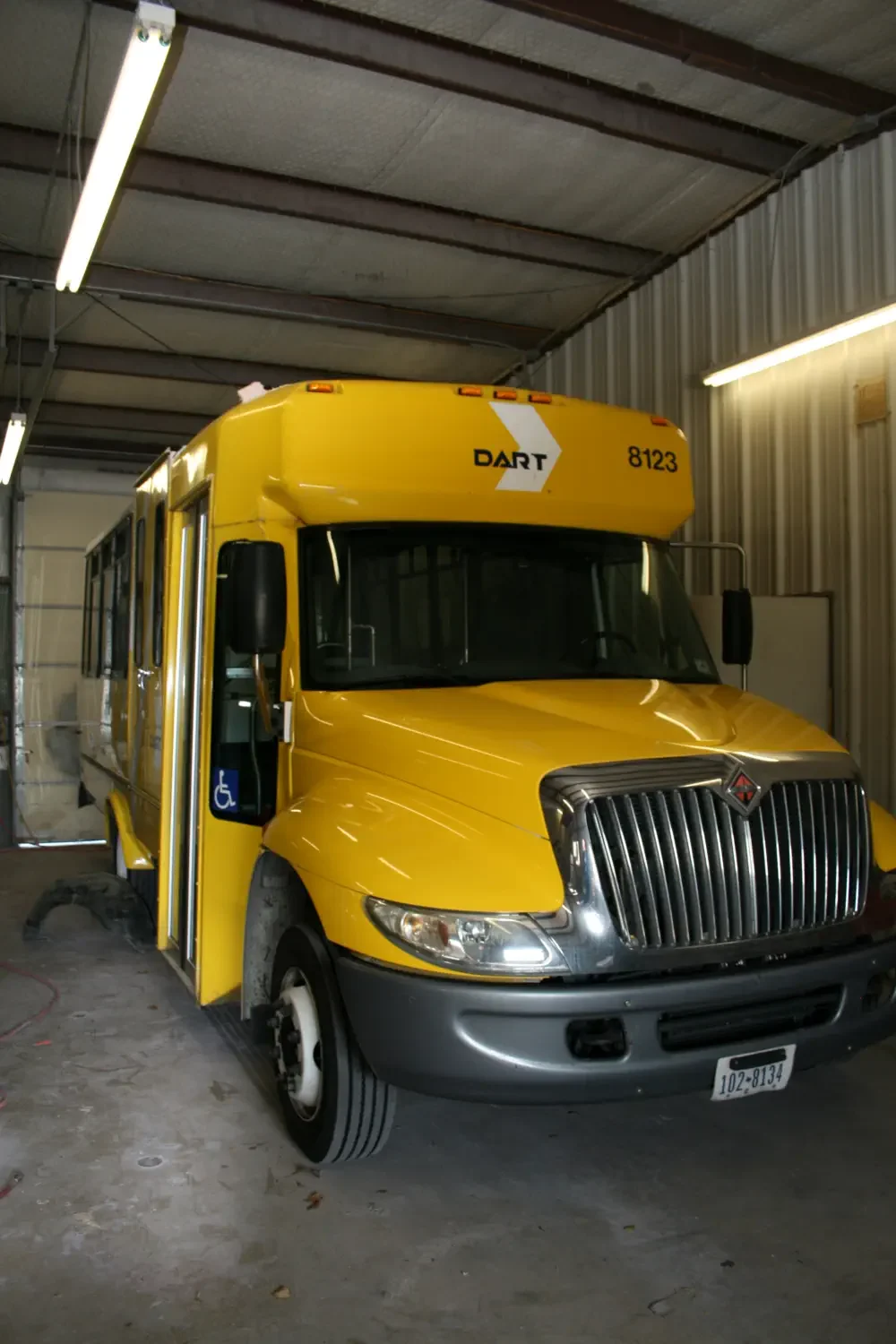
Why does downtime matter more than the repair bill?
A damaged work truck costs you twice. There is the repair invoice, and there is every day the truck sits.
While a unit is down, the work does not go away. A route gets doubled up, a crew waits, a rental gets added, or a job gets pushed. We will not put a dollar figure on that. Use your own daily number when you compare shops.
That is why the lowest estimate is not always the cheapest repair. A shop that starts sooner, does more of the job itself and tells you the truth about parts delays can cost you less overall. The questions below work for any fleet and work vehicle repair shop in the Dallas area, including ours.
Can the shop physically handle your vehicles?
Start with size. Many body shops are set up for cars and pickups. A high-roof van, a box truck, a bus or a utility-bed truck needs more door height, more floor space and equipment rated for the weight.
- What is the largest vehicle you have repaired here? Ask about vans, box trucks, buses and utility beds by name.
- Can you paint it here? If a tall or long body does not fit, ask where it goes and who is responsible for it there.
- How many of my units can you work on at once?
- Can I see fleet jobs you have finished? Photos of real jobs tell you more than a brochure. Look through our work to see the kind of proof to ask for.
Is frame, welding, mechanical and glass work done in house?
Every time a truck leaves one building for another, you lose time. Each handoff is also a place where blame gets passed around if something is wrong later. Ask which of these the shop does itself:
- Frame and suspension. Ask how the shop measures a frame before and after, and whether you get the measurements. Our guide on whether a bent truck frame can be repaired explains what to expect, and our frame and suspension repair page shows how we handle it.
- Welding and fabrication. Utility beds, racks, bumpers, steps and brackets are often not on a parts shelf. A shop that fabricates can rebuild them instead of waiting on a special order.
- Mechanical and diagnostics. A collision can damage cooling, steering, suspension and wiring. If the body shop can fix those too, the truck does not need a second stop.
- Glass. Ask if windshields and door glass are replaced on site.
Sending some work out is normal. What matters is that the shop tells you up front what goes out, to whom, and how long that usually adds.
How should estimates, approvals and billing work?
Most fleet repair disputes are about a surprise, not the quality of the work. Settle the rules before the first truck goes in.
- Estimates. Ask for a written, line-by-line estimate with parts, labor and paint listed separately.
- Hidden damage. Once panels come off, shops often find more. Ask whether work stops until you see photos and approve the added cost.
- Who can approve. Give the shop one or two names and an approval limit.
- Parts. Ask what kind of parts the estimate is based on and what happens if one is backordered.
- Billing and fleet pricing. Ask whether each invoice shows your unit number and VIN, what the payment terms are, and what any fleet discount applies to. Get it in writing.
To see how a shop writes an estimate before you commit, request a free estimate on one unit and read it closely.
What about pickup, towing, rentals and insurance paperwork?
- Towing and pickup. If a truck cannot be driven, can the shop arrange a tow for a vehicle of that size?
- Rental or replacement. Ask if the shop can help set up a rental while the unit is down.
- Insurance claims. The claim belongs to the vehicle owner. A good shop documents the damage, writes the estimate and works with the adjuster so the paperwork matches the truck. Our guide on choosing your own body shop on a Texas insurance claim covers how shop choice works.
- Decals and upfits. Lettering, unit numbers, reflective striping, ladder racks, toolboxes and lift gates have to come off and go back on. Ask who does that, who replaces damaged graphics, and whether it is in the estimate.
What does a good answer sound like, and what is a red flag?
The table below lists the main questions, what a solid answer usually sounds like, and the answers that should make you slow down.
| Question to ask | A good answer sounds like | Red flag |
|---|---|---|
| What is the largest vehicle you have repaired here? | Names specific vehicle types and offers to show the bays and past jobs. | "We can probably make it work." |
| Which work do you send out? | A clear list of what is in house and what is not, with the usual added time. | "We handle everything," with no detail. |
| How do you check a frame? | Measures before and after and gives you the results. | "We can tell by looking." |
| What happens when you find hidden damage? | Work pauses, you get photos and a revised estimate, and your approver signs off. | "We just fix it and add it to the bill." |
| When will the truck be ready? | A date range tied to parts arrival, with updates if it changes. | A firm promise before teardown. |
| How do you bill fleets? | Invoices by unit number and VIN, with terms and fleet pricing in writing. | Verbal pricing only. |
| How do you handle insurance claims? | Documents the damage and works with the adjuster. You stay in charge of the claim. | Promises a payout. |
| Who handles decals and upfits? | They are on the estimate, with who does the work. | "That is up to you after pickup." |
Read across each row. One vague answer is worth a follow-up question. Several red flags in one call usually mean the shop is not set up for fleet work, even if its car repairs are fine.
What records should you keep after a commercial vehicle crash?
Good records protect you with insurers, auditors and your own management. Some are also required for regulated motor carriers. Whether the federal rules below apply to your fleet depends on your vehicles and operation, so confirm that with your safety or compliance contact. This is general information, not legal advice.
The police crash report
Under Texas Transportation Code Section 550.062, an officer who investigates a collision must make a written report if it caused injury, death, or damage to any one person's property to the apparent extent of 1,000 dollars or more. The officer must file it not later than the 10th day after the collision. TxDOT sells copies of that report (Form CR-3) online: 6 dollars for a regular copy and 8 dollars for the official copy used for legal proceedings. TxDOT also says it no longer keeps the Driver's Crash Report (Form CR-2), so if police did not investigate, keep your own copy of anything your driver filled out.
The federal accident register
Under 49 CFR 390.15(b), motor carriers must keep an accident register for 3 years after the date of each accident. It lists the date, the city or town and state, the driver's name, the number of injuries and fatalities, and whether hazardous materials other than fuel from the vehicle's tanks were released. Carriers must also keep copies of accident reports required by state or other government entities or insurers. In 49 CFR 390.5, "accident" means a commercial motor vehicle crash that results in a fatality, an injury treated immediately away from the scene, or disabling damage that requires a vehicle to be towed or carried away.
Repair, inspection and testing records
- Repair records. 49 CFR 396.3 requires carriers to keep, for each vehicle they control for 30 consecutive days, a record of inspection, repairs and maintenance showing date and nature. These are kept for 1 year where the vehicle is housed or maintained, and for 6 months after it leaves the carrier's control. Your body shop invoice belongs in that file.
- Driver inspection reports. Under 49 CFR 396.11, a listed defect likely to affect safe operation must be repaired before the vehicle is operated again, and the carrier certifies on the report that the defect was repaired or that repair is unnecessary. Those reports are kept for three months.
- Post-accident testing. 49 CFR 382.303 sets out when an employer must test a surviving driver for alcohol and controlled substances after certain crashes, and requires a record of the reason if a required test is not done in time.
Texas DPS says all commercial vehicles in all counties still need a passing vehicle safety inspection, so keep that record current too. Also keep scene photos, the tow receipt, every estimate, the final invoice, frame measurements and the insurer's letters in one folder per unit.
Is one shop better than several vendors, and how do you run a trial job?
Several vendors can work. The cost is coordination. You schedule each move, chase each update and sort out who is responsible when a repaired truck comes back with a warning light on.
One shop that covers collision repair, frame, mechanical, glass and paint gives you one estimate, one contact, one invoice and one party who answers for the whole job. The trade-off is that you depend on that shop's schedule.
Before you decide, run a trial:
- Pick one real, medium-size job, such as a dented van door or a damaged bed corner.
- Give the shop your approval rules and contact names in writing.
- Note the drop-off date, the date work started, each update and the date it was ready.
- Compare the final invoice to the estimate line by line. Check that every change was approved.
- Inspect the truck in daylight: paint match, panel gaps, decals and upfits. Ask the driver how it drives.
- File the paperwork. If it fits your unit folder without extra calls, the shop understands fleets.
Any shop you consider should also be willing to point you to its reviews.
How ACE Body & Frame helps
ACE Body & Frame has been on S. Peachtree Road in Balch Springs since 1987, serving Balch Springs, Mesquite and the surrounding area. We repair fleet and work vehicles and offer fleet discounts. We have repaired transit buses, utility-bed trucks and large fleets, and we keep letters of recommendation from fleet customers on file.
Our services include collision repair, auto body and paint, suspension and frame repair, foreign and domestic mechanical service and diagnostics, welding, fabrication, glass replacement, fiberglass repair, upholstery and state inspections. Towing and rental car service are available. We also handle RV and motor home repair.
We accept all insurance claims and write free computerized estimates. You have the right to choose where your vehicle is repaired. Our repairs are satisfaction guaranteed. Read more about our shop.
To start with a trial job, request a free fleet estimate, call 972-286-0935 Monday through Friday, or contact us to walk the shop at 2922 S. Peachtree Road, Balch Springs, Texas 75180. See more guides.
Questions people ask next
Can I choose the body shop when a fleet truck is on an insurance claim?
You have the right to choose where your vehicle is repaired. The claim belongs to the vehicle owner. The shop documents the damage, writes the estimate and works with the adjuster. Check your commercial policy for its own terms, and see our guide on choosing your own body shop on a Texas insurance claim.
How long do I have to keep records after a commercial vehicle crash?
For motor carriers covered by the federal rules, 49 CFR 390.15(b) requires an accident register kept for 3 years after the date of each accident. 49 CFR 396.3 requires repair and maintenance records to be kept for 1 year where the vehicle is housed or maintained and for 6 months after the vehicle leaves the carrier's control. Confirm with your compliance contact whether these rules apply to your fleet.
How do I get the police crash report for a fleet vehicle in Texas?
TxDOT sells the Texas Peace Officer's Crash Report (CR-3) through its online purchase system. TxDOT lists the price as 6 dollars for a regular copy and 8 dollars for the official copy used for legal proceedings. Under Texas Transportation Code Section 550.062, the investigating officer must file the report not later than the 10th day after the collision.
Should I get more than one estimate for a damaged work truck?
It can help, as long as you compare the same things. Look at what each estimate includes, what work is sent out, how hidden damage is handled and when the shop can start. A lower total with a later start or more outside vendors may cost more once you count the days the truck is down.
Does ACE Body & Frame work on buses and utility-bed trucks?
Yes. We have repaired transit buses, utility-bed trucks and large fleets, and we offer fleet discounts. Call 972-286-0935 Monday through Friday to talk about your vehicles, or request a free computerized estimate.
Ready to get your vehicle back to work?
ACE Body & Frame, 2922 S. Peachtree Road, Balch Springs. Free computerized estimates, all insurance claims accepted.
Sources
- 49 CFR 390.15
- 49 CFR 390.5
- 49 CFR 396.3
- 49 CFR 396.11
- 49 CFR 382.303
- Tex. Transp. Code 550.062
- TxDOT, "Crash reports and records"
- Texas DPS news release HQ 2025-001 (January 3, 2025)
Read next
 Fleet and work trucks
What crash records does a Texas fleet have to keep, and for how long?
Accident register for 3 years, repair records for 1 year, driver reports for three months, inspection reports for 14 months. Each crash record and its rule.
 Fleet and work trucks
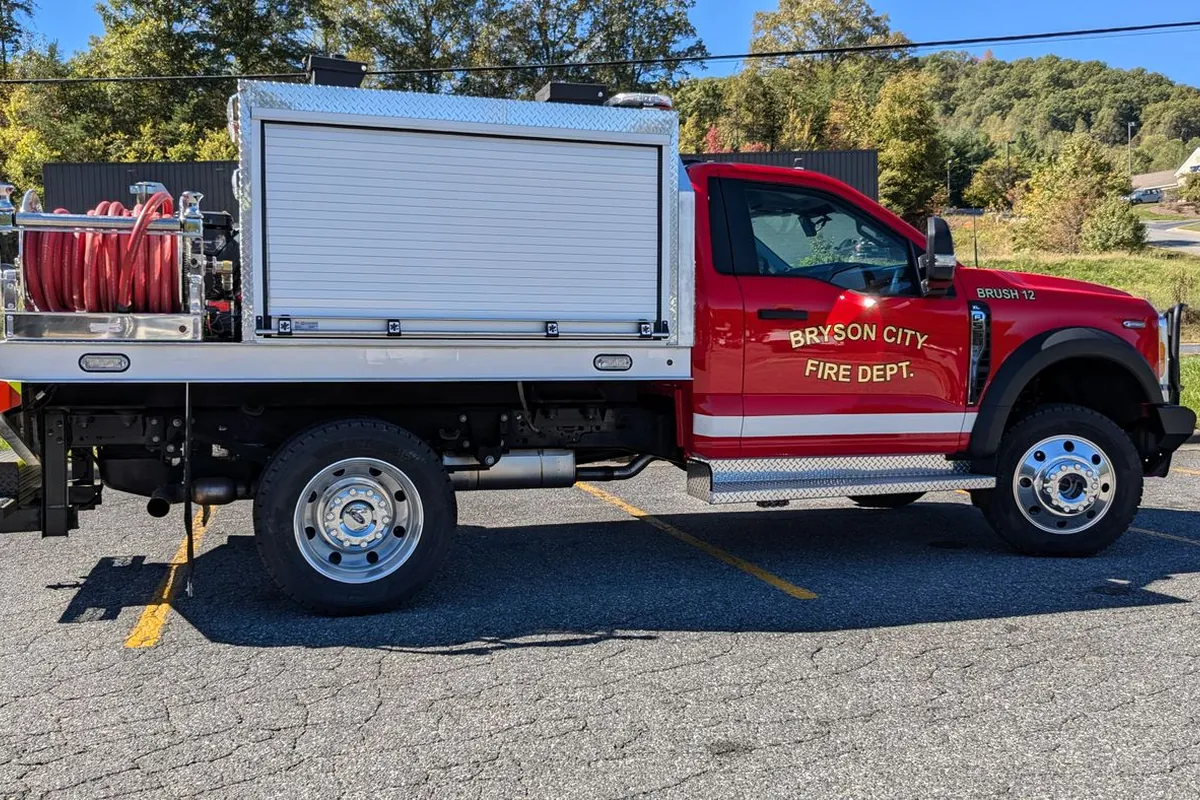
Can a body shop repair a utility bed or service body truck near Balch Springs?
Yes, if the shop handles the chassis, the frame and the service body. What gets damaged, when to repair or replace, and what to check under the body first.
 Fleet and work trucks
Who fixes Ram ProMaster body damage in the Mesquite, TX area?
Stellantis calls for wiTECH scans, measured structural repair and a recalibrated camera after glass work. What it means for your ProMaster and what to ask.
More: all fleet and work trucks guides, fleet & work trucks, repair by make, reviews and directions to the shop.