
In short
A pothole or curb hit damages parts in order from the outside in: the tire, the wheel, then the steering and suspension links, and on a hard hit the mounts they bolt to. Damage is often invisible, so an inspection that starts at the tire and ends with an alignment check is the safe next step after a hard hit.
- A sidewall bulge means the tire can fail; do not drive on it at speed.
- Several makers do not approve straightening a structurally bent wheel.
- A sideways curb hit tends to bend tie rods and control arms.
- Many makers require sensor calibration after a wheel alignment.
- Ask your insurer how a single-vehicle hit is handled before filing.
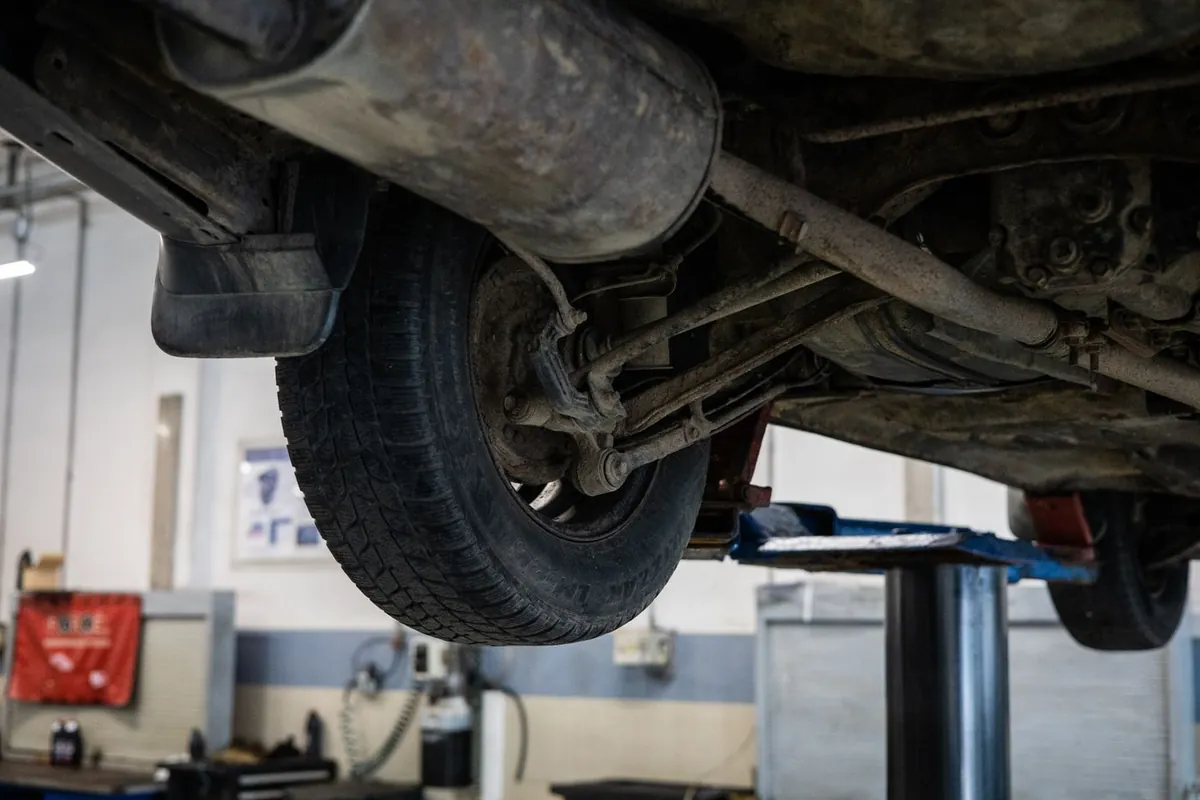
What usually breaks when you hit a pothole or a curb?
The parts closest to the impact take it first, in a fairly predictable order: the tire, then the wheel, then the steering and suspension links that hold that wheel, and only on a hard hit the structure those links bolt to. A sharp pothole edge tends to hurt tires and wheels. A curb strike, especially sideways while turning or sliding, tends to push the whole wheel back or inward and bend the links behind it.
The trouble is that a hit can damage something without any visible mark. A wheel can look fine and still be bent on the inside lip. A control arm can be bent a little and still feel normal at low speed. That is why a hard hit deserves an inspection even when the car seems to drive fine, and why the inspection should start at the tire and work inward.
How hard was the hit, and what does that usually mean?
The table matches the kind of hit drivers describe with the parts most likely to be damaged and what to check first. It is a starting point, not a diagnosis.
| What happened | Parts most at risk | What to check first |
|---|---|---|
| Dropped into a pothole at low speed, loud bang, nothing changed after | Tire sidewall, wheel lip | Look for a bulge or cut on the tire and a flat spot on the wheel edge |
| Hit a deep pothole at road speed | Tire, wheel, strut or shock, tie rod | Tire and wheel, then an alignment check and a look at the strut and steering links |
| Rubbed or bumped a curb while parking | Wheel finish, tire sidewall, sometimes alignment | Sidewall damage and whether the steering wheel is still centered |
| Slid sideways into a curb, or hit it while turning | Wheel, tie rod, control arm, knuckle, steering gear | Full suspension inspection and alignment readings before any adjustment |
| Hard curb strike that pushed the wheel back in its opening | Control arm, subframe or frame mounts, possibly structure | Measure the suspension mounting points, not just the wheel angles |
Read down the rows: the further down your hit sits, the more likely the damage reaches beyond what an alignment can adjust, and the more important a measured inspection becomes.
Why does the tire and wheel matter more than people think?
A tire with a bulge in the sidewall has broken cords inside and can fail without warning. Do not drive on it at highway speed. A bent wheel may not hold air, can cause a vibration, and can hide a slow leak that shows up days later.
Several vehicle makers are firm that a structurally damaged wheel should be replaced, not straightened. American Honda says it does not approve any wheel repair that involves welding, bending, hammering, straightening or re-machining, and limits repair to minor cosmetic sanding or polishing. Nissan says the same and adds that after a collision all four wheels should be thoroughly inspected. Ford recommends replacing any wheel whose structure has been altered with a new original wheel. FCA does not recommend reconditioned wheels because they can result in sudden catastrophic wheel failure. Volvo says any wheel close to an impact should be carefully examined.
So if a shop or tire store offers to straighten a bent wheel, ask what your vehicle's maker says about it first. Cosmetic curb rash on the face of a wheel is a different matter; that is a finish repair.
Which steering and suspension parts bend after the wheel?
Behind the wheel, the hit travels into the parts that locate it. Our guide on why a car pulls after a wreck or curb hit describes each part in detail. In short:
- Steering links, such as tie rods, bend easily on a sideways hit and change where the wheel points.
- Control arms locate the wheel and can bend or crack at their bushings.
- Struts, shocks and knuckles carry the hub. A bend changes the tire's lean and wears one edge.
- Wheel bearings can be damaged by a sharp jolt and start to hum or grind later.
- Mounting points on the subframe, cradle or frame are the last line. If they moved, new parts will not bring the angles back.
I-CAR notes that a great majority of collisions can cause suspension damage, which means a wheel alignment will be necessary. The same logic applies to a hard curb or pothole hit: once anything in that chain is replaced, the alignment has to be reset.
What are the warning signs I should not ignore?
- The steering wheel is off center when you drive straight. Something moved.
- The car pulls or wanders on a flat road.
- A new vibration at a certain speed, often a bent wheel or a damaged tire.
- Clunks or knocks over bumps, which can mean a loose or bent link.
- Uneven tire wear showing up within a few weeks, a sign the angles are wrong.
- A warning light, such as tire pressure, stability control or a driver-assistance message.
- The wheel sits differently in the opening than the one on the other side.
TxDMV warns that frame misalignment can strain the drivetrain, wheels, tires and brakes. Even when the frame is fine, a bent suspension part does the same kind of slow harm to the tires and the parts around it.
Does the repair affect my car's safety sensors?
It can. Lane keeping, adaptive cruise and automatic braking rely on knowing which way the car is actually traveling. I-CAR says vehicles with driver-assistance systems need to be properly aligned with how the vehicle travels, and that numerous makers require calibration of those systems whenever a wheel alignment is performed. I-CAR also says a steering angle sensor may need calibration after a wheel alignment.
If your car has these features, ask the shop before the work starts whether your maker requires a calibration after the alignment, and how it will be done. Ask any shop, including us. Our guide to recalibrating safety sensors after a repair explains the types of calibration.
Will insurance or the city pay for pothole damage?
Insurance first. The Texas Department of Insurance describes collision coverage as the coverage that pays to repair or replace your car after an accident, and says deductibles apply to collision claims. Whether a single-vehicle pothole or curb hit is handled under collision depends on your policy, so ask your insurer how it treats it. Compare the likely repair with your deductible before you decide to file; TDI says an insurer cannot charge you more for a call asking about your policy or the claims process.
As for the road owner: we have no reliable state source on how pothole claims against a city or the state work, and the rules differ by who owns the road. If you want to try, write down the exact location, take photos of the pothole and your damage, keep every receipt, and check with the city or agency that maintains that road about how and when to file.
If another vehicle forced you into the curb, that is a collision claim with a different path. Our guide to what to do right after a car accident in Texas covers that. Ready to have it checked? Request a free estimate and describe what you hit.
What should I tell the shop, and what should I ask?
A good inspection goes faster when the shop knows what happened. Before you bring the car in, note:
- Which wheel took the hit and from which direction: straight on, from the side, or while turning.
- Roughly how fast you were going, in plain terms such as parking lot, city street or highway.
- What changed afterward: pull, vibration, noise, steering wheel position, warning lights.
- Photos of the tire, the wheel and, if it is safe and legal to take them, the pothole or curb.
- Any earlier alignment printout or tire receipt, which shows how the car was set before the hit.
Then ask three things. Will you show me the alignment readings before you adjust anything? Which parts are bent, and can I see them? Does my maker require a calibration or a scan after this work? A shop that answers those plainly is a shop you can trust with the rest. If the damage turns out to reach the structure, our guide on unibody versus body-on-frame repair explains what changes, and how long repairs usually take covers what can slow parts and calibration down.
How ACE Body & Frame helps
ACE Body & Frame has served drivers in Balch Springs, Mesquite and the surrounding area from S. Peachtree Road in Balch Springs since 1987. Suspension and frame repair is one of our core services, together with foreign and domestic automotive service and diagnostics, collision repair and auto body and paint. A pothole or curb hit can involve the wheel, the suspension and sometimes the structure, and our suspension repair work starts at the tire and follows the damage inward.
Estimates are free and computerized, and we accept all insurance claims. You have the right to choose where your vehicle is repaired. If you file a claim, it stays yours; we document the damage, write the estimate and work with your adjuster. Towing is available if the car should not be driven, rental car service is available, and repairs are satisfaction guaranteed. Read what customers say or browse the frame and suspension guides, including signs of frame damage.
Call 972-286-0935, Monday to Friday, and tell us which wheel took the hit and what the car does now. Or send us a request with a photo of the wheel and tire.
Questions people ask next
Can I keep driving after hitting a pothole if nothing feels wrong?
Check the tire and wheel as soon as you safely can. Look for a sidewall bulge or cut and a dent on the wheel edge, and watch the tire pressure for a few days. If the steering wheel is off center, the car pulls, or a new vibration or noise starts, have the suspension inspected before highway driving.
Is curb rash on my wheel just cosmetic?
Scrapes on the face of the wheel usually are, and makers generally allow cosmetic refinishing that only removes and restores the finish. A dent or flat spot on the rim, a wobble, or a tire that keeps losing air means the wheel itself may be bent. Several makers say a structurally damaged wheel should be replaced, not straightened.
Will an alignment fix the problem after a curb hit?
Only if nothing is bent. An alignment resets the wheel angles with the adjusters. If a tie rod, control arm or knuckle is bent, or a mount has moved, the angles will not come into the maker's range, or the car will not hold the setting. The bent part has to be replaced first, then the car is aligned.
How do I know if the frame or subframe was hit?
Signs include a wheel that sits back or tilted in its opening compared with the other side, angles that cannot be adjusted into range, and uneven gaps around nearby panels. The only way to know is to measure the mounting points against the maker's dimensions. That is part of a structural inspection, not a standard alignment.
Does a pothole claim raise my insurance premium?
That depends on your insurer and how the claim is classified. TDI says an insurer cannot charge more for a claim it did not pay or for a call asking about your policy or the claims process. Ask your agent how a single-vehicle claim is treated, and compare the repair estimate with your deductible before filing.
Ready to get it fixed?
ACE Body & Frame, 2922 S. Peachtree Road, Balch Springs. Free computerized estimates, all insurance claims accepted.
Sources
- I-CAR RTS, "The Effects Of Wheel Alignment On ADAS"
- I-CAR RTS, "Typical Calibration Requirements For Steering Angle/Position Sensors"
- American Honda position statement, "Steel and Aluminum Wheel Repair"
- Nissan Collision Position Statement, "Nissan Wheel Repair" (NPSB-16-595)
- FCA US LLC Position Statement, "Reconditioned Wheel Usage" (December 1, 2025)
- TxDMV, "Rebuilt Vehicles" (Title Check)
- TDI, Automobile insurance guide (cb020)
- TDI, "Will my premium go up if I file a claim?"
- Ford Collision Position Statement, "Remanufacturing or Refinishing Steel & Aluminum Wheels" (October 1, 2025)
- Volvo Car U.S. LLC, "Statement on Replacement of Wheels"
Read next
 Frame and suspension
Can a bent truck frame be repaired, or is the truck totaled?
When a bent truck frame can be straightened, sectioned or replaced, how Texas insurers decide a total loss, and what paperwork to ask a frame shop for.
 Frame and suspension
Who does frame straightening near Mesquite, TX, and what should I ask?
Frame straightening near Mesquite: how it works, why your car maker's procedure matters, and the six questions that show whether a shop will do it right.
 Frame and suspension
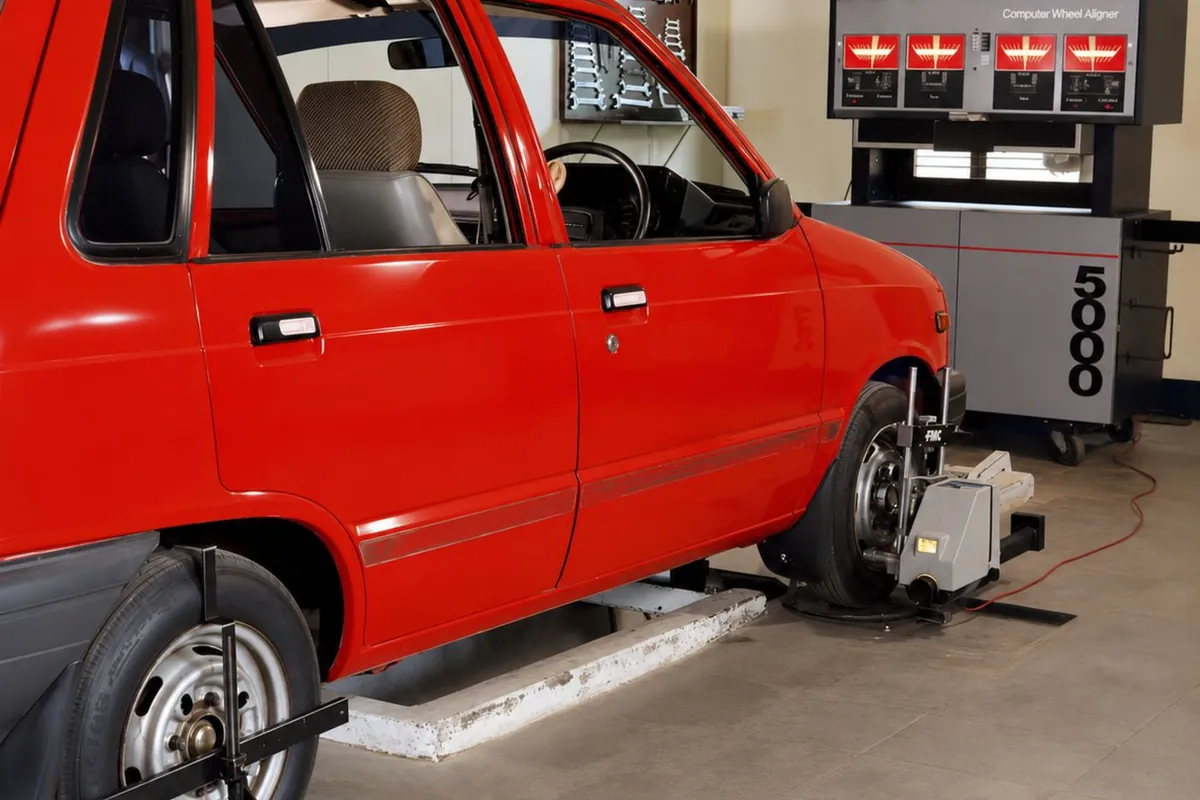
Why does my car pull to one side after a wreck or a curb hit?
A pull after a wreck or curb hit can be alignment, a bent suspension part, a wheel or the structure. See the signs, when to stop driving and what to ask.
More: all frame and suspension guides, frame & suspension, repair by make, reviews and directions to the shop.