
In short
A truck frame bent by a rear-end hit or a hit to the hitch can often be repaired by measuring it, pulling the rails back to the maker's dimensions and replacing parts that cannot be straightened. Whether a damaged rear rail can be sectioned depends on the maker's procedure for your truck, and some trucks have none for the rear rails.
- A hitch is bolted to the rails, so a hit to it loads the frame directly.
- A rear hit can buckle the rail ahead of the rear axle.
- Some trucks have no published procedure for replacing part of a rear rail.
- Do not tow a trailer with a hitch or frame you suspect is bent.
- Ask how rear sensors will be scanned and calibrated after the bumper comes off.
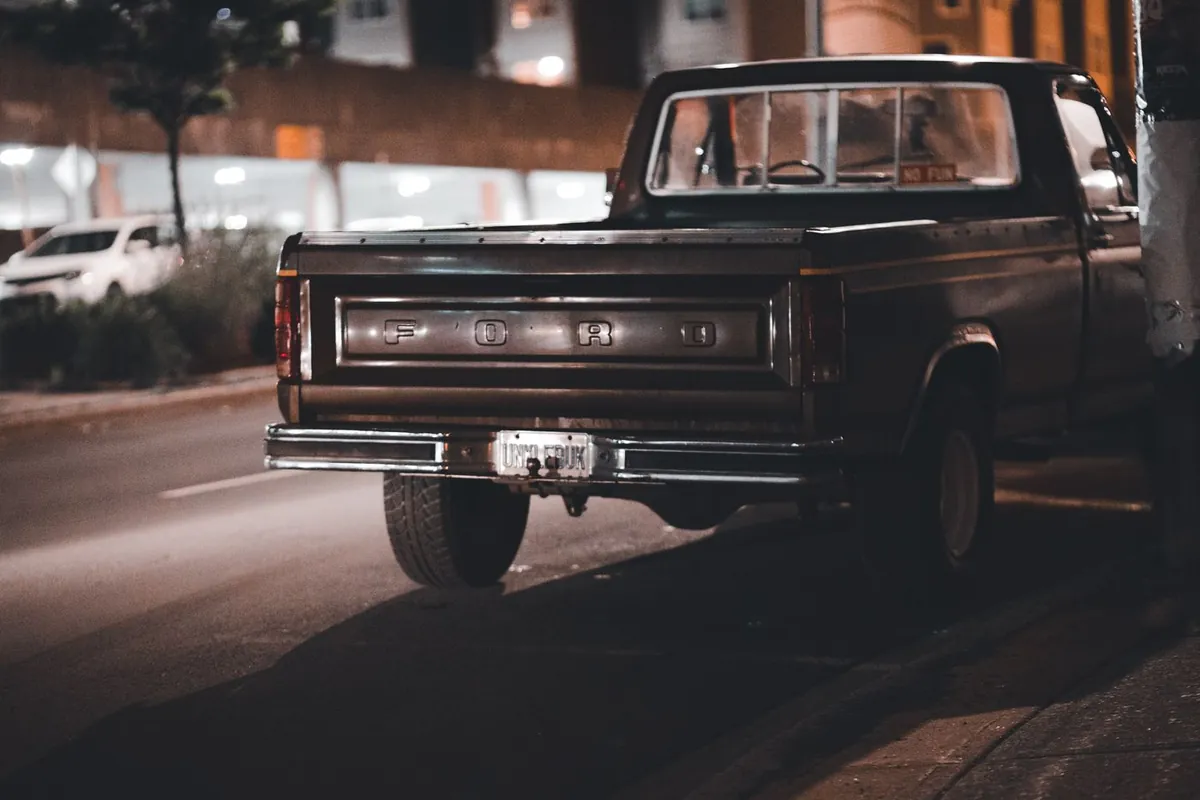
Can a truck frame bent by a rear-end hit or a hitch be repaired?
Often, yes. Rear frame damage on a pickup is commonly repaired by measuring the frame, pulling the bent rails back to the maker's dimensions on a frame rack, and replacing the parts that cannot be straightened, such as the bumper, the hitch receiver, crossmembers or a damaged rail section where the maker allows it. Whether your truck can be repaired that way depends on two things: how far forward the bend goes, and what the maker's repair information allows for the rear rails on your exact truck.
That second point matters more than most owners expect. Some trucks have published procedures for replacing part of a rear rail. Some do not. According to I-CAR, on the 2017 Ram 1500 the rear rails have no replacement procedures available, while the front rails do. When the maker gives no procedure for a section, the choices narrow to straightening within the maker's limits or replacing more of the frame, which changes the cost a lot.
Why does a hit to the hitch reach the frame at all?
A receiver hitch is bolted directly to the frame rails, usually through brackets on both sides. That is what lets it pull a trailer. It also means a vehicle that runs into your hitch, or a trailer tongue that jackknifes into it, pushes that force straight into the rails. The bumper and the bed may look nearly untouched while the rails behind them are bent, kinked or twisted.
A rear-end hit without a hitch loads the frame differently. The bumper and its brackets take the first blow, then the rear crossmember and the ends of the rails. On many pickups the rear rails curve up over the axle, and a hard push from behind can buckle the rail at that curve, ahead of the rear wheels. That is why a shop measures the whole frame after a rear hit, not just the last few inches.
The bed adds another layer. On a pickup the bed is a separate box bolted to the frame, and a rear hit can push the bed forward on its mounts, crush the bed floor, or bend the bed sides and tailgate opening. Sometimes the frame is fine and only the bed moved; sometimes both moved. Measuring the frame first tells the shop which case it is, so the bed is not repaired on top of a bent frame. Our guide to pickup bed, tailgate and bumper repair covers the bed side of the job.
What are the signs the frame is bent, not just the bumper?
The table shows what owners commonly notice after a rear hit, what it may point to, and what to do next.
| What you notice | What it may mean | What to do |
|---|---|---|
| Hitch receiver sits crooked or lower on one side | Hitch, brackets or the rail ends are bent | Stop towing; have the frame measured before hooking up again |
| Gap between the cab and bed is uneven or the bed sits off center | Rail bent ahead of the bed mounts, or bed shifted on its mounts | Frame measurement and a look at the bed mounts |
| Tailgate is hard to close or its gaps changed | Bed sides pushed, or the bed or frame moved | Check bed and frame together, not the tailgate alone |
| Wrinkles or flaking undercoating on the rails near the rear axle | Rail buckled at the bend over the axle | Measured inspection; do not tow with it |
| Truck dog-tracks or rear tires wear unevenly | Rear axle position changed by a shifted frame or spring mount | Frame measurement and a four-wheel alignment check |
| Backup camera view shifted, or parking sensors act up | Sensor or bumper moved; may need repair and calibration | Ask about a scan and the maker's calibration steps |
Read it this way: any sign in the first five rows means the frame needs to be measured, even if the damage you can see is small.
For a wider list of symptoms, see our guide to signs of frame damage after an accident.
What does the truck maker allow on the rear frame?
Each maker publishes its own rules for structural repair, and they differ. A few that apply to pickups:
- Ford. Ford defines structural parts as those that carry crash energy or vehicle loads, including frame rails and reinforcements. It says Ford-approved original parts should be used for structural repairs and that where no specific Ford procedure exists, structural repairs should be made at original factory joints or seams.
- Ram (FCA). FCA says structural distortions must be corrected using straightening equipment and a three-dimensional measuring system, that structural panels must be installed in their entirety unless partial replacement is documented in an FCA publication, and that it does not support reusing structural parts from a previously damaged vehicle.
- Chevrolet and GMC. According to I-CAR, GM does not sanction clip repairs and says sectioning should be done only where its vehicle-specific body repair manual shows it, so the manual for your truck decides what is possible at the rear.
- Toyota. According to I-CAR, Toyota says frame sectioning is not an approved repair on its full-frame vehicles.
The takeaway is simple: before anyone quotes a frame repair on your truck, they should look up the procedure for your year and model. You can read more about specific trucks in our guides to the Ram 1500 and the Ford F-150, or start from repair by make.
Do the rear sensors and electronics need attention?
Many pickups now carry a backup camera, parking sensors, blind spot radar in the rear corners and trailer electronics in or near the bumper. A rear hit can damage them, and removing the bumper to repair the frame disturbs them too.
FCA's scan tool statement lists an accident, even when damage appears minor, and significant disassembly including bumpers as conditions that can trigger trouble codes, and says a scan is necessary before and after collision repair. Ford requires pre-repair and post-repair scans on its 1996 and newer vehicles involved in a collision beyond minor outer-panel cosmetic damage, and notes that some faults need multiple drive cycles to appear. Ask any shop, including us, how scanning and any rear sensor calibration will be done on your truck. Our guide to scanning before and after a repair explains why it matters even when no warning light is on.
Is it safe to tow or drive before the repair?
Do not tow a trailer with a hitch or frame you suspect is bent. The hitch and rails are what hold the trailer to the truck, and a bent rail or bracket may have lost strength you cannot see. Driving the truck empty for a short trip to the shop may be fine if it tracks straight, the lights work, nothing drags or rubs, and no warning lights are on. If the tailgate or bumper is hanging, the lights are out, or the truck crabs down the road, have it towed instead.
The Texas Department of Insurance says that if your vehicle cannot be driven after a wreck, you can have it towed to a storage lot or body shop of your choice. If the truck is for work, our guide on keeping a damaged work vehicle safe until it is repaired covers the day-to-day questions. When you are ready, request a free estimate and tell us whether a hitch was involved.
What should I bring, and who pays?
- Photos of the rear, the hitch, the other vehicle or trailer, and the scene.
- The claim number and the adjuster's name and phone number, if you have filed.
- The other driver's information if you were hit: name, insurer, policy number.
- Any towing details: hitch type, ball mount, wiring add-ons, and whether a brake controller is installed, so they can be checked and reinstalled.
If another driver hit you, the Texas Department of Insurance says that driver's insurer should pay for your repairs, but it may dispute fault or delay; see who pays when the other driver was at fault. If you backed into something or your own trailer caused the damage, it is usually a claim on your own collision coverage, with your deductible. If the frame damage is severe, the repair cost may approach the truck's value; our guide on whether insurance will total a bent frame covers that case.
How ACE Body & Frame helps
ACE Body & Frame has been on S. Peachtree Road in Balch Springs since 1987, repairing pickups, work trucks, fleet vehicles and motor homes for owners in Balch Springs, Mesquite and the surrounding area. Frame and suspension repair is one of our core services, and so are welding and fabrication, collision repair and auto body and paint. A rear hit on a truck often needs frame repair, bed work and electronics checks together, and we can look at all of it in one visit.
Estimates are free and computerized, and we accept all insurance claims. You have the right to choose where your vehicle is repaired. You keep ownership of the claim; we document the damage, write the estimate and work with your adjuster. Towing and rental car service are available, and repairs are satisfaction guaranteed. See our past work or the other frame and suspension guides.
Call 972-286-0935, Monday to Friday, or send your request with photos of the rear of the truck and the hitch.
Questions people ask next
Can I just replace the hitch if it got hit?
Only if the frame behind it measures correctly. The hitch and its brackets bolt to the rails, so a hit strong enough to bend the hitch can bend the rails too. Have the frame measured first. If the rails are within the maker's dimensions, a new hitch may be all you need; if not, the frame has to be repaired before a new hitch goes on.
Does my bumper really need to come off to check the frame?
Often it does. The bumper, its brackets and the hitch hide the ends of the rails and the rear crossmember, which are exactly where a rear hit does its damage. Removing them lets the shop see wrinkles and measure the rails. That disassembly can also disturb rear sensors, which is one reason makers call for scans after repair.
Will a rear frame repair show up when I sell the truck?
A buyer's inspection may find signs of frame work, and an insurance claim may appear on a history report. Keep the measurement printouts, invoice and photos so you can show the repair was done to the maker's dimensions.
My trailer jackknifed into the truck. Is that covered?
That depends on your policies. TDI says auto insurance might pay for accidents you cause while pulling a trailer, but you probably need a separate RV policy or endorsement to cover the trailer itself. Damage to your own truck usually falls under your collision coverage with your deductible. Ask your insurer how it treats damage between your own truck and trailer.
How do I know if the truck is safe to drive to the shop?
If it tracks straight, nothing drags or rubs, the lights work and no warning lights are on, a short careful drive may be fine. Do not tow anything. If the bumper or tailgate is hanging, the lights are out or the truck crabs down the road, have it towed to the shop you choose instead of driving it.
Ready to get it fixed?
ACE Body & Frame, 2922 S. Peachtree Road, Balch Springs. Free computerized estimates, all insurance claims accepted.
Sources
- I-CAR RTS, "Sectioning And Partial Part Replacement: 2017 RAM 1500"
- Ford Collision Position Statement, "Structural Repairs" (October 1, 2025)
- FCA US LLC Position Statement, "Structural Repair Parts Usage" (December 1, 2025)
- I-CAR RTS, "Structural Sectioning Procedures: General Motors"
- I-CAR RTS, "Structural Sectioning Procedures: Toyota/Lexus"
- FCA US LLC Position Statement, "Scan Tool Usage" (December 1, 2025)
- Ford Collision Repair Position Statement, "Pre- and Post-Diagnostic Scanning During a Collision Repair Required" (October 1, 2025)
- TDI, "Not your fault? How to deal with the other driver's insurance"
- TDI, "Were you in a wreck? Tips for auto insurance claims"
- TDI, "Insurance for RVs: Know your coverages"
Read next
 Frame and suspension
Who does frame straightening near Mesquite, TX, and what should I ask?
Frame straightening near Mesquite: how it works, why your car maker's procedure matters, and the six questions that show whether a shop will do it right.
 Frame and suspension
Why does my car pull to one side after a wreck or a curb hit?
A pull after a wreck or curb hit can be alignment, a bent suspension part, a wheel or the structure. See the signs, when to stop driving and what to ask.
 Frame and suspension
How do I know if my car has frame damage after an accident?
Uneven gaps, sticking doors, a pull or a crooked wheel can mean frame damage. See the signs you can check yourself and why only measuring settles it.
More: all frame and suspension guides, frame & suspension, repair by make, reviews and directions to the shop.