
In short
A car pulls after a hit because the alignment moved, a steering or suspension part bent, a wheel or tire was damaged, or the structure those parts bolt to shifted. An alignment only fixes the first one. If the angles cannot be adjusted back into the maker's range, something is bent and has to be found and replaced or corrected first.
- A new pull that started right after a hit is damage until proven otherwise.
- An alignment cannot fix a bent part or a shifted structure.
- Several makers do not approve straightening a bent wheel.
- Many makers tie sensor calibration to wheel alignment.
- Ask for the alignment printout from before and after the repair.
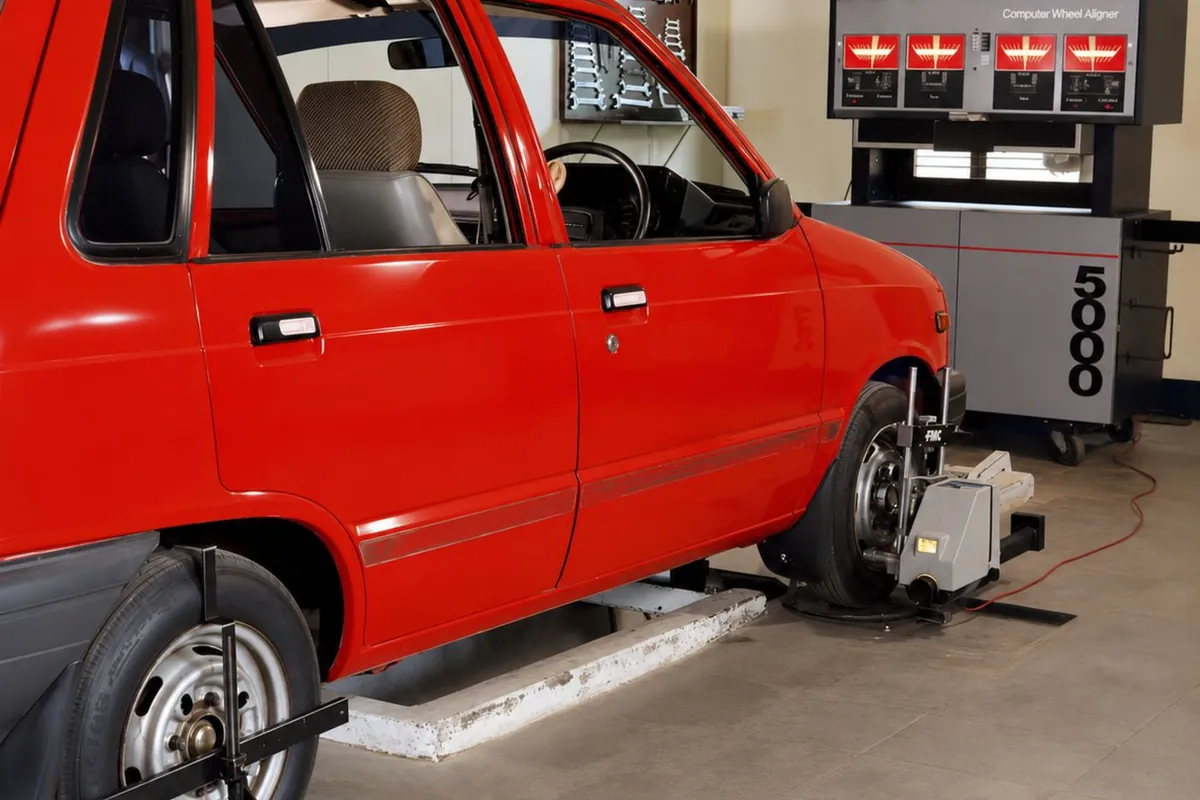
Why does my car pull to one side after a wreck or a curb hit?
Because something that sets the direction of a wheel has moved. A hard hit to a wheel, a curb strike or a collision can knock the alignment out of adjustment, bend a steering or suspension part, damage a wheel or tire, or shift the structure those parts bolt to. The car then steers toward one side on a flat, straight road, and you find yourself holding the wheel against it.
The pull itself does not tell you which of those four things happened. A small adjustment and a bent structural mount can feel the same from the driver's seat. That is why the fix starts with an inspection and measurements, not with turning the adjusters until the car drives straight.
Is it just the alignment, or is something bent?
Alignment means the angles of the wheels: whether they point straight ahead, lean in or out, and how the steering axis is tilted. The angles are set with adjusters on the suspension. A sharp jolt can move an adjuster or shift a part in its mount. When that is all that happened, a wheel alignment puts the angles back and the pull is gone.
Often it is more than that. The parts that hold a wheel in place are designed to be the weak link, so a hit bends them before it bends the body. Common examples:
- Tie rod. The link between the steering gear and the wheel. A bent one changes where that wheel points, and the steering wheel usually sits off center.
- Control arm. The arm that locates the wheel front to back and side to side. A bent arm moves the wheel in the wheel opening and changes how it leans.
- Strut or knuckle. The upright parts that carry the hub. A bend here changes the lean of the tire and can wear one edge quickly.
- Wheel, tire or bearing. A bent rim, a damaged tire or a hurt wheel bearing can cause a pull, a shake or a hum by themselves.
- Subframe, cradle or frame. The structure that the suspension bolts to. If it shifted, no part swap will bring the angles back until the structure is corrected.
If the alignment machine shows an angle that cannot be adjusted back into the maker's range, something is bent or moved. Our guide to suspension damage from potholes and curbs lists the parts that fail most often.
What do the symptoms tell me?
The table below matches what drivers usually notice after a hit with what it may mean and the sensible next step.
| What you notice | What it may mean | What to do |
|---|---|---|
| Steady pull to one side, steering wheel still centered | Alignment angles moved, uneven tire pressure, or a damaged tire | Check tire pressure first, then have the alignment measured |
| Steering wheel sits crooked when the car goes straight | Bent tie rod or a shifted steering or suspension part | Ask for a suspension inspection before any alignment |
| One wheel sits farther forward or back in its opening | Bent control arm, or the subframe or structure has moved | Have the structure measured, not only aligned |
| Shake in the steering wheel that changes with speed | Bent wheel, damaged tire or lost wheel weight | Have the wheel and tire checked off the car |
| Clunk or knock over bumps on the side that was hit | Damaged strut, ball joint, sway bar link or mount | Stop driving it on the highway and have it inspected |
| Rear of the car seems to follow at an angle | Rear axle or rear suspension shifted, or frame out of square | Have it towed if it feels unstable, and ask for frame measuring |
Read each row as a reason to look closer, not as a diagnosis. Two or more rows together, or any row after a hard collision, make a bent part or shifted structure more likely than a simple adjustment.
Is it safe to keep driving a car that pulls?
A light pull with no noise, no shake and a centered steering wheel is usually something you can drive carefully to a shop. Keep your speed down, leave room, and do not put it off for weeks. A car that is out of alignment scrubs its tires every time it rolls, and a tire can be ruined long before the tread looks worn across the face.
Have it towed, or at least stay off the freeway, when any of these is true:
- The steering wheel is far off center or the steering feels loose or notchy.
- You hear clunking, grinding or a rhythmic thump from one corner.
- A wheel is visibly tilted or sits in the wrong place in the fender.
- The tire has a bulge, a cut in the sidewall or keeps losing air.
- A warning light for stability control, steering or brakes came on after the hit.
Waiting has a cost too. The Texas Department of Motor Vehicles, in its advice to buyers of rebuilt vehicles, warns that frame misalignment can strain the drivetrain, wheels, tires and brakes. If you think the structure itself took the hit, read how to tell if your car has frame damage.
Can a bent wheel be straightened?
This is a question to settle with the vehicle maker's position, not with what a wheel shop can physically do. Several makers have published statements on it, and they point the same way:
- Honda and Acura. American Honda says it does not approve of any repair of steel or aluminum wheels that involves welding, bending, hammering, straightening, re-machining, reforming or adding new material. Repair is limited to minor cosmetic sanding or polishing that removes just the finish.
- Nissan. Nissan's statement uses nearly the same list and adds that after a collision all four wheels should be thoroughly inspected.
- Ford. Ford recommends replacing any steel or aluminum wheel whose structure has been altered or compromised with a new Ford original equipment wheel, and says limited refinishing is approved only when purely cosmetic.
- Ram, Jeep, Dodge and Chrysler. FCA US says it does not recommend reconditioned wheels, meaning wheels that were damaged and repaired, because they can result in sudden catastrophic wheel failure.
Those statements are the makers' positions, not Texas law. For other brands, ask the shop to check the maker's repair information for your vehicle. The safe default is plain: curb rash on the face of a wheel is cosmetic, and a wheel that is bent, cracked or out of round is a candidate for replacement.
Why does the alignment matter for cameras and sensors?
On newer vehicles the direction the car travels is also a reference for its driver-assistance systems. I-CAR, the collision repair industry's training organization, says that a great majority of collisions can cause suspension damage, which means a wheel alignment will be necessary, and that vehicles with driver-assistance systems need to be properly aligned with how the vehicle travels.
I-CAR also reports that numerous makers require calibration of those systems whenever a wheel alignment is performed, that some require the vehicle to be on an alignment rack during calibration, and that others include a wheel alignment as a step in the calibration procedure. A steering angle sensor may need calibration after structural repairs or a wheel alignment as well, normally with a scan tool and the wheels pointing straight ahead.
What this means for you: on a vehicle with lane keeping, adaptive cruise or automatic braking, ask what the maker requires after an alignment on your model and how it will be done. Ask any shop that question, including us. Our guide on recalibrating safety cameras and sensors after body repair goes deeper.
How does a shop find the real cause?
A careful diagnosis follows an order, so a cheap answer is ruled in or out before an expensive one is assumed.
- Listen to the story. Which corner was hit, how hard, and what changed afterward. Tell the shop everything, including a curb you would prefer to forget.
- Check tires and wheels. Pressure, sidewall damage, bent rims and wheel bearings come first because they are common and quick to confirm.
- Inspect on a lift. The technician compares the damaged side with the good side: tie rods, control arms, struts, knuckles, mounts and the subframe.
- Measure the alignment. The readings show which angles are out and whether they can be adjusted into the maker's range.
- Measure the structure if needed. When angles will not come in, or a wheel sits out of position, the mounting points are measured against the maker's dimensions.
- Repair, then align and road test. Bent parts are replaced, structure is corrected, the alignment is set last and the car is driven to confirm it tracks straight.
Ask for the alignment printout from before and after. It is the simplest proof that the pull was corrected and not masked. If structure was involved, ask for the measurement report too. Our frame and suspension repair page explains that side of the work, and whether frame damage can be fixed safely covers the bigger cases.
Will insurance pay to fix a pull after a hit?
It depends on what caused it and what coverage you carry. The Texas Department of Insurance describes collision coverage as the part of a policy that pays to repair or replace your car after an accident, and says deductibles apply to collision claims. If another driver caused the wreck, a claim against that driver's insurer has no deductible. For a curb or pothole hit with no other vehicle, ask your insurer how it treats the loss before you decide whether to file.
Whatever route you take, make sure the suspension damage is written on the estimate. Bent parts are often found only after the wheel is off, and they are added to the claim as a supplement. See what a supplement on a body shop estimate is. What to bring to the shop:
- Photos of the curb, pothole or the other vehicle, and of your wheel and tire.
- Your claim number and adjuster's name, if a claim is open.
- Any recent alignment or tire paperwork, which shows the car was straight before.
- A short note on when the pull happens: always, under braking, or at speed.
How ACE Body & Frame helps
ACE Body & Frame has been on S. Peachtree Road in Balch Springs since 1987, serving Balch Springs, Mesquite and the surrounding area. Suspension and frame repair is one of our core services, alongside collision repair, auto body and paint, and foreign and domestic automotive service and diagnostics. That matters for a pull, because the cause can sit in the suspension, the structure or the body, and one shop can follow it wherever it leads.
We write free computerized estimates and accept all insurance claims. You have the right to choose where your vehicle is repaired. We document the damage, write the estimate and work with your adjuster, and the claim stays yours. Towing is available if the car should not be driven, rental car service is available, and our repairs are satisfaction guaranteed. You can read customer reviews or browse more answers in our frame and suspension guides.
Call 972-286-0935, Monday to Friday, and tell us which corner was hit and what the car does now. Or request a free estimate online and we will take it from there. If the car is not safe to drive, say so and ask about towing with your estimate request.
Questions people ask next
Can I just get an alignment and see if the pull goes away?
You can, and sometimes that is the whole fix. Ask the alignment shop to show you the readings first. If an angle cannot be brought into the maker's range, or the technician has to offset one adjustment to hide another, a part is bent or the structure has moved, and that needs repair before the alignment will hold.
How long can I drive on a car that pulls a little?
As short a time as you can manage. A car that is out of alignment scrubs its tires constantly, so tire wear starts right away, and a bent part keeps loading the parts around it. If there is noise, shake, a crooked steering wheel or a warning light, stay off the highway and have it inspected.
The body shop fixed my car but it still pulls. What now?
Go back to the shop and describe exactly when it pulls. Ask for the alignment printout from after the repair and whether the suspension and structure on the damaged corner were measured. TDI explains that if repairs cost more on an insurance claim, the shop sends a new estimate to the insurer, which pays the extra amount if it agrees.
Does hitting a curb count as a collision claim in Texas?
The Texas Department of Insurance describes collision coverage as the coverage that pays to repair or replace your car after an accident, and a deductible applies. How a single-vehicle curb or pothole hit is handled depends on your policy, so ask your insurer before you file and compare the likely repair bill with your deductible.
Will my lane keeping or adaptive cruise need attention after an alignment?
It may. I-CAR reports that numerous vehicle makers require calibration of driver-assistance systems whenever a wheel alignment is performed, and that a steering angle sensor may need calibration after structural repairs or an alignment. The requirement depends on the make and model, so ask the shop what the maker's repair information says for your vehicle.
Ready to get it fixed?
ACE Body & Frame, 2922 S. Peachtree Road, Balch Springs. Free computerized estimates, all insurance claims accepted.
Sources
- I-CAR RTS, "The Effects Of Wheel Alignment On ADAS"
- I-CAR RTS, "Typical Calibration Requirements For Steering Angle/Position Sensors"
- American Honda position statement, "Steel and Aluminum Wheel Repair"
- Nissan Collision Position Statement, "Nissan Wheel Repair" (NPSB-16-595)
- Ford Collision Position Statement, "Remanufacturing or Refinishing Steel & Aluminum Wheels" (October 1, 2025)
- FCA US LLC Position Statement, "Reconditioned Wheel Usage" (December 1, 2025)
- TxDMV, "Rebuilt Vehicles" (Title Check)
- TDI, Automobile insurance guide (cb020)
- TDI, "Were you in a wreck? Tips for auto insurance claims"
Read next
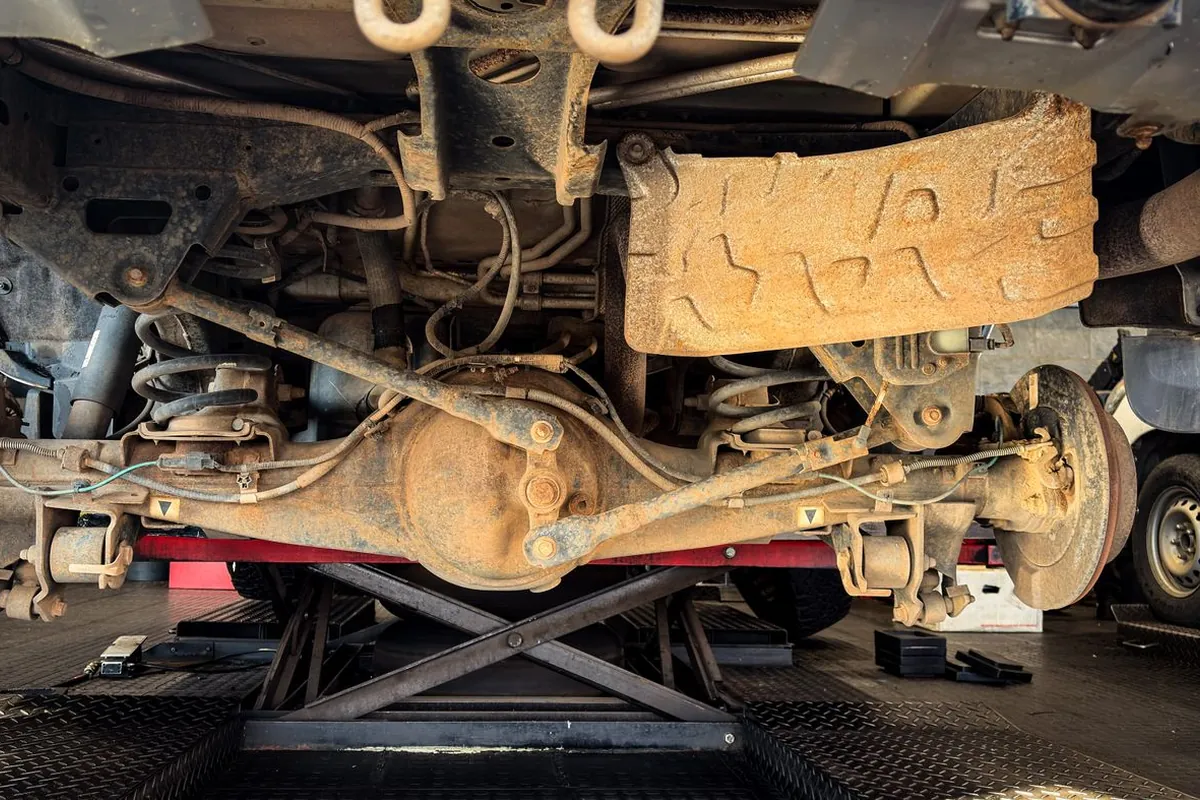 Frame and suspension
Unibody vs body-on-frame: what is the difference when my vehicle is repaired?
A unibody is one welded shell; body-on-frame bolts the body to a separate frame. See how each is measured and repaired and what makers allow on yours.
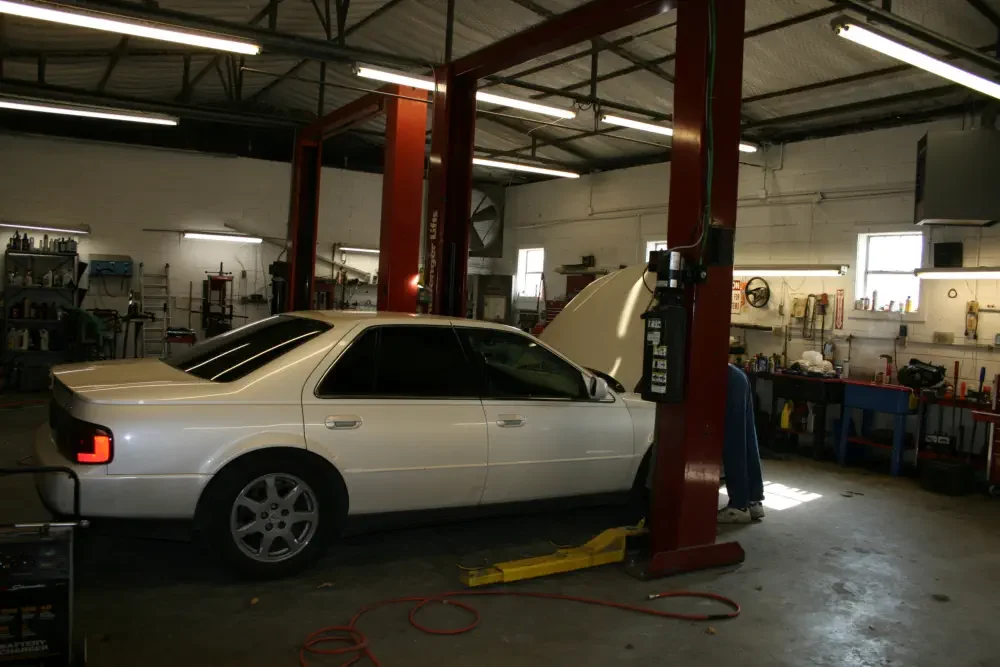 Frame and suspension
Can a bent truck frame be repaired, or is the truck totaled?
When a bent truck frame can be straightened, sectioned or replaced, how Texas insurers decide a total loss, and what paperwork to ask a frame shop for.
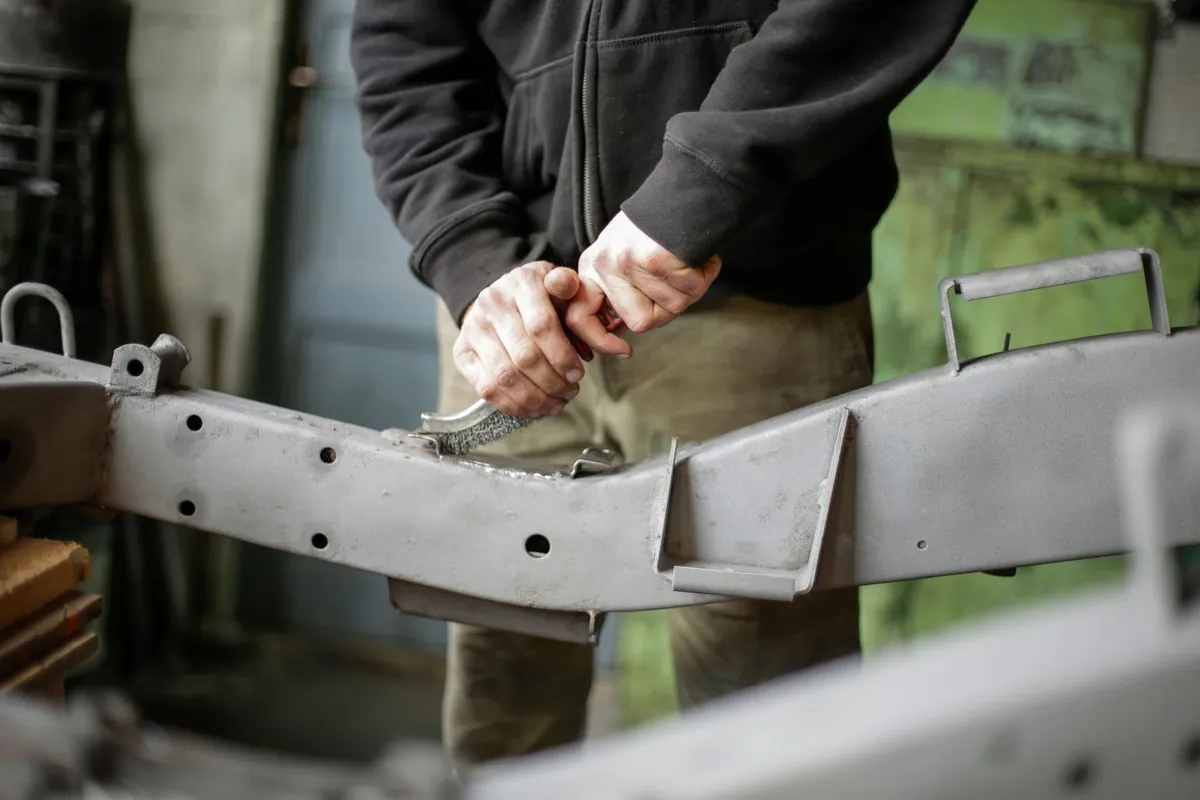 Frame and suspension
Who does frame straightening near Mesquite, TX, and what should I ask?
Frame straightening near Mesquite: how it works, why your car maker's procedure matters, and the six questions that show whether a shop will do it right.
More: all frame and suspension guides, frame & suspension, repair by make, reviews and directions to the shop.