
In short
Frame damage is often repairable, and a car repaired by the maker's procedure can be safe again: measured, straightened or replaced with the methods and parts the maker allows, then aligned, scanned and checked for restraints. Until it is inspected, drive as little as possible, and do not drive it at all if a wheel is out of place, it pulls hard or air bags deployed.
- Many frame repairs are safe when they follow the maker's procedure.
- Do not drive a car with a shifted wheel, hard pull or deployed air bags.
- Makers set rules on heat, sectioning and parts for structural repairs.
- Seat belts and air bag parts are checked under the maker's procedure.
- Keep measurement, scan and parts records from the repair.
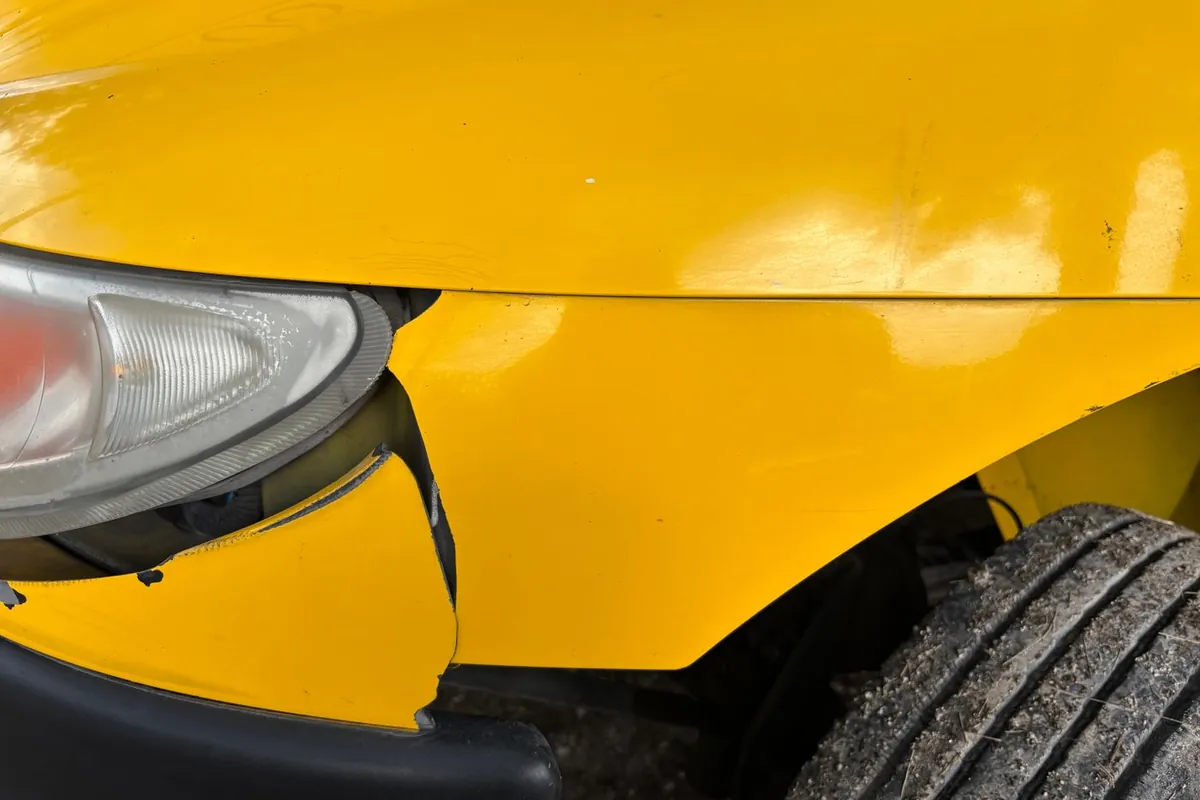
Can frame damage be fixed, and is the car safe afterward?
Yes, frame damage is often repairable, and a car repaired correctly can be safe to drive. "Correctly" carries the weight in that sentence. A safe structural repair means the structure is measured, straightened or replaced the way the vehicle maker's repair information says, with the methods and parts the maker allows, and the restraint system, alignment and electronics are checked afterward. When those steps are followed, the car is built back to the maker's design. When they are skipped, a car can look perfect and still not protect you the way it should in the next crash.
Before the repair, the answer to "is it safe to drive?" is usually "not until it has been inspected." This guide covers both questions: driving it now, and trusting it later.
Is it safe to drive with frame damage right now?
It depends on how bad it is, and you should lean toward caution. TxDMV, writing for buyers of rebuilt vehicles, says frame misalignment can strain the drivetrain, wheels, tires and brakes. A shifted structure can also change how the car handles in an emergency and how it would absorb a second hit.
Use these as a guide:
- Do not drive it if a wheel sits out of position, the car pulls hard, the steering feels wrong, a door will not latch, air bags deployed, fluid is leaking, or a tire rubs.
- Drive only as needed if the signs are mild, the car tracks straight and nothing rubs or leaks. Keep to local roads and get it inspected soon.
- When in doubt, tow it. Have it taken straight to the shop you choose rather than driven there.
Our guide on signs of frame damage lists what to check before you decide.
How is frame damage repaired?
A structural repair follows a set order:
- Measure. The shop compares the structure with the maker's dimensions to see where and how far it moved.
- Plan by the maker's procedure. The repair information says which parts may be straightened, which must be replaced, and where they may be cut or joined.
- Straighten. The vehicle is anchored and pulled back toward its original shape, measuring as it goes. Stellantis says structural distortion must be corrected with structural straightening equipment and a three-dimensional measuring system.
- Replace what cannot be straightened. Parts are replaced at factory seams or at sectioning points the maker publishes.
- Measure again. The final measurements confirm the structure is back within the maker's dimensions.
- Restore protection. Corrosion protection, seam sealer and any foam or adhesives the maker specifies.
- Align, scan and calibrate. Suspension and alignment, then electronics.
The shop's equipment matters less than whether each step follows the maker's procedure for your model. Ask any shop to show you that procedure.
What makes a frame repair safe or unsafe?
This table compares what a sound structural repair looks like with the shortcuts that make one unsafe.
| Step | Safe repair | Warning sign |
|---|---|---|
| Measuring | Measured before, during and after, with a printed report | "We eyeballed it" or no report |
| Straightening | Cold straightening where the maker allows it | Heat used on steel where the maker does not allow it |
| Cutting and joining | Only at factory seams or the maker's published sectioning points | Cuts in places with no procedure |
| Joining two cars | Not done where the maker does not sanction it | A "clip" from another vehicle welded on |
| Parts | Structural parts the maker supports | Salvaged structural parts the maker objects to |
| Restraints | Belts, sensors and air bags checked and replaced per the maker | Restraint warning light, or belts not checked |
| Finish | Alignment, scan and calibration records | No records at handover |
Use the right-hand column as a list of questions. If a shop cannot tell you how it avoids each warning sign on your car, ask more, or get a second estimate.
Why do makers care so much about heat and sectioning?
Because the metals in a modern structure are engineered. I-CAR, the collision industry's training organization, says heat can permanently damage certain metals by breaking down the structure that gives them strength, and that makers publish rules on when heat may be used. Toyota, according to I-CAR's summary of its bulletins, approves cold straightening by pushing, pulling and hammering, does not approve heating high-strength and ultra-high-strength steel for stress relief, and prohibits heat repair of body and frame parts.
Sectioning, which means cutting out a damaged part of a rail and joining in a new piece, is the same story. I-CAR says it is allowed only when the maker's repair information supports it, because adding a sectioning joint changes how a part reacts to collision forces. Makers differ widely:
- Toyota, according to I-CAR, does not approve frame sectioning on its full-frame trucks and SUVs.
- GM, according to I-CAR, released a sectioning kit for the front frame rails of 2011 and later Silverado and Sierra heavy-duty pickups, a published procedure for those trucks. GM also does not sanction clip repairs that join sections of two vehicles.
- Stellantis says structural panels must be installed in their entirety unless a partial replacement procedure is documented, and does not support reusing structural parts from previously damaged, flooded, burned or scrapped vehicles.
The upshot: the same bent rail might be sectioned on one truck and fully replaced on another. Our guide on whether a bent truck frame can be repaired goes further on trucks, and unibody vs body-on-frame explains why cars and trucks differ.
What about seat belts and air bags after a hard hit?
A crash hard enough to bend the structure has usually loaded the restraint system too. What must be replaced depends on the maker. As one published example, Nissan, according to I-CAR's summary of its position statement, says to inspect all seat belt assemblies, including retractors and buckles, after a collision, and recommends replacing all belts in use unless the collision was minor and the belts show no damage and work properly. Nissan also says pre-tensioners should be replaced if the frontal air bags deployed, even for belts not in use.
That is one maker's rule, not a rule for every car. Ask the shop to look up your maker's restraint procedure, and expect the estimate to list the belts, sensors and air bag parts it calls for. A restraint warning light at pickup means the job is not finished. Parts matter here as well; see OEM, aftermarket and used parts.
Will a repaired frame hurt my car's value or get it totaled?
Either can happen, and they are separate questions. Whether an insurer totals the car depends on the cost of repair compared with the car's value; read will insurance total a bent frame and total loss in Texas. A car that is repaired may still be worth less later. TxDMV notes that a rebuilt vehicle, one that once had a salvage title, can be expected to have a lower value than a comparable vehicle with no salvage history. Our guide on frame damage and resale value covers that, including the records worth keeping: measurement reports, scan reports, the parts list and the final invoice.
What should I ask before I approve a frame repair?
These questions work at any shop, and a good shop will be glad to answer them:
- Can I see the measurements? Ask for the before figures now and the after figures at pickup.
- Which parts will be straightened and which replaced? Ask why for each structural part.
- What does my maker's procedure say about heat and sectioning in this area?
- Where are the structural parts coming from? New from the maker, or something else.
- Which seat belts, sensors and air bag parts does the maker list for this crash?
- What happens if more damage turns up once the car is apart? The shop documents it and sends a supplement to the insurer, and you should hear about it before work continues.
Bring the claim number and adjuster's contact, the insurer's estimate if there is one, photos from the scene, and a note of who sat where and whether air bags deployed. Mention any earlier repairs you know about in the same area, since they can change what the maker allows. If the insurer's figure is far below the shop's, our guide to a lower insurance estimate explains the next steps.
How ACE Body & Frame helps
ACE Body & Frame has been doing frame and suspension repair on S. Peachtree Road in Balch Springs since 1987, serving Balch Springs, Mesquite and the surrounding area. Our other services include collision repair, body and paint, welding and fabrication, and foreign and domestic automotive diagnostics.
We write free computerized estimates and accept all insurance claims. Ask us to show you the measurements and explain, in plain terms, which parts we would straighten, which we would replace and what your maker's procedure says. We document the damage and work with your adjuster; the claim stays yours, and you have the right to choose where your vehicle is repaired. Towing and rental car service are available, and repairs are satisfaction guaranteed.
To start, request a free frame estimate or call 972-286-0935, Monday to Friday. Read about our shop, our structural repair services, the questions to ask about frame straightening, or more on the frame and suspension topic page. You can also send photos and the insurer's estimate for a first opinion.
Questions people ask next
How do I know a frame repair was done right?
Ask for the records: measurements before and after straightening, the parts list, the pre- and post-repair scans, the alignment printout and any calibration records. Then check the car: even gaps, doors that close easily, a centered steering wheel, no warning lights and straight tracking on the road. If a shop cannot provide the measurements, ask why.
Can a frame be straightened more than once?
It depends on the part and the metal. Some makers limit or forbid heat on high-strength steels, and a part that has been bent, straightened and bent again may need replacement under the maker's rules. Tell the shop about any earlier structural repair you know of, so it can check the maker's procedure for that area.
Is a car with a repaired frame weaker in a later crash?
A structure repaired to the maker's procedure, with supported parts and methods, is meant to perform as designed. Problems come from shortcuts: heat where it is not allowed, cuts in places with no procedure, joined sections from two cars, or unsupported structural parts. Those are the questions to ask before the repair starts.
My insurer wants to repair the frame; I think the car should be totaled. What can I do?
Ask the insurer and the shop to show you the repair plan and the measurements. Whether to total a car is the insurer's decision based on repair cost and the car's value, so ask your adjuster to explain its reasoning in writing, and compare it with the shop's estimate. Our guide to total loss in Texas covers your options.
Does frame damage show up on the title in Texas?
Not just because the frame was repaired. A title brand comes into play only when a vehicle is treated as a salvage vehicle, which turns on how repair costs compare with its value. Many frame repairs never reach that point. A vehicle that was salvaged and rebuilt carries a Rebuilt Salvage brand on its Texas title.
Ready to get it fixed?
ACE Body & Frame, 2922 S. Peachtree Road, Balch Springs. Free computerized estimates, all insurance claims accepted.
Sources
- TxDMV, "Rebuilt Vehicles" (Title Check)
- FCA US LLC Position Statement, "Structural Repair Parts Usage" (December 1, 2025)
- I-CAR RTS, "Straightening And Heat"
- I-CAR RTS, "Straightening And Heat: Toyota, Lexus, Scion"
- I-CAR RTS, "Structural Sectioning Procedures: Toyota/Lexus"
- I-CAR RTS, "GM Has New Front Full-Frame Sectioning (Heavy Duty) Part Kit Available"
- I-CAR RTS, "Structural Sectioning Procedures: General Motors"
- I-CAR RTS, "Nissan Position Statement: Seat Belt Replacement Considerations"
- Tex. Transp. Code 501.091
- TDI, "My car was totaled! Now what?"
Read next
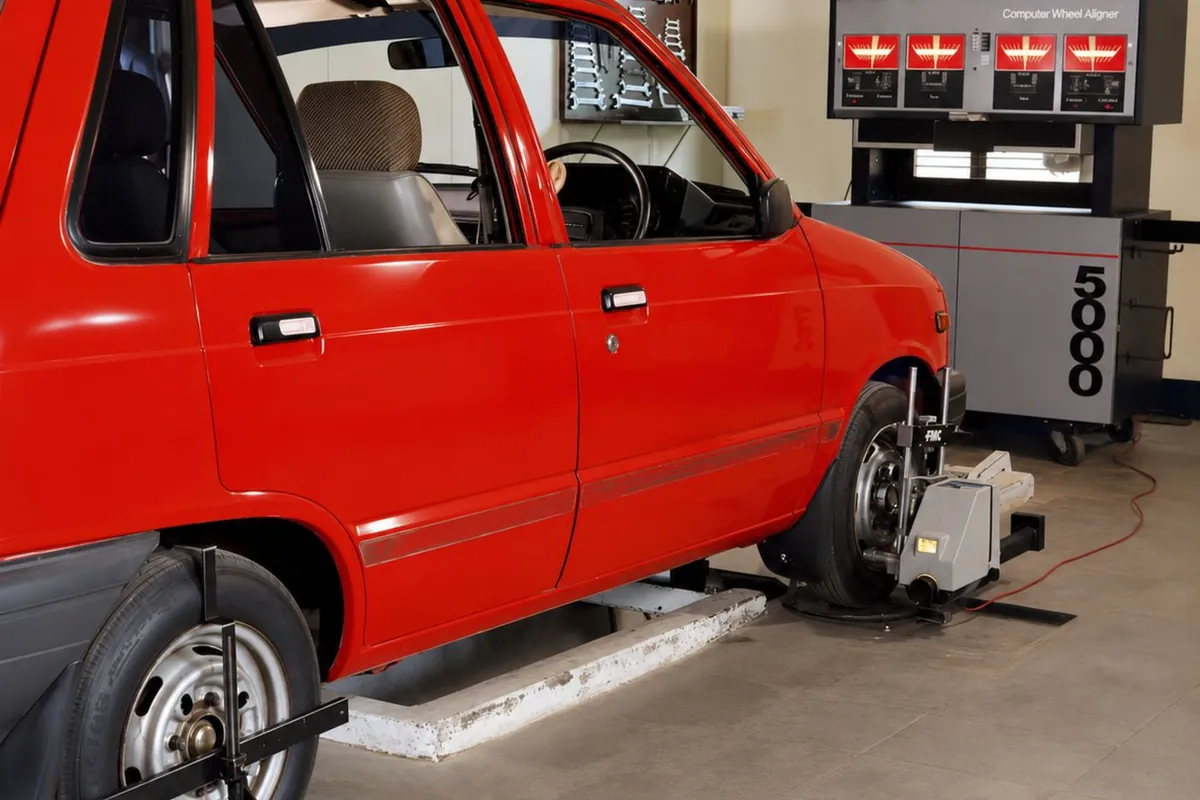 Frame and suspension
Why does my car pull to one side after a wreck or a curb hit?
A pull after a wreck or curb hit can be alignment, a bent suspension part, a wheel or the structure. See the signs, when to stop driving and what to ask.
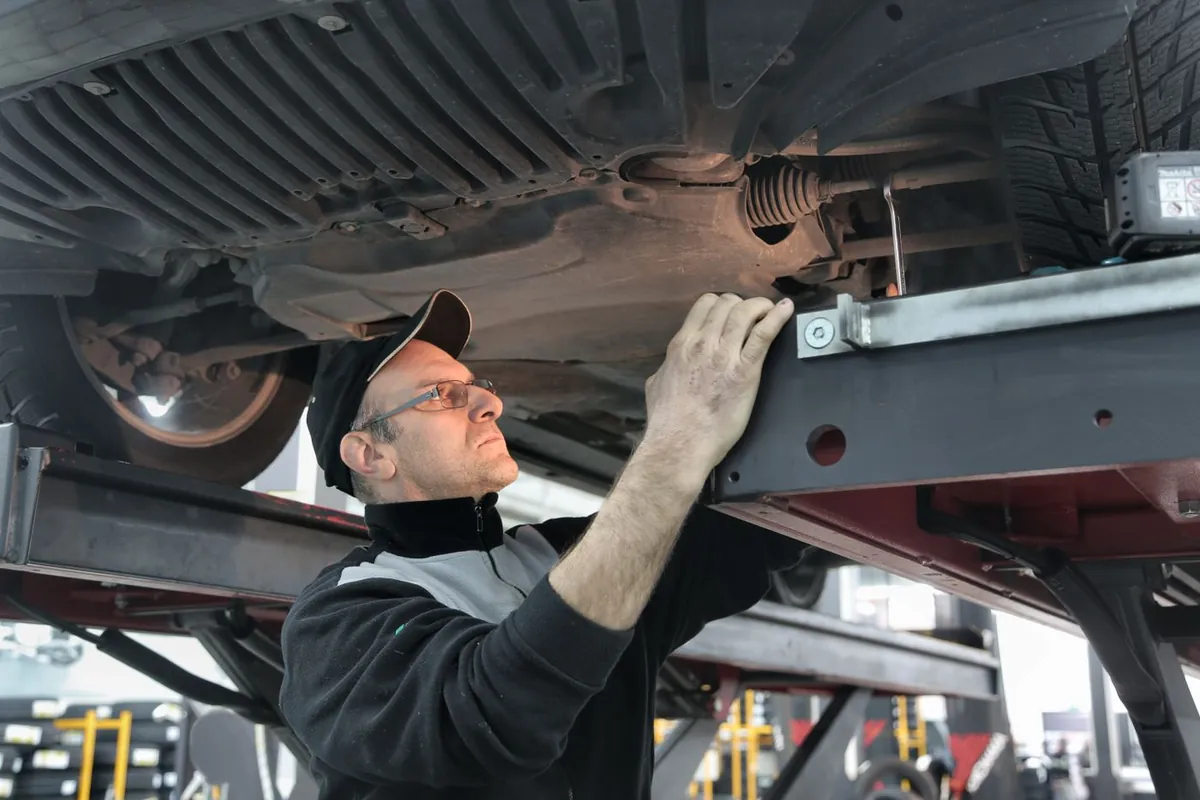 Frame and suspension
How do I know if my car has frame damage after an accident?
Uneven gaps, sticking doors, a pull or a crooked wheel can mean frame damage. See the signs you can check yourself and why only measuring settles it.
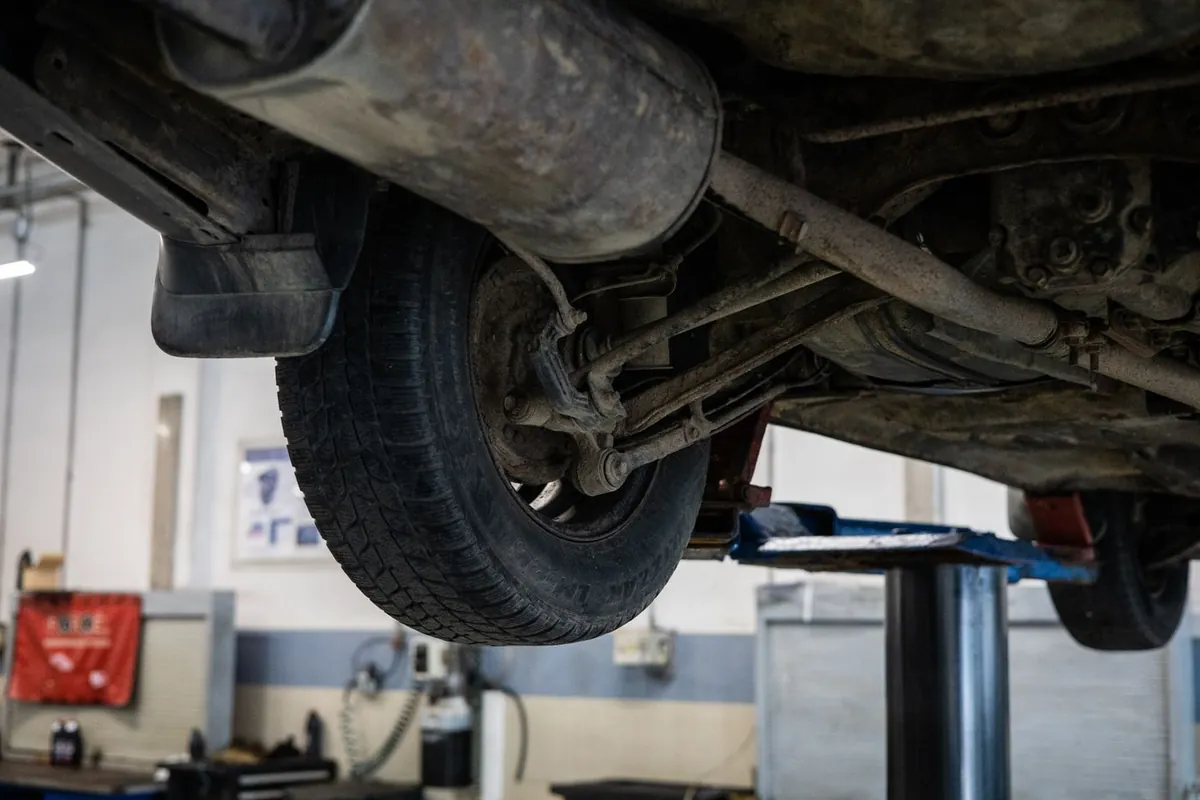 Frame and suspension
Suspension damage after hitting a pothole or curb in Dallas: what breaks?
A pothole or curb hit damages the tire and wheel first, then the steering and suspension links. See the warning signs, what makers say and what to do next.
More: all frame and suspension guides, frame & suspension, repair by make, reviews and directions to the shop.