
In short
Patch rust when it is limited to a small area and the metal around it is solid; replace the panel when rot is widespread, reaches seams or structural edges, or sits under failing old repairs. The decision should be made after the rusted area is cleaned to bare steel. When no replacement panel exists, a new part can be fabricated from sheet steel.
- Surface rust is cleaned and protected; holes in solid metal are cut out and patched.
- Widespread rot, seam rust and failing old repairs usually mean panel replacement.
- A proper patch is welded steel, not filler, fiberglass or riveted sheet over a hole.
- Fabrication makes parts nobody reproduces, from brackets to floor sections.
- Large body changes can affect Antique plate statements or custom vehicle rules in Texas.
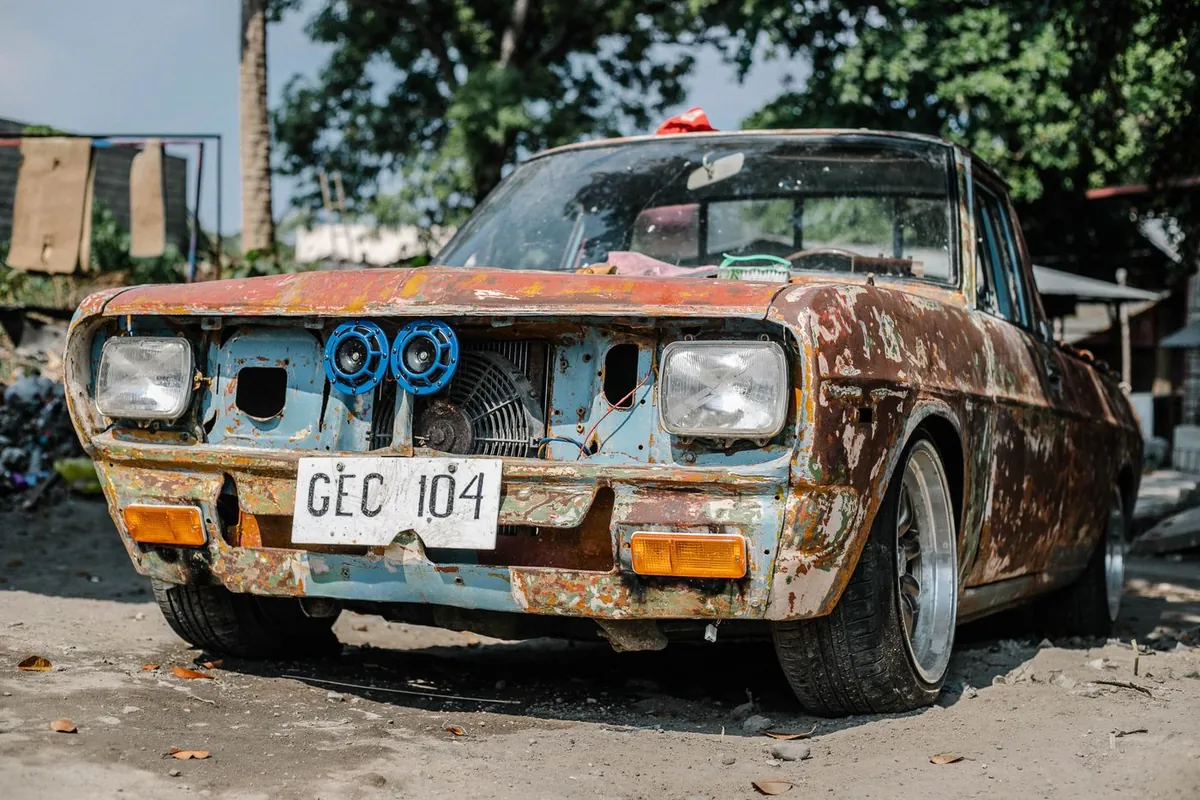
Should rust on a classic car be patched or the whole panel replaced?
Patch when the rust is limited to a small area and the metal around it is solid. Replace the panel when rust has spread through a large part of it, when it reaches seams or structural edges, or when the panel has been patched before and the old repairs are failing. The deciding factor is the metal you cannot see yet, so the honest answer always comes after the rusted area is cleaned back to bare steel and the edges of the damage are found.
Rust is also not only a looks problem. On floors, rockers, frame rails and mounting points, it weakens parts that hold the car together. We do rust repair, welding and metal fabrication as part of our classic car and truck restoration work in Balch Springs, and this guide explains how the patch-or-replace choice is made and what to ask about it.
How bad is the rust, really?
Rust comes in stages, and each stage calls for a different repair. The table below shows what each looks like and what usually happens to it.
| What you see | Stage | Usual repair |
|---|---|---|
| Orange haze or light spots on bare metal, no pitting | Surface rust | Clean to bright metal, treat and prime; no new metal needed |
| Bubbles under paint, small pits when sanded | Scale or pitting | Remove all rust, check metal thickness, fill only if the steel is still solid |
| Small hole, the size of a coin or a little larger, with firm metal around it | Localized rot | Cut out and weld in a patch of new steel |
| Several holes, lacy edges, metal that flexes or crumbles | Spreading rot | Replace the section or the whole panel |
| Rust at seams, pinch welds, mounts or frame rails | Structural rust | Cut out to solid metal and rebuild the structure; often panel or section replacement |
| Thick filler, fiberglass or riveted sheet over a hole | Old cover-up repair | Remove it all and repair properly underneath |
Read the table from the top down: the first two rows are cleaning and protection, the middle rows are patching, and the bottom rows are replacement or rebuilding. Most old cars have something from every row.
When does a patch make sense?
A patch is the right repair more often than people think, as long as it is done properly. That means:
- Cut back to clean metal. The rusted area is cut out until the edges are bright, solid steel all the way around. Leaving any rust behind under a patch is how it comes back.
- Match the metal. The patch should be steel of a similar thickness to the original, shaped to the panel's curve.
- Weld it in. The patch is welded into the panel, with the heat controlled so the panel does not warp. Riveted or glued patches over a hole are cover-ups, not repairs.
- Protect the back side. Inside surfaces of doors, rockers and quarter panels are where rust starts. They need cleaning and coating too, not only the outside.
- Finish lightly. A thin skim of filler to smooth the weld is normal. A thick layer is a sign the patch was not shaped well.
Patches suit lower door corners, the bottom of fenders, small spots on quarter panels, trunk floors with one bad area, and floor pans with a single hole.
When is a full panel replacement the better choice?
Replace instead of patch when:
- The rot is widespread. If the panel needs several patches, the welds and heat add up, and a new panel is usually stronger and straighter.
- The rust reaches seams or edges. Rust in a seam between two panels or along a flange is hard to remove fully without taking the panel off.
- Old repairs are failing. Layers of past patches and filler make a good repair hard. Starting over with a new panel is often cleaner.
- A good replacement exists. Many popular classics have reproduction panels: floor pans, cab corners, rockers, quarter panel sections, trunk floors and fenders. The quality varies, so ask how the panel will be fitted and what happens if it does not line up.
Sometimes the best answer is in between: a partial panel, such as the lower part of a quarter panel or a half floor pan, replaces only the rusted section and keeps the original metal above it.
What if no replacement panel is made for my car?
That is where fabrication comes in. For rare models, or for brackets, braces and inner structures nobody reproduces, a new part can be made from sheet steel. The shop measures the original, makes a pattern, shapes the steel and welds it in. The same skills apply to frame sections, crossmembers and mounts on trucks. Fabrication takes longer than bolting in a reproduction part, but it can save a car that would otherwise be scrapped, and it keeps the original shape.
Fabrication is also how an older repair is often corrected. If a previous owner used the wrong shape or welded a panel out of line, the part can be cut out and remade so the gaps and body lines are right again.
Does replacing panels affect my classic's title or plates in Texas?
Ordinary rust repair with steel panels that match the original design is routine restoration work. Still, two Texas points are worth knowing before a big project:
- Antique plates. On the Texas Department of Motor Vehicles (TxDMV) Antique plate application, Form VTR-54, the owner states that the frame, body and motor are at least 25 years old and that the vehicle is not a replica or an aftermarket vehicle. If a large part of the body is being replaced, ask your county tax office how that statement applies to your car before you apply.
- Custom vehicles and street rods. TxDMV's Assembled and Reconstructed Vehicle Manual defines a custom vehicle or street rod as one altered from the maker's original design or with a body built from materials not original to the vehicle. The manual says these must pass an inspection by an ASE Master Automobile Technician to be eligible for title. A switch to non-original body materials, or a heavily altered body, can move your car into this group.
Classic plates on Form VTR-850 carry no use restriction on the form. Our guide to antique and classic plates in Texas explains both plate types.
How do I keep rust from coming back after the repair?
Rust returns where water sits and air cannot dry it out. A repair lasts when the causes are dealt with as well as the damage:
- Clear the drain holes. Doors, rockers and cowls have small drains at the bottom. When they clog with dirt, water sits inside the panel. Check they are open after the repair and every season after that.
- Replace tired seals. Old windshield, door and trunk rubber lets rain into floors and trunk pans. New seals are cheap compared with new floors.
- Coat the hidden surfaces. Ask what the shop puts inside rockers, doors and frame rails, and on the underside of floors after welding.
- Store it dry. A car stored on dirt or grass, or under a plastic tarp, can rust from below even in a dry summer. A garage with a concrete floor and some air movement is best.
- Wash off what the road leaves behind. Mud packed in wheel wells and behind headlights holds moisture against the metal for days.
Look underneath once or twice a year with a flashlight. Small new spots caught early are a cleaning job, not another round of welding.
What should I ask a shop about rust repair?
Ask any shop, including us:
- Will you show me the metal after the rust is cleaned out, before any patch or panel goes in?
- Patch or panel, and why? The reason should come from what they found, not from habit.
- Are the patches welded in and what kind of steel is used?
- How will the inside surfaces of rockers, doors and frame rails be protected?
- Where do replacement panels come from, and who adjusts them if they do not fit?
- How is extra rust handled? You should approve added work before it is done.
If the rust is on a frame, also read our guides on signs of frame damage and unibody versus body-on-frame repair, since the approach differs between the two designs.
How ACE Body & Frame helps
ACE Body & Frame has been on S. Peachtree Road in Balch Springs since 1987, serving Balch Springs, Mesquite and the surrounding area, Monday to Friday. Welding and fabrication are core services here, alongside classic restoration and rust repair, frame and suspension repair, auto body and paint, fiberglass repair and upholstery. Because rust repair, the paint over it and any frame work are all among our services, they can be planned together, in the right order.
Estimates are free and computerized, and repairs are satisfaction guaranteed. See examples on our work, or call 972-286-0935. Send photos of the rusted areas, including underneath and inside the trunk, and request a free estimate.
Once the metal is sound, the car moves to bodywork, primer and paint. Rust work done well makes that stage faster and the finish last longer. Our guide on what to ask before a classic paint job covers the next step, and full versus driver-quality restoration helps you decide how far to go. Truck owners should read classic truck restoration near Dallas, where cab corners and bed floors get their own attention. Browse all classic restoration guides, or ask us to look at your rust.
Questions people ask next
Can rust just be sanded off and painted over?
Only light surface rust with no pitting. Once rust has pitted the steel or made holes, sanding leaves rust in the pits and paint over it bubbles again. Pitted or rotted areas need to be cleaned to bright metal, checked for thickness, and patched or replaced where the steel is weak. Inside surfaces need the same care.
Are reproduction panels as good as original metal?
Quality varies by maker and by panel. Some reproduction panels fit closely; others need trimming and reshaping to line up with the doors and body lines. Ask the shop which source it plans to use, whether it has fitted that panel before, and who does the adjusting. Sometimes saving original metal with a partial panel is the better choice.
How do I know how much rust my classic really has?
You often cannot tell until paint and filler are removed. Look for bubbling paint, soft spots in floors, rust inside the trunk and under carpets, and a magnet that will not stick where it should, which can point to filler. A shop can strip test areas to show the real condition before giving a full estimate.
Will replacing rusted panels hurt my car's value?
Properly welded steel repairs that keep the original shape are a normal part of restoring an old car. What usually hurts value is poor work: thick filler, riveted patches and misaligned panels. Keep photos of the rust before repair and of the bare metal after, so a future buyer can see what was done and how.
Can you repair rust on a classic truck frame?
Yes. ACE Body & Frame does welding, fabrication and frame and suspension repair at 2922 S. Peachtree Road in Balch Springs. Rusted frame sections, crossmembers and mounts can often be cut out and replaced with new steel. Badly cracked or bent frames may be better replaced. A free computerized estimate starts with a look underneath.
Ready to get it fixed?
ACE Body & Frame, 2922 S. Peachtree Road, Balch Springs. Free computerized estimates, all insurance claims accepted.
Sources
- TxDMV Application for Antique License Plate (Form VTR-54, Rev 8/2019)
- TxDMV Application for Classic License Plates (Form VTR-850, Rev. 8/2019)
- TxDMV Assembled and Reconstructed Vehicle Manual, October 2025
Read next
 Classic restoration
Full restoration or driver-quality restoration: which is right for my classic?
Choose by how you will use the car. See what each restoration level includes, what drives the cost, and how it affects Texas antique or classic plates.
 Classic restoration
Paint job for a classic car in the Mesquite area: what should I ask first?
Ask about stripping, rust, filler and color matching before you pick a color. The questions that separate a lasting classic paint job from a quick one.
 Classic restoration
How do antique and classic license plates work in Texas?
Antique plates limit use to shows and parades; Classic plates do not. Compare age rules, fees, forms and custom vehicle rules before you apply in Texas.
More: all classic restoration guides, classic restoration, repair by make, reviews and directions to the shop.