
In short
Before a Lexus repair, ask the shop whether it will run Toyota's Health Check scan before and after, straighten structure cold without the heat Toyota prohibits, use glass that keeps the camera working and calibrate it, match layered paint, and give you the records. Texas lets you choose the shop; ACE Body & Frame in Balch Springs repairs Lexus cars near Mesquite.
- Per I-CAR's summary of Toyota bulletins, a Lexus gets a Health Check scan before and after collision repair.
- Per I-CAR, Toyota prohibits heat repair on body and frame parts and approves cold straightening.
- Per I-CAR, Toyota does not approve frame sectioning on full-frame models such as the GX.
- Per I-CAR, the forward recognition camera must be calibrated after a new windshield.
- Try to be present when the adjuster inspects your Lexus.
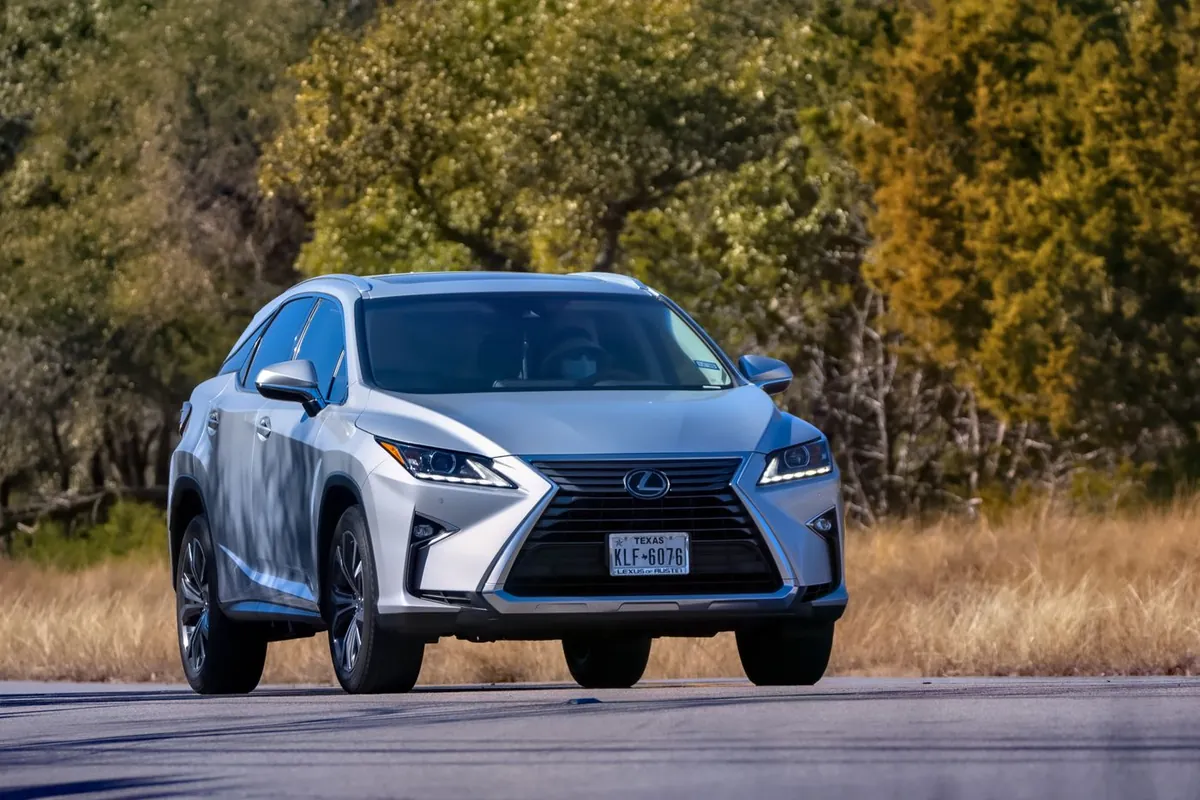
What should I ask a body shop before it repairs my Lexus RX or ES?
Ask five things: whether it will run the diagnostic scan Lexus calls for before and after the repair, how it will straighten or replace damaged structure without the heat Lexus prohibits, what glass it will use and who will calibrate the camera, how it will match your paint, and what records you will get. Those questions come straight from the repair rules Toyota publishes for Toyota and Lexus vehicles, which are summarized below.
You also get to choose who answers them. The Texas Department of Insurance (TDI) says an insurer may offer a list of body shops, but you can use any shop you choose. ACE Body & Frame, on S. Peachtree Road in Balch Springs near Mesquite, does collision repair on Lexus sedans and SUVs, from the ES and IS to the RX, NX and GX. Ask us the same five questions. You should get the same clear answers from any shop you are considering.
Does my Lexus need a scan if there is no warning light?
Yes. Lexus is part of Toyota, and Toyota's repair bulletins cover both brands. According to I-CAR's summary of Toyota Collision Repair Information Bulletin (CRIB) 191, from July 2021, repairers should perform a "Health Check" diagnostic scan before and after every repair on a vehicle that has sustained collision damage. The bulletin explains why: a capable scan tool is the only way to identify and document diagnostic trouble codes, and collision damage may not turn on the malfunction indicator lamp.
So a clean dashboard proves very little after a wreck. The pre-repair Health Check records what the car's computers stored when it arrived; the post-repair check confirms nothing was left behind. Ask for both reports in your file. Our guide on scanning before and after the repair explains how to read them.
Can bent structure on a Lexus be straightened, or must it be replaced?
Often it can be straightened, but only cold and only as Toyota allows. According to I-CAR's summary of Toyota CRIB 176, approved methods include cold straightening by pushing, pulling and hammering. Heating high-strength and ultra-high-strength steel for stress relief is listed as not approved, and CRIB 161 states that heat repair for body and frame components is prohibited.
That matters because heat used to be a common way to relax bent metal. On modern Lexus structure, a part that cannot be straightened cold within the procedure is replaced.
The GX is different from the rest of the line. It is built body-on-frame, like a truck, while the ES, IS, RX and NX are unibody. For full-frame vehicles, I-CAR reports Toyota CRIB 155 as stating that frame sectioning, meaning partial replacement of a frame rail or component, is not an approved repair. A GX with a frame rail damaged beyond cold straightening needs a different plan than splicing in a section. Our guide to unibody vs body-on-frame repair explains the difference, and the Tacoma and Tundra frame guide covers the same Toyota frame rules on trucks.
What changes when a Lexus gets a new windshield?
Several Lexus driver-assist features rely on a camera behind the windshield. According to I-CAR's summary of Toyota's glass requirements, Toyota states that non-genuine windshield glass could affect the lane departure alert, forward recognition camera, dynamic radar cruise control, pre-collision system and automatic high beams. When the windshield is replaced on a model with a forward recognition camera, the camera must be calibrated.
Toyota also sets installation rules, according to I-CAR: primerless adhesives are not allowed for glass installation, and a repaired pinchweld (the metal flange the glass bonds to) needs epoxy primer, not self-etching primer. These details are invisible once the glass is in, which is why you ask before. After installation, the Auto Glass Safety Council says the vehicle should stay put for a minimum drive-away time set by the adhesive and conditions, and the installer will tell you what it is. See windshield replacement after a wreck for more.
The radar behind the grille and the alignment
Dynamic radar cruise control and the pre-collision system also use a radar at the front of the car. Toyota's own radar documents were not part of our research, so here is general guidance from I-CAR: forward radar sits in or behind the front bumper or grille, calibration is normally required after the sensor is replaced, and it may also be needed after the bumper or grille is removed, after front structural repairs, or after the radar is removed and reinstalled. A front-end hit often also means a wheel alignment, and some driver-assist systems and the steering angle sensor depend on it. On a Lexus with a front-end hit, expect the estimate to address the radar, the alignment and the steering angle sensor, and ask which steps Toyota's procedure requires for your model.
How do I judge the answers I get?
This table puts each question next to what Toyota's documents say for Lexus, as summarized by I-CAR, and what a vague answer should prompt you to ask next.
| Your question | What Toyota says for Lexus | If the answer is vague, ask |
|---|---|---|
| Will you scan before and after? | Health Check scan before and after every collision repair | Will I get both reports? |
| How will you straighten structure? | Cold straightening approved; heat repair on body and frame parts prohibited | What happens if a part will not straighten cold? |
| Can you section my GX frame? | Frame sectioning not approved on full-frame vehicles | What is the plan for a damaged rail instead? |
| What windshield will you use? | Non-genuine glass could affect camera-based systems; camera must be calibrated | Who calibrates, and how? |
| What parts are on the estimate? | No Toyota statement on aftermarket or salvaged body parts was available to us | Which parts are genuine Lexus, and does my insurer allow them? |
Read the middle column as the standard and the right column as your follow-up. A shop does not need to quote bulletins to you, but its plan should line up with them.
Will the paint match on a Lexus pearl white or dark metallic?
Lexus pearl whites and deep metallics are layered colors that shift with the light, so painters usually blend into the panels next to the repair to avoid a visible edge. A good match starts with the paint code, then test sprays compared against your car in daylight. Our guide to whether new paint will match covers blending and why it appears on estimates.
The federal EPA rule at 40 CFR 63.11173 requires painters who spray-apply coatings on motor vehicles to be trained in spray application and equipment setup, and requires spraying in a booth or enclosure with filters that capture at least 98 percent of overspray. A clean booth also keeps dust out of a high-gloss finish, which matters on a car where buyers notice every flaw.
How should I work with the insurance adjuster?
TDI explains that an adjuster works for the insurance company paying the claim, reviews what happened and estimates the payment. TDI suggests you try to be present when the adjuster inspects the damage, and says you can ask the company to assign a different adjuster if you cannot resolve issues. If repairs cost more than first estimated, TDI says the shop sends a new estimate to the insurer, and the insurer pays the extra amount if it agrees. The claim is yours; the shop documents the damage and works with the adjuster. See supplements on a repair estimate for how that step works.
A few points on money, from TDI's auto insurance guide. On your own policy, collision coverage pays for an accident and comprehensive covers non-collision damage such as hail, vandalism, theft and flood, and your deductible applies to both. On a claim against the other driver's insurer, no deductible applies, and that insurer typically pays for a rental car for the reasonable repair period. On your own policy, a rental depends on whether you carry rental reimbursement coverage. Keep records of every call, estimate and receipt.
What should I bring to the estimate?
- Your claim number and adjuster contact, plus any estimate already written.
- Your VIN, so glass and parts match your exact Lexus equipment.
- Photos of the damage and of any warnings on the dash since the wreck.
- Notes on handling changes, such as a pull or an off-center steering wheel.
- Anything you noticed about the driver-assist features since the wreck: cruise control that will not set, lane alerts that act strangely, or a pre-collision warning that comes on for no reason.
- Both keys, and the wheel lock key if your Lexus has locking lug nuts.
Then request a free estimate with your model and year.
How ACE Body & Frame helps
Since 1987 ACE Body & Frame has worked from 2922 S. Peachtree Road in Balch Springs. We are open Monday to Friday and serve Balch Springs, Mesquite and the surrounding area. For a Lexus we can take on collision and body work, paint, frame and suspension repair, glass replacement, and mechanical service and diagnostics on foreign and domestic vehicles.
Estimates are free and computerized, and every insurance claim is welcome. Where your vehicle is repaired is your choice by right. If you need a tow or a rental car, both can be arranged, and our repairs are satisfaction guaranteed.
Read about our shop, see the Lexus repair page and other repair by make guides such as Toyota RAV4 and Highlander body repair. Our collision repair service page has more. Call 972-286-0935 or send us your Lexus details.
Questions people ask next
Does Lexus require a scan for minor damage?
According to I-CAR's summary of Toyota CRIB 191, repairers should perform a Health Check scan before and after every repair on a vehicle with collision damage. Toyota notes that collision damage may not turn on the malfunction indicator lamp, so a dark dashboard does not prove the car's systems are free of stored codes.
Why can't a shop just heat and straighten a bent part?
Toyota's bulletins, as summarized by I-CAR, list heating high-strength and ultra-high-strength steel for stress relief as not approved and say heat repair for body and frame components is prohibited. Cold straightening is approved. A part that cannot be brought back cold within the procedure has to be replaced.
Can a GX frame rail be sectioned?
I-CAR reports that Toyota CRIB 155 states frame sectioning, the partial replacement of a frame rail or component, is not an approved repair on Toyota and Lexus full-frame vehicles. The GX is body-on-frame, so a rail damaged beyond cold straightening needs a different plan. Ask the shop what Toyota's procedure allows.
Is aftermarket windshield glass fine on a Lexus?
According to I-CAR, Toyota states that non-genuine windshield glass could affect lane departure alert, the forward recognition camera, radar cruise control, the pre-collision system and automatic high beams. On models with a forward recognition camera, the camera must be calibrated after the windshield is replaced, whichever glass is used.
Can I ask for a different adjuster?
Yes. TDI says you can ask the insurance company to assign a different adjuster if you cannot resolve issues with the one you have. TDI also suggests being present when the adjuster inspects the damage, so you can point out problems and hear the adjuster's view first-hand.
Ready to get your Lexus fixed?
ACE Body & Frame, 2922 S. Peachtree Road, Balch Springs. Free computerized estimates, all insurance claims accepted.
Sources
- I-CAR RTS, "Toyota/Lexus/Scion Position Statement: Pre- and Post-Repair System Scanning"
- I-CAR RTS, "Straightening And Heat: Toyota, Lexus, Scion"
- I-CAR RTS, "Structural Sectioning Procedures: Toyota/Lexus"
- I-CAR RTS, "Toyota/Lexus/Scion Glass Replacement Requirements: UPDATE"
- I-CAR RTS, "Typical Calibration Requirements For Forward Radar Sensors"
- 40 CFR 63.11173
- TDI, "Working with an insurance adjuster"
- TDI, Automobile insurance guide (cb020)
- TDI, "Were you in a wreck? Tips for auto insurance claims"
- Auto Glass Safety Council, "Minimum Drive-Away Times"
Read next
 Repair by make
Hyundai Elantra, Sonata and Tucson collision repair near Mesquite, TX?
Hyundai collision repair near Mesquite: why Hyundai requires scans before and after, what changes on a hybrid, and how parts and insurance work in Texas.
 Repair by make
Honda CR-V and Pilot body repair in east Dallas County: where to go?
Choosing a shop for CR-V or Pilot body repair in east Dallas County: Honda's scan and aiming rules, windshield facts, and warning signs after pickup.
 Repair by make
Can a Toyota Tacoma or Tundra with a bent frame be repaired near Dallas?
A bent Tacoma or Tundra frame can often be straightened, but Toyota does not approve sectioning. What that means for your repair and insurance in Texas.
More: all repair by make guides, collision repair, Lexus repair, repair by make, reviews and directions to the shop.