
In short
A Tacoma or Tundra frame that is out of position can often be measured and cold straightened. According to I-CAR's summary of Toyota's bulletins, that method is approved, while sectioning a new piece into a frame rail is not approved on Toyota full-frame trucks and heat repair is prohibited, so a kinked or torn rail usually means a full frame replacement or a total loss decision.
- Toyota approves cold straightening of its frames by pushing and pulling, per I-CAR's summary.
- Per I-CAR, frame sectioning is not an approved repair on Toyota full-frame trucks.
- Per I-CAR's summary, Toyota's bulletin prohibits heat repair of body and frame parts.
- Ask for frame measurements before and after, plus scan reports and an alignment sheet.
- TDI says an insurer will likely total a truck when repairs cost about its value or more.
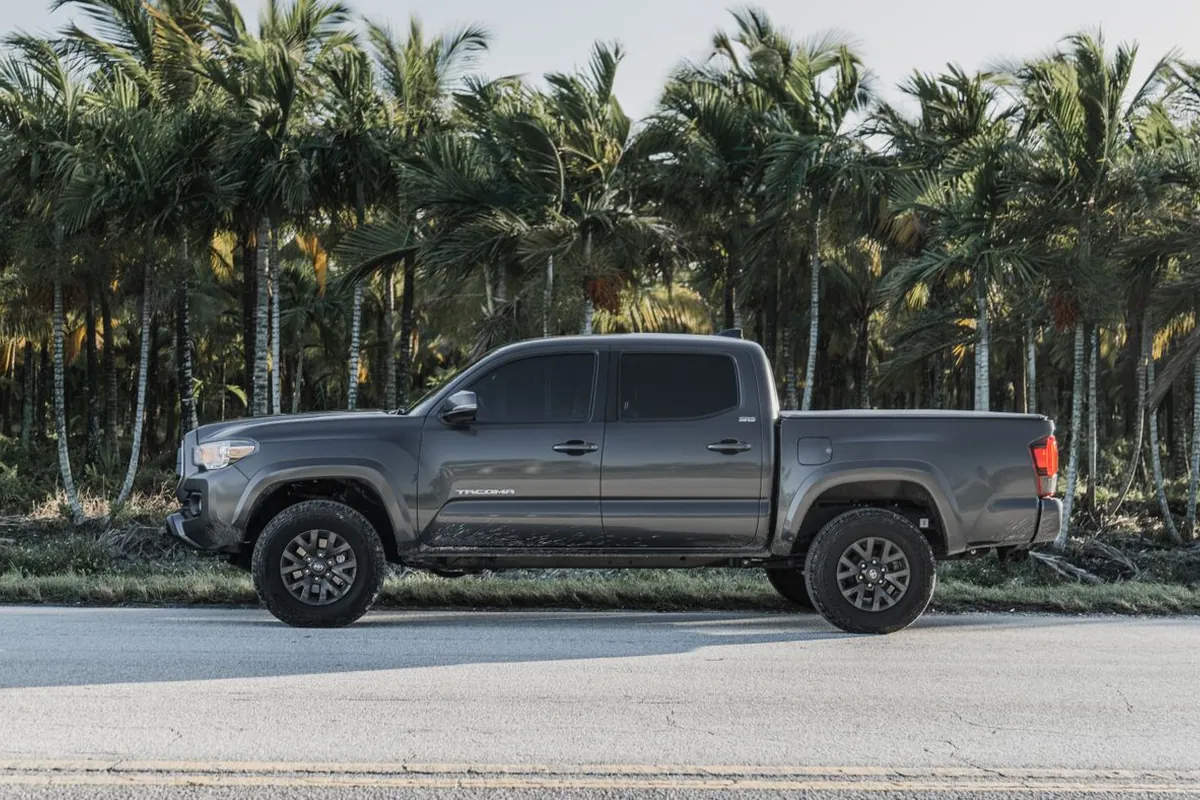
Can a bent Tacoma or Tundra frame be fixed, or is the truck done?
Often it can be fixed, but the answer depends on where the frame is bent and how badly, and Toyota's rules narrow the options more than many owners expect. A frame that is out of position can usually be measured and pulled back with cold straightening, which Toyota lists as an approved method according to I-CAR's summary. A frame rail that is kinked, torn or needs a new section is a different story: according to I-CAR's summary of Toyota's bulletin, cutting in a new piece of rail (sectioning) is not an approved repair on Toyota full-frame trucks. When that happens, the choice becomes a full frame replacement or a total loss.
ACE Body & Frame in Balch Springs, near Dallas, offers frame and suspension repair and body work at 2922 S. Peachtree Road, where we have been since 1987. The rest of this guide explains Toyota's position in plain words, how to read your estimate, and how insurance treats a truck with frame damage in Texas.
What is different about frame repair on a Toyota pickup?
The Tacoma and the Tundra are body-on-frame trucks. A ladder-shaped steel frame carries the cab, the bed, the engine and the suspension, and the body bolts on top. That design is tough, but it means a hit to the bumper, a hitch, a wheel or the bed can travel straight into the frame. Our guide comparing unibody and body-on-frame repair explains the difference.
Toyota publishes Collision Repair Information Bulletins (CRIBs) for repairers. They sit behind a subscription, so what follows comes from I-CAR's summaries of them:
- Sectioning is not approved. CRIB 155 says frame sectioning, meaning partial replacement of a frame rail or component, is not an approved repair on Toyota and Lexus full-frame vehicles.
- Cold straightening is approved. CRIB 176 lists straightening by pushing, pulling and hammering as approved.
- Heat is not. CRIB 176 lists heating high-strength and ultra-high-strength steel for stress relief as not approved, and CRIB 161 states that heat repair for body and frame components is prohibited.
I-CAR explains why makers are this strict. Many parts are now made from high-strength and ultra-high-strength steel and are designed to collapse or transfer crash forces in a specific way, and adding a sectioning joint changes how a part reacts in the next collision. Most makers allow sectioning of some rails, but only when their repair information supports it. On Toyota's full-frame trucks, per I-CAR's summary, it does not.
How do I read the frame lines on my Tacoma or Tundra estimate?
The table below matches the kinds of frame damage we see on pickups to Toyota's position and the usual outcome. It is a guide for the conversation with the shop and the adjuster, not a diagnosis.
| What the measurements show | Toyota's position (per I-CAR) | Usual path |
|---|---|---|
| Frame is out of position but not kinked or torn | Cold straightening by pushing and pulling is approved | Measure, straighten on equipment, measure again |
| Rail is kinked, buckled or torn in one area | Sectioning a new piece into the rail is not approved | Full frame replacement, or a total loss decision |
| Someone used heat to straighten a bend | Heat repair of body and frame components is prohibited | Treat the part as needing replacement; ask questions |
| Bolt-on parts bent (bumper, hitch, crossmember brackets) | Follow the vehicle's repair manual | Replace the bolt-on part, then measure the frame behind it |
| Suspension or steering parts bent | Follow the repair manual for each part | Replace, then align the wheels |
The deciding column is the first one, which is why measuring comes before any promise. Ask for the measurement printouts from before and after the repair. If someone tells you a Toyota frame will be "cut and sleeved", ask which Toyota procedure allows it on your model year.
After any frame or suspension work, plan on an alignment. I-CAR notes that a great majority of collisions can cause suspension damage, which makes an alignment necessary, and that vehicles with driver-assistance systems must be aligned with how the vehicle travels. On newer trucks, the camera and radar may need calibration after that alignment.
What does Toyota require for scans and cameras on a frame repair?
A frame hit is a collision, so Toyota's scanning guidance applies. According to I-CAR's summary of Toyota CRIB 191, repairers should perform a "Health Check" diagnostic scan before and after every repair on a vehicle with collision damage, because collision damage may not light the malfunction indicator lamp. Newer Tacomas and Tundras carry a forward camera and, on many trims, a front radar. If the windshield is replaced on a model with a forward recognition camera, I-CAR's summary says Toyota requires the camera to be calibrated.
Ask any shop, including us, how the scans and any calibration will be done on your truck and who will do them. Our guide to recalibrating safety cameras and sensors covers the details.
Will insurance total my Tacoma or Tundra for a bent frame in Texas?
It might, and Toyota's no-sectioning position is one reason. The Texas Department of Insurance (TDI) says an insurer compares the vehicle's value with the cost to repair it. If repair costs are about the same as or more than the value, the company will likely consider it totaled, and some companies might total a vehicle even when the repair costs less. TDI gives no fixed percentage.
A few related facts help you plan:
- The cap. TDI says repair payments under your policy are capped at the vehicle's actual cash value, which is replacement cost minus depreciation.
- If you disagree with the value. TDI says you can ask the insurer what source it used to value the truck and negotiate, with local dealer quotes, online prices and ads, and proof of special features or custom parts. Lift kits, racks and toppers are examples worth documenting.
- If you want to keep it. Tell the insurer as soon as possible. It subtracts the salvage value from the payment, the truck may get a salvage title, and after repairs you need a new title from the Texas Department of Motor Vehicles before driving it.
- The frame is a major component. Texas Transportation Code 501.091 lists the frame as a major component part, and the state's rebuilt vehicle form asks for the VIN of the vehicle a replacement frame came from.
Our guides on whether insurance will total a bent frame and total loss in Texas go further.
Is a Toyota truck with a repaired frame safe, and does it lose value?
A frame that was measured, straightened by an approved method or replaced, then measured again and aligned, is a correct repair. The risk is in shortcuts. TxDMV tells buyers of rebuilt vehicles to check whether the frame was damaged and realigned correctly, because frame misalignment can strain the drivetrain, wheels, tires and brakes. Those are the same signs to watch on your own truck after a repair: uneven tire wear, a pull, a crooked steering wheel, or a gap between cab and bed that was not there before.
Value is a separate question. A truck with a salvage history is expected to be worth less than one without it, according to TxDMV. For an ordinary repair without a salvage title, keep the estimate, the measurement printouts, the scan reports and the alignment sheet. When you sell, those papers answer the buyer's questions. Our guide on frame damage and resale value covers it.
What should I ask a shop and bring to the estimate?
Ask any shop these questions about a Tacoma or Tundra with frame damage:
- How will you measure the frame, and will I get the printouts from before and after?
- Is any rail kinked or torn, and if so, is the plan straightening, a full frame, or a total loss conversation with my insurer?
- Will any heat be used on the frame or body structure?
- Which scans and calibrations does my truck need after this repair?
- What about the hitch, bed and accessories? Will they be checked and remounted?
Bring or send:
- The VIN, model year, cab and bed length, and 2WD or 4WD.
- Photos of all four sides, the damage up close, and under the truck behind the impact if you can safely see it.
- A list of aftermarket parts: lift, wheels, bumper, hitch, rack, topper.
- The claim number and the adjuster's name and phone number.
- Any warning messages on the dash since the wreck.
If you are unsure the frame is involved at all, start with the signs of frame damage, then request a free estimate so the truck can be looked at properly.
How ACE Body & Frame helps
We are a body and frame shop in Balch Springs, near Dallas, on S. Peachtree Road since 1987 and open Monday to Friday. For a Tacoma or Tundra we handle suspension and frame repair, collision repair, body and paint, welding, fabrication, glass replacement, and foreign and domestic automotive service and diagnostics.
Estimates here are free and computerized, and every insurance claim is accepted. You have the right to choose where your vehicle is repaired. If the truck should not be driven, towing is available, and rental car service is available while it is here. Repairs are satisfaction guaranteed. We will tell you what the measurements show and what Toyota's repair information allows before any work starts.
Read what customers say on our reviews page, see the Toyota repair page or other repair by make guides, or call 972-286-0935. When you are ready, send us your truck's details.
Questions people ask next
Can a shop weld a new section into my Tacoma frame rail?
According to I-CAR's summary of Toyota CRIB 155, frame sectioning, meaning partial replacement of a frame rail or component, is not an approved repair on Toyota and Lexus full-frame vehicles. If a rail is kinked or torn, ask the shop which Toyota procedure it plans to follow. The usual options are a full frame replacement or a total loss decision.
How do I know if my Tundra frame is bent after a wreck?
Look for a truck that sits unevenly, a pull to one side, a crooked steering wheel, uneven tire wear, doors or a tailgate that no longer line up, or a changed gap between cab and bed. None of these proves frame damage, and some frame damage shows no sign at all. Only measuring the frame against the maker's dimensions settles it.
Can I keep my Tacoma if the insurer totals it?
TDI says you can keep a totaled vehicle if you tell the insurer as soon as possible. It subtracts the salvage value from the payment, the truck may receive a salvage title, and after repairs you need a new title from the Texas Department of Motor Vehicles before driving it. A salvage history usually lowers resale value.
Does a frame repair on my Toyota affect the safety cameras?
It can. According to I-CAR's summary, Toyota's guidance calls for a Health Check scan before and after every collision repair. I-CAR notes that many makers require driver-assistance calibration after a wheel alignment, and a frame repair is usually followed by an alignment. Ask the shop which scans and calibrations your truck's VIN requires and who will perform them.
Do my lift kit and aftermarket wheels count when the insurer values my truck?
TDI advises documenting special features and custom parts when you discuss a total loss value, along with local dealer quotes, online prices and ads for similar trucks. Keep receipts for lifts, wheels, bumpers and racks. Whether your policy pays for them depends on its terms, so ask your agent whether custom equipment is covered.
Ready to get your Toyota fixed?
ACE Body & Frame, 2922 S. Peachtree Road, Balch Springs. Free computerized estimates, all insurance claims accepted.
Sources
- I-CAR RTS, "Structural Sectioning Procedures: Toyota/Lexus"
- I-CAR RTS, "Straightening And Heat: Toyota, Lexus, Scion"
- I-CAR RTS, "Toyota/Lexus/Scion Position Statement: Pre- and Post-Repair System Scanning"
- I-CAR RTS, "The Effects Of Wheel Alignment On ADAS"
- TDI, "My car was totaled! Now what?"
- TDI, Automobile insurance guide (cb020)
- TxDMV, "Rebuilt Vehicles" (Title Check)
- Tex. Transp. Code 501.091
- I-CAR RTS, "Toyota/Lexus/Scion Glass Replacement Requirements: UPDATE"
- TxDMV Salvage/Nonrepairable Motor Vehicle Manual, January 2026
Read next
 Repair by make
Toyota Camry and Corolla collision repair near Mesquite, TX: who should I call?
Camry or Corolla wrecked near Mesquite? What Toyota says about scans and camera calibration, what drives the estimate, and what to ask any body shop.
 Repair by make
Toyota RAV4 and Highlander body repair near Balch Springs: what about the safety sensors?
RAV4 or Highlander body repair near Balch Springs: which repairs affect the camera and radar, what Toyota requires, and what records to ask for at pickup.
 Repair by make
Ford Super Duty frame and body repair east of Dallas: who does it?
F-250 or F-350 with a bent frame or body damage? What Ford allows for straightening and parts, when trucks get totaled, and what to ask a shop near Dallas.
More: all repair by make guides, collision repair, Toyota repair, repair by make, reviews and directions to the shop.