
In short
Choose a shop that follows Mazda's procedures: Mazda says any of its vehicles involved in a collision must get a pre- and post-repair scan with a genuine Mazda scan tool, warning light or not, and it does not authorize non-genuine, used or reconditioned parts or damaged fasteners. In Texas you pick the shop; ACE Body & Frame in Balch Springs near Mesquite is one choice.
- Mazda requires a pre- and post-repair scan with a genuine Mazda scan tool after any collision.
- Mazda does not authorize reusing damaged fasteners and hardware.
- Texas insurers must pay for like kind and quality parts, not necessarily Mazda parts.
- Bumper, windshield and alignment work can call for sensor calibration.
- Layered reds and grays usually need blending into the next panel.
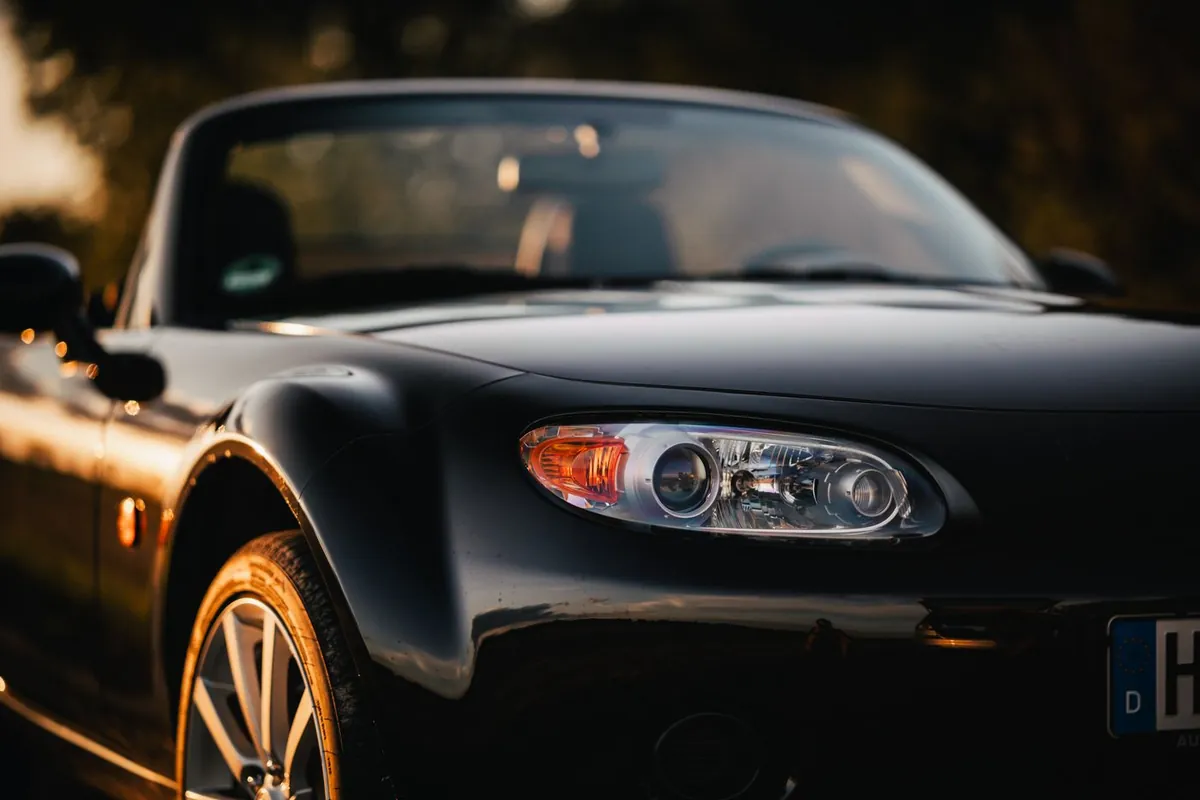
Where should I take a Mazda3 or CX-5 for body repair near Mesquite?
Take it to a shop you choose that will follow Mazda's repair procedures, scan the car with the scan tool Mazda names, and tell you plainly which parts it will use. You do not need your insurer's permission to pick that shop. The Texas Department of Insurance (TDI) says an insurer may offer a list of body shops, but you can use any shop you choose.
ACE Body & Frame is in Balch Springs, near Mesquite, and has done collision repair on S. Peachtree Road since 1987, on everything from a Mazda3 or CX-30 to a CX-5 or the larger CX-9 and CX-90. Mazda has published clear positions on scanning and on parts, and many of its newer models carry cameras and radar for driver assistance. This guide explains what those positions mean for your repair and gives you the questions to put to any shop, including ours.
What does Mazda require before and after a collision repair?
Mazda's position statement of October 31, 2025 is direct. Any Mazda vehicle involved in a collision must undergo both a pre-repair and a post-repair diagnostic scan with a genuine Mazda scan tool, regardless of whether a warning light is illuminated. The post-repair scan confirms that systems are operating correctly, properly calibrated and free of trouble codes.
Three words in that statement matter to you as the owner:
- "Any." The statement does not set a minimum damage level, so even a parking lot bump is worth asking about.
- "Genuine Mazda scan tool." Mazda names the tool, not just the task. Ask any shop what tool it will use on your Mazda, or whether the scan will be done by an outside service that uses Mazda's tool.
- "Regardless of whether a warning light is illuminated." A dark dashboard does not mean no fault is stored.
Ask for both scan reports to be printed or saved to your repair file. If anything shows up on the first scan, it should either be repaired or explained by the time of the second. Our guide on scanning before and after the repair shows what a report looks like and how to read it.
What parts and hardware does Mazda want on my car?
Mazda's statement on non-OEM parts (December 6, 2024) strongly recommends Mazda Genuine Parts for all repairs, including collision repairs. It says Mazda North American Operations does not authorize:
- aftermarket, third-party, gray market or imitation parts,
- used, salvaged, recycled or reconditioned parts,
- damaged fasteners and hardware.
The last item is easy to miss. Clips, bolts, nuts and push pins that hold bumpers, liners and trim break or stretch during a collision and during removal. Mazda's position is that damaged ones are not reused. On an estimate, that shows up as a list of small hardware items. Seeing them listed is a good sign that the repair was planned with the maker's position in mind.
Remember that the maker's position is not Texas law. TDI's auto insurance guide says insurers must pay for parts of like kind and quality, which are not necessarily original manufacturer parts. If your estimate lists non-Mazda parts and you want genuine ones, raise it with the adjuster before work starts. Our guide to OEM, aftermarket or used parts in Texas explains your options, and when the insurance estimate is lower than the shop's covers what to do if the two numbers differ.
Which repairs can affect the cameras and radar on my Mazda?
Many newer Mazdas use a camera at the top of the windshield and a radar at the front for features such as adaptive cruise control and automatic braking, and sensors at the corners and rear for blind spot and parking functions. Mazda's own calibration documents were not part of our research, so the table below uses general guidance from I-CAR, the collision industry's training body. Your model's Mazda repair information is the final word.
| Repair step | What may follow | What to ask |
|---|---|---|
| Front radar replaced | Calibration is normally required | Static, on-road, or both, and who does it? |
| Front bumper or grille removed, or front structure repaired | Radar calibration may be needed | Does Mazda's procedure call for it on this model? |
| Windshield replaced or front camera removed | Camera aiming may be needed; replacing the camera almost always needs it | What glass is used, and how is the camera aimed? |
| Wheel alignment after suspension damage | Many makers require driver-assist calibration after an alignment | Is calibration done after the alignment? |
| Airbag deployment or structural repair | Steering angle sensor may need calibration | Is it on the estimate? |
Read "may" as "check the procedure for your model," not as "optional." I-CAR also notes that on-road calibration can be slowed or stopped by rain, which is one reason some repairs take longer than the body work alone suggests. For more, see does my car need its cameras and sensors recalibrated.
Will the paint match on a Mazda red or gray?
Some of Mazda's best known colors, including its deep reds and metallic grays, are built in layers, with a tinted or pearl coat over a base. Layered colors look different depending on the angle of the light, which makes them among the harder colors to match. A skilled painter starts from the paint code, sprays test panels, and usually blends color into the panel next to the repaired one so there is no visible edge. If an estimate shows blending on a neighboring door or fender, that is why. Our guide on whether new paint will match covers this in more depth.
Federal rules also govern how a shop sprays. The EPA rule at 40 CFR 63.11173 requires painters who spray-apply coatings on motor vehicles to be trained in spray application and equipment setup, and requires spraying inside a booth or enclosure with filters that capture at least 98 percent of overspray. Ask any shop where your car will be painted.
What happens once my Mazda is at the shop?
- Check-in and pre-scan. The damage is photographed and the pre-repair scan is run, so stored codes are on record from the start. Ask whether the scan is done at the shop or by an outside service.
- Estimate. At ACE you get a free computerized estimate. If you have a claim, we send it to the adjuster. TDI suggests you try to be present when the adjuster inspects the damage.
- Teardown. Damaged parts come off and hidden damage is found. TDI explains that when repairs cost more, the shop sends a new estimate to the insurer and the insurer pays the extra amount if it agrees. Our guide to supplements on a repair estimate explains this step.
- Parts and repair. Parts are ordered, structure is repaired, panels are fitted and painted.
- Alignment and calibration. Whatever Mazda's procedure requires for the work done.
- Post-scan and road test. The final scan confirms no trouble codes remain.
- Pickup. You get the paperwork, including scan and calibration records.
If you are wondering what makes these steps take longer, see how long body and paint repair usually takes.
Who pays for the repair and a rental while my Mazda is in the shop?
That depends on who caused the wreck and what your policy includes. TDI's auto insurance guide sets out the usual cases:
- Another driver caused it. That driver's insurer should pay for your repairs and typically pays for a rental car for the reasonable repair period. No deductible applies to a claim against another driver's insurer. See whose insurance fixes your car when the other driver was at fault if that insurer is slow to respond.
- You caused it, or no one else is identified. Your collision coverage pays to repair the car, minus your deductible.
- Hail, vandalism, theft or flood. Comprehensive coverage applies, also minus your deductible.
- A rental on your own policy after an accident is paid if you carry rental reimbursement coverage, a set daily amount up to your policy's limits.
Calibration steps and parts on order can stretch a repair, so check your rental limit at the start. The claim stays in your name. A shop documents the damage, writes the estimate and works with the adjuster; it does not take over your claim.
What should I bring for the estimate?
- Your claim number, the adjuster's name and phone number, and any estimate already written.
- Photos from the scene and the police report number, if one was made.
- A note of any warning messages that appeared after the wreck, even if they went away.
- Your VIN or registration, so parts for your exact trim can be ordered.
- Both keys and anything the shop will need to move or test the car.
When that is together, request a free estimate and tell us your model and year.
How ACE Body & Frame helps
ACE Body & Frame has served Balch Springs, Mesquite and the surrounding area from 2922 S. Peachtree Road since 1987, Monday to Friday. Collision and body repair, paint, frame and suspension work, glass replacement and service and diagnostics on foreign and domestic cars are all part of what we do, so one estimate can cover the body work, paint and alignment on a Mazda.
Every insurance claim is accepted here, and estimates are free and computerized. You have the right to choose where your vehicle is repaired. We can arrange a tow and a rental car, and our repairs are satisfaction guaranteed. For scanning and calibration, ask us the same thing you would ask anyone: how it will be done on your Mazda and what records you will get.
Learn about our shop, see the Mazda repair page and the other repair by make guides, such as the Subaru and EyeSight guide. Our auto body and collision service page has more. Call 972-286-0935 or send us your Mazda's details for an estimate.
Questions people ask next
Does Mazda really require a scan for a small dent?
Mazda's October 2025 statement says any Mazda vehicle involved in a collision must have a pre-repair and a post-repair diagnostic scan with a genuine Mazda scan tool, regardless of whether a warning light is on. The statement sets no minimum damage level, so after even a minor bump, ask the shop whether the scans are on your estimate.
Will my insurer pay for genuine Mazda parts?
Not automatically. TDI says insurers must pay for parts of like kind and quality, which are not necessarily original manufacturer parts. Mazda strongly recommends its genuine parts. If genuine parts matter to you, ask the adjuster before work starts what the policy allows and whether you would pay any difference.
Why does my estimate list so many clips and bolts?
Mazda does not authorize damaged fasteners and hardware. Clips, push pins and bolts on bumpers, liners and trim often break or stretch in the crash or during removal, so they are replaced rather than reused. Listing them is a sign the estimate follows the maker's position, not padding.
Can a cracked CX-5 bumper be repaired instead of replaced?
Sometimes. Plastic bumper covers can often be repaired and refinished, but when a radar or other sensor sits behind the cover, Mazda's repair information for that model decides whether repair or refinishing is allowed. Ask the shop to show you what Mazda says for your vehicle before you approve either option.
How do I know the sensors work after the repair?
Ask for the post-repair scan report and any calibration record. Mazda says the post-repair scan confirms systems are operating correctly, calibrated and free of trouble codes. Then watch for warning messages over the first few drives, and bring the car back promptly if any driver-assist feature acts differently than before.
Ready to get your Mazda fixed?
ACE Body & Frame, 2922 S. Peachtree Road, Balch Springs. Free computerized estimates, all insurance claims accepted.
Sources
- Mazda Position Statement, "Pre- and Post-Repair Diagnostic Scanning" (October 31, 2025)
- Mazda Position Statement, "Use of Non-OEM Parts" (December 6, 2024)
- I-CAR RTS, "Typical Calibration Requirements For Forward Radar Sensors"
- I-CAR RTS, "Typical Calibration Requirements For Forward Facing Cameras"
- I-CAR RTS, "The Effects Of Wheel Alignment On ADAS"
- 40 CFR 63.11173
- TDI, Automobile insurance guide (cb020)
- TDI, "Were you in a wreck? Tips for auto insurance claims"
- TDI, "Working with an insurance adjuster"
- I-CAR RTS, "Typical Calibration Requirements For Steering Angle/Position Sensors"
Read next
 Repair by make
Ford Super Duty frame and body repair east of Dallas: who does it?
F-250 or F-350 with a bent frame or body damage? What Ford allows for straightening and parts, when trucks get totaled, and what to ask a shop near Dallas.
 Repair by make
Pickup bed, tailgate and bumper repair near Balch Springs: repair or replace?
Repair or replace a pickup bed, tailgate or rear bumper? It depends on the part, the metal and the frame behind it. See how to decide and what to ask.
 Repair by make
OEM, aftermarket or used parts: what goes on my car after a wreck in Texas?
Texas lets you choose your parts, but insurers pay for like kind and quality. See which parts matter most for safety and how to read your estimate.
More: all repair by make guides, collision repair, Mazda repair, repair by make, reviews and directions to the shop.