
In short
An Audi body mixes aluminum and several grades of steel, and each panel must be repaired by Audi's procedure, since heat can permanently weaken some metals. Its cameras and radar need calibration after many repairs, and according to I-CAR, Audi's repair information calls for checking the fault memory before and after the work.
- Ask which panels on your Audi are aluminum before work starts.
- Heat can permanently weaken some metals; follow the maker's procedure.
- Per I-CAR, Audi's repair information says to check fault memory before and after.
- Bumper, windshield and alignment work can each call for calibration.
- Texas insurers owe like kind and quality parts, not always original.

What should I know about aluminum and sensors before my Audi is repaired?
Two things. First, an Audi body is built from more than one kind of metal, and the right repair for each panel comes from Audi's repair information, not from habit: some materials cannot be heated or straightened the way ordinary steel can. Second, an A4, A6, Q5 or Q7 carries cameras and radar that have to be aimed correctly after body work, and, according to I-CAR, Audi's own repair documents call for checking the fault memory before and after the repair.
You can choose any shop to repair your Audi in Texas; your insurer cannot make that choice for you. ACE Body & Frame has done collision repair on S. Peachtree Road in Balch Springs, southeast of Dallas, since 1987. Below we explain the aluminum question, the sensor question, how insurance treats parts, and what to ask any shop, including us.
Does Audi require a scan before and after the repair?
Audi handles this differently from many makers. According to I-CAR, Audi and Volkswagen have no stand-alone position statement on pre- and post-repair scanning. Instead, their "Safety Precautions and Repair Information" document tells technicians to check the trouble code memory with the vehicle diagnostic tester, to process any code that has been set, and to check the systems for codes again after the repair.
In plain terms, that is a scan at the start and a scan at the end, written into the repair instructions rather than issued as a separate statement. The practical result for you is the same: ask for both scans to appear on the estimate, and ask for the reports when you pick the car up. A dashboard with no warnings is not proof that nothing is stored.
Why does aluminum change how an Audi is repaired?
I-CAR notes that vehicle parts today are made from high-strength steel, ultra-high-strength steel, aluminum and carbon fiber, and that many are designed to collapse or transfer collision forces in a specific way. Audi has used aluminum in its bodies for a long time, and the mix varies by model and year, so the first question for your car is simply which panels on it are aluminum and which are steel.
Why it matters:
- Heat. I-CAR says heat can permanently damage certain metals by breaking down the structure that gives them strength, and that the maker's procedures must always be followed for heat use. A panel that would be warmed and worked on an older car may need a different method, or replacement, on yours.
- Joining. Mixed-material bodies are often joined with rivets and adhesives as well as welds. The method and the parts for each joint come from the maker's procedure for that location.
- Dent repair. Aluminum behaves differently from steel under a hammer and dolly, so small dents that would be routine on steel can call for different techniques or a new panel.
- Keeping metals apart. Many shops keep tools and work areas used on aluminum separate from those used on steel, because steel particles left on aluminum can lead to corrosion. Ask how the shop handles it.
Not every Audi repair involves aluminum structure. A bumper cover is plastic, and many outer panels are steel. The point is to ask before work starts, so the estimate is written for the materials your car actually has.
Which sensors could a body repair disturb on an A4, A6, Q5 or Q7?
IIHS describes the typical setup: front crash prevention uses cameras, radar or lidar; lane departure systems use cameras; blind spot detection uses sensors on the side of the vehicle; rear systems use cameras, radar or ultrasonic sensors. On most Audis that means a camera near the top of the windshield, radar at the front, sensors in the rear corners and parking sensors in the bumpers. The table shows what I-CAR's general guidance says about calibration after common repairs.
| Repair | Sensor that may be affected | What I-CAR's general guidance says | Ask the shop |
|---|---|---|---|
| Front bumper or grille removed | Forward radar | Calibration may be needed after the bumper or grille is removed, and is normally required if the sensor is replaced | Does Audi's procedure call for radar calibration after this repair? |
| Front structural repair | Forward radar and its mount | Calibration may be needed after front structural repairs | Will the radar mount be measured and the radar aimed? |
| Windshield replaced or removed | Forward camera | Removing the windshield or mirror may require aiming; replacing the camera almost always does | How and where will the camera be aimed? |
| Wheel alignment | Camera and radar systems | Numerous makers require calibration whenever an alignment is done | Does Audi require calibration after alignment on my model? |
Use the "ask the shop" column word for word. I-CAR also notes that calibration can be static, with targets in the shop, or dynamic, on the road under set conditions, and some vehicles need both. IIHS reported in 2023 that makers stipulate calibration any time a sensor is removed and replaced or reinstalled, and that about half of owners who had a crash avoidance feature repaired reported problems afterward. For more detail, see does my car need its sensors recalibrated and bumper cover repair or replace.
Why does a wheel alignment matter for an Audi's driver-assist systems?
I-CAR says a great majority of collisions can cause suspension damage, which means an alignment will be needed, and that vehicles with driver-assistance systems need to be aligned with how the vehicle actually travels. The camera and radar steer and brake based on where they think straight ahead is. If the car's thrust line has moved and the sensors were not recalibrated to match, lane keeping can drift and adaptive cruise can track the wrong lane.
So if your Audi hit a curb, slid into one, or took a corner hit, expect the estimate to include an alignment and the calibration Audi requires after it. If it pulls or the steering wheel sits off center, read why a car pulls after a wreck or curb hit.
Will insurance pay for Audi parts and calibration?
The Texas Department of Insurance says insurers must pay for parts of like kind and quality, which are not necessarily original manufacturer parts. Texas lets you choose the shop and the parts, but the insurer does not have to pay more than a reasonable amount. Your collision coverage pays minus your deductible; a claim against an at-fault driver's insurer has no deductible; and payments under your policy are capped at the car's actual cash value.
Calibrations are part of a correct repair, not an extra. When each scan and calibration is its own line on the estimate, with the reason beside it, the adjuster can see why it is needed. If damage turns up after teardown, the shop sends a new estimate, and the insurer pays the added amount if it agrees.
What happens to an Audi once it is at the shop?
Knowing the order of work makes the estimate and any changes to it easier to follow. A typical Audi collision repair here runs like this:
- Walk-around and pre-scan. We look over the car with you and note what you noticed after the hit, and the stored trouble codes are read.
- Look up the car. The repair is planned from Audi's information for your VIN: which panels are aluminum or steel, how each joint is made, and which sensors sit behind the damaged parts.
- Estimate and adjuster. We write a free computerized estimate and work with your adjuster. You decide whether to go ahead.
- Teardown. Damaged parts come off, and anything hidden goes to the insurer on a new estimate before more work is done.
- Structure, body and paint. Measuring comes first, then panel work, joining by the maker's method, and refinishing with color blended into the panels next to the repair.
- Alignment, calibration, post-scan. The wheels are aligned if needed, sensors are calibrated as Audi requires, and the car is scanned again.
- Road test and pickup. You get the paperwork for the scans and calibrations with your invoice.
What should I bring and ask before an Audi repair?
- Bring your claim number, adjuster's contact, the insurer's estimate if one exists, scene photos and all keys.
- Note any message about lane assist, adaptive cruise, pre sense or side assist that appeared after the hit.
- Ask: Which panels being repaired or replaced on my car are aluminum?
- Ask: Will the trouble code memory be checked before and after, as Audi's repair information says?
- Ask: Which sensors will be removed, and how will each be calibrated?
- Ask: Which parts are original Audi, and which are not?
Other European makes raise similar questions; see our guides to Volkswagen repair, BMW body repair and Mercedes-Benz repair. When you are ready, request a free estimate.
How ACE Body & Frame helps
We have worked on S. Peachtree Road in Balch Springs since 1987, repairing foreign and domestic vehicles for Balch Springs, Mesquite and the surrounding area.
- Free computerized estimates that list materials, parts, scans and calibrations.
- All insurance claims accepted. You have the right to choose where your vehicle is repaired. We document the damage, write the estimate and work with the adjuster.
- Collision repair, auto body and paint, plus suspension, frame and glass work.
- Foreign and domestic service and diagnostics.
- Towing and rental car service available. Repairs are satisfaction guaranteed.
Ask us, as you would any shop, exactly how your model's materials and sensors will be handled. See our Audi repair page, more repair by make guides, or our work. We are open Monday to Friday. Call 972-286-0935 or request a free estimate.
Questions people ask next
Is my whole Audi made of aluminum?
Usually not. Modern bodies combine aluminum with high-strength and ultra-high-strength steels, and the mix differs by model and year. Some Audis use more aluminum than others. Ask the shop to check Audi's repair information for your VIN and tell you which damaged panels are aluminum, because that changes how they can be repaired or joined.
Can a dent in an aluminum panel be repaired?
Often, but aluminum behaves differently from steel when it is worked, and I-CAR warns that heat can permanently damage some metals. Whether a given dent is repaired or the panel is replaced depends on its size, its location and Audi's procedure for that part. Ask the shop to explain the choice on the estimate.
Does Audi have a position statement on scanning?
According to I-CAR, Audi has no stand-alone scanning statement. Its Safety Precautions and Repair Information document says to check the trouble code memory with the diagnostic tester, process any codes that are set, and check the systems again after the repair. In practice that means a scan at the start and at the end.
Will a new windshield affect my Audi's lane assist?
It can. I-CAR's general guidance says removing the windshield or the rearview mirror may require the forward camera to be aimed, and replacing the camera almost always does. Ask what glass is priced on your estimate and how and where the camera will be aimed after the new windshield is installed.
My Audi was aligned after the repair. Is calibration also needed?
It may be. I-CAR notes that numerous makers require driver-assist calibration whenever a wheel alignment is performed, and that some include the alignment as a step in the calibration. Whether Audi requires it on your model is in its repair information, so ask the shop to check and to list it on the estimate if it applies.
Ready to get your Audi fixed?
ACE Body & Frame, 2922 S. Peachtree Road, Balch Springs. Free computerized estimates, all insurance claims accepted.
Sources
- I-CAR RTS, "Audi Position: Pre- and Post-Repair System Scanning - UPDATE"
- I-CAR RTS, "Structural Sectioning Procedures: Toyota/Lexus"
- I-CAR RTS, "Straightening And Heat"
- I-CAR RTS, "Typical Calibration Requirements For Forward Radar Sensors"
- I-CAR RTS, "Typical Calibration Requirements For Forward Facing Cameras"
- I-CAR RTS, "The Effects Of Wheel Alignment On ADAS"
- IIHS news, "Crash avoidance features improve safety but complicate repairs" (February 15, 2023)
- TDI, Automobile insurance guide (cb020)
- TDI, "Were you in a wreck? Tips for auto insurance claims"
- Consumer Bill of Rights, Personal Automobile Insurance (28 TAC 5.9970(b), 2026 Version)
Read next
 Repair by make
Honda CR-V and Pilot body repair in east Dallas County: where to go?
Choosing a shop for CR-V or Pilot body repair in east Dallas County: Honda's scan and aiming rules, windshield facts, and warning signs after pickup.
 Repair by make
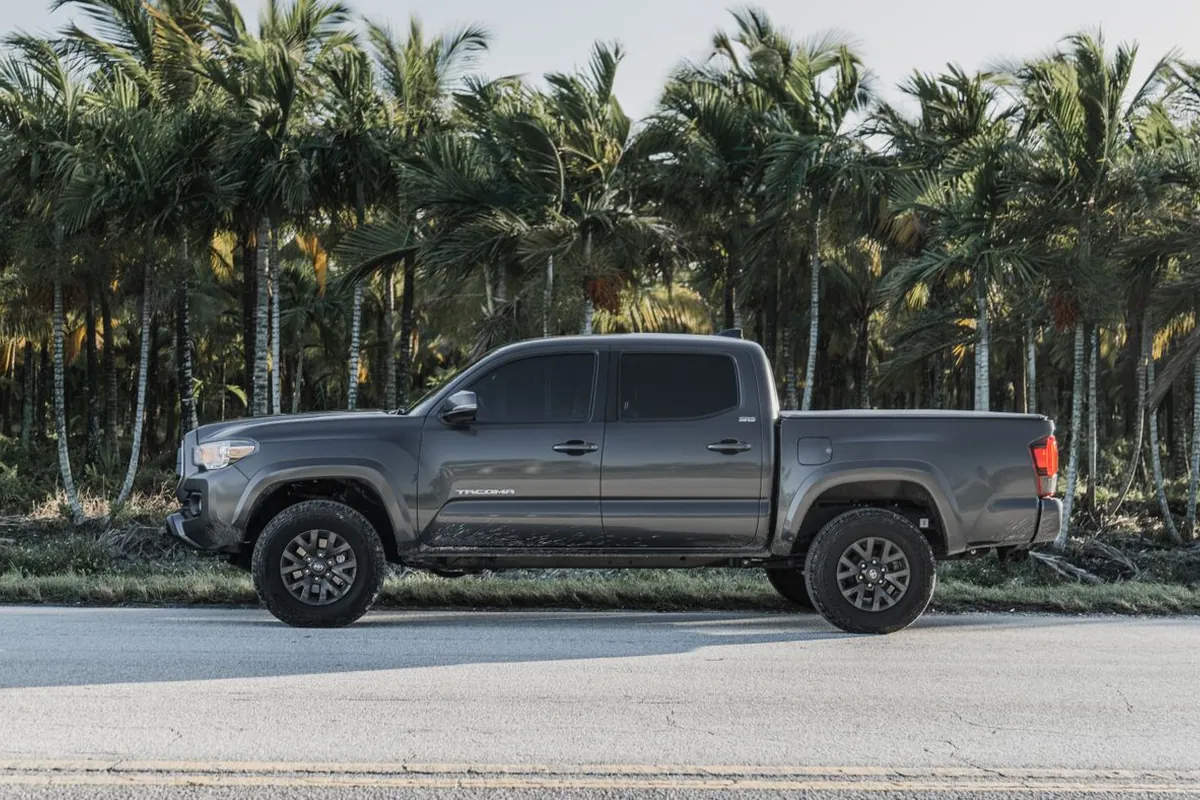
Can a Toyota Tacoma or Tundra with a bent frame be repaired near Dallas?
A bent Tacoma or Tundra frame can often be straightened, but Toyota does not approve sectioning. What that means for your repair and insurance in Texas.
 Repair by make
Where do I take a Ram 1500 with body or frame damage near Dallas?
Ram 1500 with body or frame damage? How to tell which you have, what Ram's maker requires for scans and frame repair, and who pays in Texas.
More: all repair by make guides, collision repair, Audi repair, repair by make, reviews and directions to the shop.