
In short
Before a long trip, check what lets water in, what can come loose on the highway, and what connects the RV to the road or the truck: roof and seals, caps and seams, windows and doors, the awning, lights, the frame and hitch, and your insurance and registration. Do it well ahead of the trip so there is time to fix what you find.
- Walk around early, with a ladder, a flashlight and a camera, not the night before.
- Fix frame, hitch, lights, door latch, awning lock and driver-view glass before leaving.
- Dried or cracked sealant at roof openings and seams is where most leaks start.
- TxDMV requires registration for non-farm trailers and a title over 4,000 pounds gross weight.
- Confirm your RV is listed on a policy that covers damage to the RV itself.
What should I check on my RV body before a long trip?
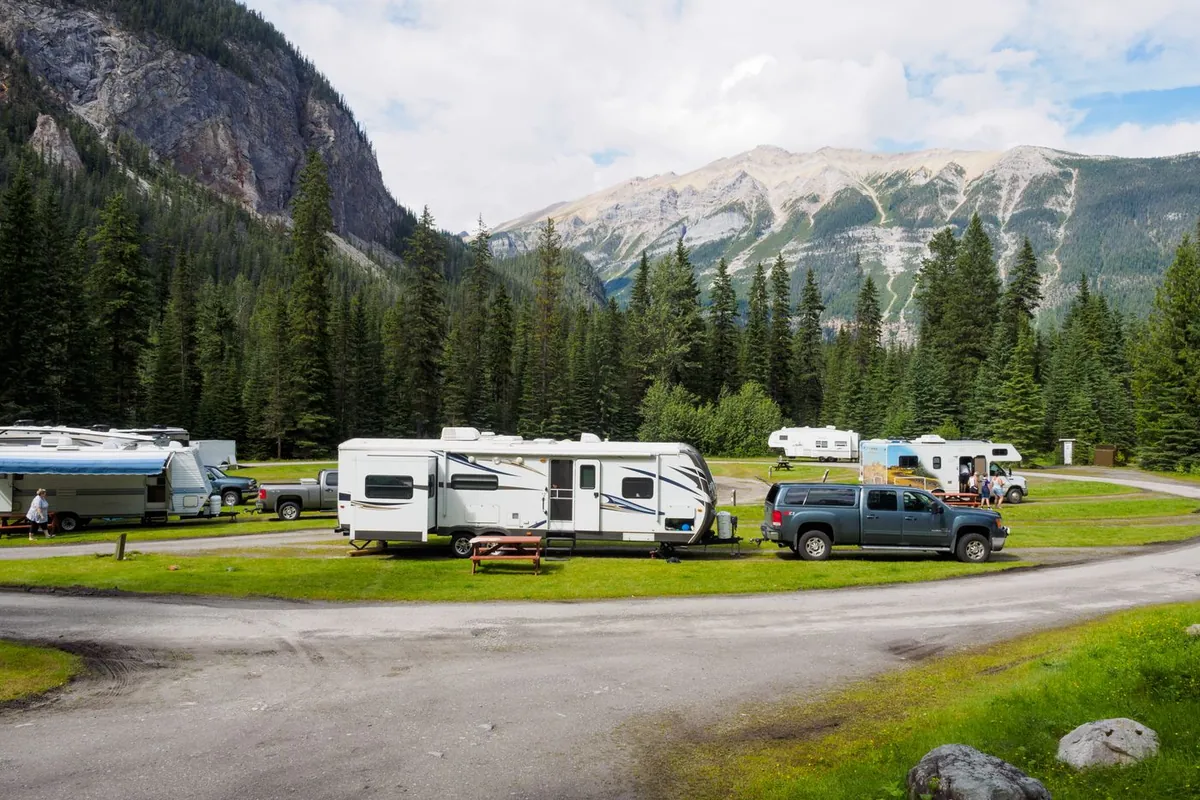
Check the things that let water in, the things that can come loose on the highway, and the things that hold the RV to the road or to the truck. In practice that means the roof and its seals, every seam and corner molding, windows and doors, the awning, lights and reflectors, the frame and hitch area, and the paperwork. Do it a couple of weeks before you leave, not the night before, so there is time to fix what you find.
Texas is hard on an RV body even when it sits still. Summer sun dries out sealant and fades fiberglass, storms test every seam, and hail can crack a roof vent you never look at. A walk-around with a ladder, a flashlight and a phone camera catches most problems while they are still small. If something looks wrong, our RV and motor home repair team in Balch Springs can take a look before you go.
What does the full walk-around look like?
The table below is the checklist we would use, split by area, with what to look for and who usually handles it. Print it or keep it on your phone.
| Area | What to look for | Who handles it |
|---|---|---|
| Roof surface | Cracks, bubbles, soft spots, punctures from branches or hail | You inspect; a body shop repairs damage |
| Roof seams, vents, air conditioner and skylights | Dried, cracked or missing sealant; broken vent covers | You inspect; reseal or replace as needed |
| Front and rear caps | Cracks, stress lines, loose trim, gaps at the joint with the walls | Body shop for fiberglass repair |
| Sidewalls and corner moldings | Bulges, delamination, open seams, loose screws | Body shop; delamination needs a closer look |
| Windows and entry door | Cracked glass, worn seals, door that will not latch or lock | Glass and body work |
| Slide-outs | Torn seals, crooked travel, gaps when closed | RV technician for mechanism; body shop if the box has shifted |
| Awning | Torn fabric, bent arms, loose brackets, travel lock working | You check; repair or replace parts |
| Lights and reflectors | Every lamp working, lenses intact, reflectors present | You test with the truck plugged in or the coach running |
| Frame, hitch, pin box, bumper | Cracks, rust, bent members, broken welds | Welding and frame work at a shop |
| Storage bays and ladder | Latches that hold, doors that close square, ladder bolts tight | You check; body shop if doors are bent |
Anything in the frame, hitch, lights, door latch or awning rows should be fixed before you leave, because those are the parts that can fail on the road. Seals, caps and cosmetic damage can sometimes wait, but water will not.
How do I check the roof and seals without making things worse?
Start with the maker's guidance on whether your roof can be walked on. Some can, some cannot, and some only on a board that spreads the weight. If you are not sure, look from a ladder at each corner and side instead.
- Clean first. Dirt hides cracks. Rinse the roof and let it dry.
- Look at every opening. Vents, the air conditioner, antennas, skylights and the ladder mounts are where sealant fails first.
- Press gently around edges. Sealant should be flexible. If it is hard, cracked or pulling away, it needs attention.
- Check the roof-to-wall joint along both sides and at the caps. A gap here lets water run straight down into the wall.
- Look for soft spots. A roof that gives under light pressure may already have wet decking under it.
- Photograph everything. Pictures help you compare next season and help a shop or an insurer later.
If you find a soft area or stains inside below it, that is not a sealant touch-up. Read our guide on RV interior and upholstery repair for what water damage looks like from inside.
What signs on the walls and caps mean I should not go yet?
Some body problems are cosmetic. Others are early warnings of a bigger failure. These are the ones to take seriously:
- Bubbles or waves in a fiberglass wall. This can mean the outer skin is separating from the layers behind it, often because water got in.
- A crack that runs from a window or door corner. Corners concentrate stress, and cracks there tend to grow.
- A gap opening at the front cap. Highway wind and rain hit the front first.
- Loose or missing corner molding. These cover seams; when they lift, the seam is exposed.
- Fresh damage from a minor hit you never had looked at, such as a scraped corner from a gas station post.
Then get low and look underneath. Wheel well skirts and fender flares crack from road debris and tire blowouts, and a torn underbelly cover lets in road spray and pests. Look at the frame rails for rust flaking at welds and at any bracket that holds a tank, step or generator. A step that does not retract fully can catch on a curb or a gas station island. On a motor home, look at the area behind the rear wheels, where a long overhang scrapes on steep driveways and leaves damage owners rarely see.
Most of these are repairable. Our guides on RV fiberglass repair and motor home body repair near Dallas explain what is involved.
What should I check on a travel trailer or fifth wheel that a motor home does not have?
The connection to the truck and the trailer's own paperwork.
- Tongue, A-frame or pin box. Look for cracks, rust at welds and bent metal. A pin box or coupler that has taken a hit should be inspected before it carries the trailer again.
- Safety chains, breakaway cable and wiring plug. Frayed or damaged parts get replaced.
- Running gear. Look for spring hangers pulled away from the frame and tires that wear on one edge, which can point to a bent axle or frame.
- Registration and title. The Texas Department of Motor Vehicles (TxDMV) says all non-farm trailers used on public highways must be registered, and a trailer with a gross weight over 4,000 pounds (trailer weight plus carrying capacity) must be titled.
- Inspection. TxDMV's FAQ has said trailers over 7,500 pounds gross weight need an inspection at a station that inspects trailers. Texas changed its inspection program on January 1, 2025, so confirm what applies to your trailer with your county tax office before you go.
If your trailer was hit in a campground or parking lot last season, see our guide on travel trailer and fifth wheel repair.
Is my insurance ready for the trip?
Check this at home, not after something happens in another state. The Texas Department of Insurance (TDI) explains that a motor home needs liability by law, plus collision and comprehensive to pay for damage to the coach itself. For a travel trailer or fifth wheel, your truck's policy might cover accidents you cause while towing, but you probably need a separate RV policy or endorsement to cover damage to the trailer. TDI also says belongings inside an RV need an RV policy, since a home policy covers them only in a very limited way.
Before you leave, put these in the glove box or a folder:
- Insurance cards for the RV and the tow vehicle, and your agent's phone number.
- The registration for each.
- Photos of all four sides and the roof, taken during your walk-around. If something happens on the road, they show what the RV looked like before.
If damage happens on the trip, our guide on RV insurance claims in Texas explains the steps. For hail on the road or at home, see hail damage repair and insurance.
How ACE Body & Frame helps
ACE Body & Frame has been on S. Peachtree Road in Balch Springs since 1987, serving Balch Springs, Mesquite and the surrounding area, Monday to Friday. A pre-trip problem often crosses trades, so it helps that our services include motor home and RV body repair, fiberglass repair, glass replacement, welding and fabrication, frame and suspension repair, paint and upholstery. A cracked cap, a broken window seal and a rusty pin box weld can be looked at together and written up on one estimate. If a window or awning is the issue, see RV glass, awning and door repair.
Estimates are free and computerized, repairs are satisfaction guaranteed, and if the damage is part of a claim we accept all insurance claims. Call 972-286-0935 with what you found on your walk-around, or send photos and request a free estimate before your departure date.
When should I book the repair if I find a problem?
As soon as you find it. Parts for RVs are often specific to one maker and model year, and caps, windows and decals may have to be ordered. Hidden damage behind a wall or under a roof is common once panels come off. Both of those take time that a trip date does not move for.
A sensible plan:
- Do the walk-around early, well ahead of the trip.
- Sort what you found into "must fix before leaving" (frame, hitch, lights, door latch, awning lock, glass in the driver's view) and "fix after".
- Send photos to a shop and ask what can be done before your date and what can safely wait.
- Cover anything open so it sheds water until the repair.
Our contact page has directions to the shop, and more answers are in our RV and motor home guides. If you would rather we look at it, ask for a pre-trip RV body check estimate.
Questions people ask next
How often should I check the seals on my RV roof?
Look at them before every long trip and after any hail or heavy storm, and give them a closer look at least once a season. Texas sun dries sealant out faster than many owners expect. Check vents, the air conditioner, skylights, antennas, ladder mounts and the roof-to-wall joint, and photograph them so you can compare next time.
Can I drive with a small crack in my RV front cap?
A small crack that is dry and not spreading may hold for a short time, but the front cap takes the full force of highway wind and rain. Cover it so it sheds water and have it looked at before a long trip. Cracks that start at corners or near the cap's joint with the walls tend to grow.
Does my travel trailer need an inspection in Texas?
TxDMV's FAQ has said trailers over 7,500 pounds gross weight need an inspection at a station that inspects trailers, with farm trailers exempt. Texas changed its inspection program on January 1, 2025, and the sources are not clear on how that affects travel trailers, so confirm with your county tax office before you register or travel.
What paperwork should I carry in my RV on a trip?
Carry the insurance cards and registration for the RV and the tow vehicle, your agent's phone number, and the claim phone number for each insurer. Add dated photos of all four sides and the roof from your pre-trip walk-around. If something happens far from home, those photos show what was there before the damage.
Can you check my RV before a trip if I am not sure what I am looking at?
Yes. ACE Body & Frame repairs motor homes and RVs at 2922 S. Peachtree Road in Balch Springs, Monday to Friday. Send photos of anything that worries you or bring the RV in for a free computerized estimate. We will tell you what should be fixed before you leave and what can safely wait.
Ready to get it fixed?
ACE Body & Frame, 2922 S. Peachtree Road, Balch Springs. Free computerized estimates, all insurance claims accepted.
Sources
- TxDMV, "Trailers"
- TxDMV FAQs
- TDI, "Insurance for RVs: Know your coverages"
- Texas DPS news release HQ 2025-001, "Vehicle Safety Inspection Program Changes Now in Effect" (January 3, 2025)
Read next
 RV and motor home
Who repairs motor home body damage near Dallas, TX?
RV dealers, RV shops and body shops that take large vehicles repair motor homes. What to check: fit, coach parts, fiberglass skills and hidden water damage.
 RV and motor home
RV windshield, awning or entry door damaged: who replaces them east of Dallas?
A broken RV windshield, torn awning or stuck door often hides wall or frame damage. What is safe to drive, what gets replaced, and what to ask the shop.
 RV and motor home
Can RV fiberglass damage be repaired, or does the panel have to be replaced?
Most RV fiberglass cracks, holes and broken caps can be rebuilt. Large delamination or shattered parts may need replacing. How to tell and what to ask.
More: all rv and motor home guides, rv & motor home, repair by make, reviews and directions to the shop.